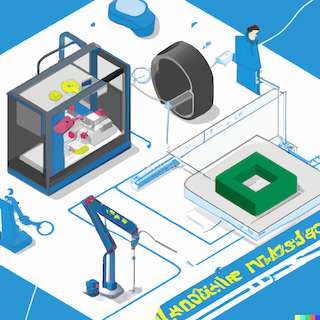
Additive manufacturing, also known as 3D printing, has been rapidly gaining popularity in recent years. With its ability to create highly customized products quickly and efficiently, it has been hailed as the future of manufacturing. Here are five reasons why additive manufacturing is set to revolutionize the industry:
Customization
Additive manufacturing offers unparalleled customization options compared to traditional manufacturing methods. With the use of 3D modeling software, designers can create complex and intricate designs, with the printer capable of producing these designs in a matter of hours. However, with customization comes the risk of over-engineering or overspending on features that the customer may not want or need. To mitigate this risk, manufacturers can use data-driven insights to guide their design decisions, seeking feedback from customers at every stage of the product development process.
Reduced Waste
Additive manufacturing is known for producing significantly less waste than traditional manufacturing methods. As the printer only produces the exact amount of material needed to create the product, there is no excess material to dispose of. However, the use of plastic-based materials in 3D printing can also result in environmental risks. To mitigate this risk, manufacturers can use alternative materials, such as biodegradable or recycled materials, to reduce their carbon footprint.
Faster Prototyping
Additive manufacturing enables companies to prototype and iterate designs faster than traditional manufacturing methods. With 3D printing, manufacturers can produce and test multiple design iterations in a matter of days, allowing for more agile product development. However, there is a risk of over-prototyping or spending too much time on design iterations, delaying the product development process. To mitigate this risk, manufacturers should establish clear goals and timelines for each stage of the product development process.

Sustainability
Additive manufacturing offers significant sustainability benefits compared to traditional manufacturing methods. By producing parts on demand and only creating the exact number needed, it minimizes waste and reduces the carbon footprint of the manufacturing process. However, there is a risk of supply chain disruption or the availability of raw materials. To mitigate this risk, manufacturers can develop strategic partnerships with suppliers to ensure the availability of materials and reduce supply chain risks.
New Materials
Additive manufacturing enables the use of new materials that were previously difficult or impossible to work with. For example, 3D printing allows for the creation of complex geometries and shapes that traditional manufacturing methods cannot achieve. However, the use of new materials can also result in material defects or failures. To mitigate this risk, manufacturers should test and validate new materials before using them in production, ensuring that they meet the required performance standards.
In conclusion, additive manufacturing is set to revolutionize the manufacturing industry by offering customized, efficient, and sustainable solutions. However, as with any technology, there are also risks associated with its use. Manufacturers must be aware of these risks and take appropriate measures to mitigate them. With its many benefits, additive manufacturing is undoubtedly the future of manufacturing.


Leave a Reply