Tag: Future of AM

  • Exploring the Challenges and Opportunities of Additive Manufacturing: Strategies for Successful Adoption

    Exploring the Challenges and Opportunities of Additive Manufacturing: Strategies for Successful Adoption

    Welcome to Addithive, where we explore the fascinating world of additive manufacturing and related technologies. Today, we’ll be diving into the current challenges and opportunities of AM implementation, discussing strategies for adoption, and exploring future development and production scenarios. So sit back, relax, and let’s talk AM.

    Challenges of AM Industrialization

    As with any new technology, there are always challenges to implementation. Additive manufacturing is no exception, and as it becomes more widely adopted, certain key challenges have become clear. Some of these include:

    1. Limited material options: Although AM technologies have come a long way in recent years, there are still relatively few materials available for use in additive manufacturing, especially when compared to traditional manufacturing methods. This limited selection can be a barrier to wider adoption, as companies may not be able to produce parts that meet their needs.
    2. High costs: AM can be an expensive technology to adopt, as it requires significant investment in equipment and training. In addition, there may be ongoing costs associated with materials, maintenance, and repairs. Companies need to carefully consider the return on investment before committing to AM implementation.
    3. Lack of standardization: As AM technologies are still relatively new, there are currently few established industry standards for the production of AM parts. This can make it difficult for companies to ensure quality and consistency, which can be a roadblock to wider adoption.

    Despite these challenges, there are also many opportunities enabled by AM that make it a highly attractive technology for certain applications.

    Opportunities of AM Industrialization: Case Studies

    Here are some examples of how AM is being used to great effect in various industries:

    1. Exploitation of the digital process chain: AM allows for the creation of highly complex parts in a single step, making it possible to produce parts that would be impossible or impractical to manufacture using traditional methods. This digital process chain is a key advantage of AM, and can lead to significant cost reductions and time savings.
    2. Novel AM materials: With ongoing research and development, new materials are being developed specifically for use in AM, expanding the range of applications for this technology. For example, biodegradable and sustainable materials are being developed, making AM an environmentally friendly option.
    3. Qualified, flexible supply chain networks: AM technology makes it possible to produce parts on demand, reducing the need for large inventories and warehousing. This allows for a more flexible and responsive supply chain, with the ability to quickly adapt to changing demand.

    SpaceX

    SpaceX is known for its innovative rocket designs and has been utilizing 3D printing technology to produce complex engine parts for its rockets. The company’s Raptor engine, which powers its Starship spacecraft, has several parts that were manufactured using 3D printing technology. This allows SpaceX to create highly complex parts in a single step, reducing the number of components and potential failure points. The digital process chain and the use of 3D printing technology have contributed to cost savings and faster turnaround times, enabling SpaceX to push the boundaries of space exploration.

    Via Spacex

    Adidas

    Adidas has been exploring the use of 3D printing technology to create innovative footwear. The company’s Futurecraft 4D sneakers are designed using a process called Digital Light Synthesis, which uses light and oxygen to create a highly durable and flexible midsole. The novel AM material used in the process is a type of liquid resin that solidifies when exposed to light. This innovative approach to footwear manufacturing has allowed Adidas to create customized shoes for individual customers, reducing waste and improving sustainability.

    Adidas Futurecraft via Adidas

    General Electric

    General Electric has been utilizing 3D printing technology to produce complex turbine parts for its jet engines. The company’s LEAP engine, which powers several commercial aircraft, has several components that were produced using 3D printing technology. This approach has allowed GE to reduce the number of parts required and simplify the manufacturing process, leading to cost savings and faster production times. The company has also been exploring the use of biodegradable and sustainable materials for its 3D printing applications, further improving its environmental impact.

    Best Practices for the Adoption of AM

    With so much potential for AM, it’s important to have a solid adoption strategy in place to maximize the benefits of the technology. Here are some key strategies and best practices to consider:

    1. Experiment : Rather than trying to implement AM across an entire organization all at once, it’s often better to start with a pilot project or small-scale implementation. This allows for testing and refinement of processes and equipment, which can help to minimize risk and maximize success.
    2. Define Need: AM adoption should be driven by a genuine need, rather than a desire to simply be seen as “innovative”. Companies should identify areas where AM can solve real problems or achieve specific goals, and build their adoption strategy around these needs.
    3. Cooperate : AM is rarely used in isolation, and is often combined with other traditional manufacturing methods to create hybrid production processes. Collaborating with other organizations or partners can help to identify opportunities for complementary use of AM technology.
    4. Plan: Successful AM adoption requires a clear strategy and strong support from top-level management. Companies should develop a clear roadmap for AM adoption, and provide employees with the training and resources they need to be successful.

    Future Development Scenarios

    Looking to the future, there are many exciting possibilities for AM development and production. Here are some potential scenarios:

    1. Mass customization: As the technology advances, it may become possible to produce highly personalized products on a mass scale. This could revolutionize many industries, from healthcare to retail.
    2. Integrating AM with Industry 4.0: AM is a key enabling technology for the Industry 4.0 movement, as it allows for on-demand production and highly flexible supply chains. As more companies embrace Industry 4.0 principles, it’s likely that AM will become an even more integral part of modern manufacturing.
    3. Space manufacturing: With plans for manned missions to Mars and beyond, there is a growing interest in developing AM technologies that can produce parts and tools in space. This would enable long-term missions without the need for frequent resupply runs from Earth.

    Key Enabler and Solution Approaches

    While there are certainly challenges to AM implementation, there are also many solutions and enablers to overcome these challenges. Here are some examples:

    1. Collaboration: Working with other companies or partners can help to overcome challenges related to standards, materials, and IP protection, as well as identifying new opportunities for AM use.
    2. Research and development: Continued investment in R&D can lead to the development of new materials and processes that expand the capabilities and applications of AM.
    3. Education and training: Providing employees with the knowledge and skills they need to be successful with AM is key to ensuring a smooth transition to this new technology.

    As you can see, additive manufacturing is a rapidly evolving technology with many exciting possibilities for the future. While there are certainly challenges to adoption, there are also many solutions and enablers available to help companies successfully implement AM into their operations. If you’re interested in learning more about AM, we encourage you to continue exploring the resources available here at Addithive. Together, we can help to shape the future of manufacturing.

  • Terran 1, world’s first 3D printed rocket Revolutionizes Aerospace

    Terran 1, world’s first 3D printed rocket Revolutionizes Aerospace

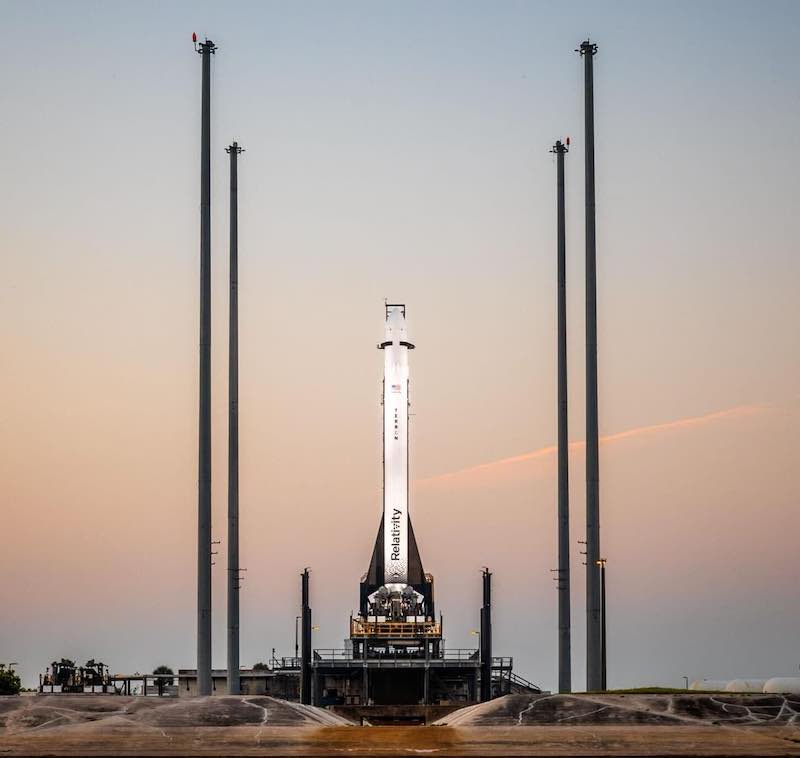
    Relativity Space writing the history by launching the world’s first 3D printed rocket, the Terran 1. This groundbreaking achievement will be a significant milestone in the aerospace industry and represents a revolutionary shift in the way we design and build rockets.

    Traditionally, rocket manufacturing has been a complex and expensive process that involves a large number of parts and specialized equipment. But with 3D printing, the potential to simplify this process and make it more cost-effective is enormous. Relativity Space has leveraged this potential to create a rocket that goes from raw material to flight, integrating artificial intelligence, robotics, and autonomous manufacturing technology.

    The Terran 1 is not only a technological marvel, but it also marks a significant shift in the aerospace industry. With 85% of its mass being 3D printed, the rocket’s primary structures are printed using a proprietary metal aluminum alloy developed in-house by Relativity. This enables the company to radically simplify the aerospace manufacturing supply chain, leading to greater flexibility and customization.

    The rocket is an expendable two-stage launch vehicle powered by liquid natural gas (LNG) and liquid oxygen (LOX) designed for future constellation deployment and resupply. It can launch up to 1,250 kilograms to low Earth orbit (LEO) for dedicated, multi-manifest and rideshare missions. With nine 3D printed Aeon 1 engines on the first stage and one 3D printed Aeon Vacuum (Vac) engine on the second stage, the rocket is 110 feet in height by 7.5 feet in diameter.

    You can watch the live launch stream above.

    The Aeon engines are fueled by liquid natural gas and liquid oxygen, utilizing the gas generator engine cycle. The tanks are autogenously pressurized with gaseous natural gas and gaseous oxygen via heat exchangers integrated into the engines. Relativity Space’s Stargate metal 3D printers enable rapid product iteration, unlocking significant improvements to product development and production.

    The potential of 3D printing in the aerospace industry is vast. The ability to print rocket parts on-demand can revolutionize the way we design and build rockets. With 3D printing, we can reduce the time it takes to produce rocket parts, reduce the cost of manufacturing, and increase the efficiency of the manufacturing process. This could lead to faster and more cost-effective space exploration.

    Relativity Space is building a highly attractive launch service offering by designing and manufacturing reusable rockets that offer high performance and reliability, while costing less to produce and fly. The company’s innovative approach to aerospace manufacturing is driving the inevitable shift toward software-defined manufacturing, which will drive innovation on and off planet Earth.

    Terran 1 – Relativityspace

    The Terran 1 launch is just the beginning of a new era in space exploration. With 3D printing and other advanced manufacturing technologies, we can revolutionize the way we explore space. The potential of additive manufacturing is vast, and we are excited to see what the future holds for this innovative technology.

    3D printing is not only a game-changer for rocket manufacturing but also for spacecraft components, satellites, and other equipment used in space exploration. This could lead to more cost-effective and efficient space missions, making it easier to explore our solar system and beyond.

    At Addithive, we are excited to see Relativity Space and other companies pushing the boundaries of what is possible with additive manufacturing. We believe that 3D printing has the potential to change the world, and we are thrilled to see how it will transform the aerospace industry and beyond.

    The Terran 1 launch is a testament to the potential of additive manufacturing to revolutionize the industry. The rocket is not only a technological marvel but also a symbol of a significant shift in the way we think about space exploration. We are excited to see what the future holds for

  • Unleashing the Power of Additive Manufacturing with Artificial Intelligence: The Game-Changing Revolution You Can’t Afford to Miss!

    Unleashing the Power of Additive Manufacturing with Artificial Intelligence: The Game-Changing Revolution You Can’t Afford to Miss!

    Are you ready to witness the future of manufacturing? Additive manufacturing and artificial intelligence are two rapidly growing technologies that are transforming the way we make things. And when combined, they have the potential to revolutionize manufacturing and beyond.

    Additive manufacturing, also known as 3D printing, is the only manufacturing technology that can be fully digitalized. It involves creating objects layer-by-layer from a digital model, using a range of materials such as plastics, metals, and even living tissue. Meanwhile, artificial intelligence (AI) is enabling machines to learn, adapt, and make decisions like humans.

    The possibilities of combining these two technologies are endless. Anything that seemed impossible before, such as creating complex geometries, personalized medical devices, or self-assembling structures, can now be possible with the power of additive manufacturing and AI.

    In this blog post, we will explore the intersection of additive manufacturing and artificial intelligence and discuss how their combination can lead to revolutionary advancements in manufacturing and beyond. We will delve into the role of AI in additive manufacturing, the potential of AI-powered 3D printing, and the challenges and opportunities of integrating these technologies. Get ready to witness the future of manufacturing and join us on this exciting journey.

    The Role of AI in Additive Manufacturing

    Additive manufacturing involves a complex process of designing, printing, and post-processing. AI can optimize each of these steps to improve efficiency and accuracy. In the design process, AI can analyze data from previous designs to generate new ones that are optimized for strength, weight, and other factors. In the printing process, AI can monitor the printing process in real-time to detect and correct errors. This can reduce waste and improve the quality of the final product. Finally, AI can improve the entire additive manufacturing software toolchain, from design to post-processing, to create a seamless and efficient workflow.

    The benefits of using AI in additive manufacturing are numerous. By optimizing the design and printing process, we can reduce waste, improve quality, and increase speed. This can lead to significant cost savings and improved competitiveness for businesses. Additionally, AI can help us discover new design possibilities and optimize our products for specific use cases.

    The Future of Additive Manufacturing with AI

    The potential of AI-powered 3D printing and additive manufacturing is limitless. In the aerospace industry, for example, AI can be used to optimize the design of components for weight reduction and improve fuel efficiency. In the automotive industry, AI can be used to design and produce custom parts on-demand, reducing the need for large inventories. In healthcare, AI can be used to create personalized medical devices and implants that are optimized for each patient’s unique anatomy.

    The impact of AI and additive manufacturing on the supply chain is also significant. By allowing for on-demand production of parts, businesses can reduce their inventory and supply chain costs. Additionally, AI can optimize the production process to reduce lead times and improve overall efficiency.

    The Challenges of Combining Additive Manufacturing and AI

    Integrating AI and additive manufacturing can be complex, especially in highly regulated industries like healthcare and aerospace. Ensuring compliance with regulations and safety standards is crucial, and R&D and implementation can be expensive and time-consuming. Additionally, there may be limitations to the types of materials that can be used in additive manufacturing with AI, which can limit the range of applications.

    However, there are solutions to these challenges. Collaboration between companies and researchers can help to share knowledge and resources, reducing costs and speeding up the development process. Additionally, advancements in material science are expanding the range of materials that can be used in additive manufacturing, opening up new possibilities for innovation.

    Success Stories and Case Studies

    Real-world examples of companies and researchers using AI and additive manufacturing to innovate and create are abundant. Let’s take a closer look at some of the most exciting success stories and the lessons learned from each.

    • Gas Turbine and Power Generation companies will been using additive manufacturing and AI to optimize the design of gas turbine blades. By simulating different designs and materials, they will be able to create a blade with better aerodynamics and cooling performance. This resulted in higher efficiency and longer lifespan of the turbine.AI and additive manufacturing can lead to better product performance and longevity in the energy sector.
    • Aviation companies will been using additive manufacturing and AI to improve the production process of aircraft parts. By using machine learning algorithms to analyze sensor data from the 3D printers, they will be able to detect and prevent defects in real-time, reducing the amount of waste and improving the quality of the final product.AI and additive manufacturing can lead to better quality control and waste reduction in the aviation industry.
    • 3D printing machine makers will be using AI to improve the printing process and optimize material properties. By analyzing data on the printing process and the behavior of different materials, they will be able to create a software tool that can predict the properties of a printed part before it is printed. This allows for better design optimization and material selection.AI can help optimize the printing process and improve the quality of the final product in additive manufacturing.
    1. Medical Device and Implant companies will be using AI and additive manufacturing to create personalized medical implants. By analyzing data on the patient’s anatomy and bone density, they will able to create a customized implant that fits perfectly and promotes bone growth. This solution is faster, more accurate, and more affordable than traditional implant manufacturing methods. AI and additive manufacturing can lead to personalized medical solutions that are more accessible and affordable to patients.
    1. Automotive companies will been using AI and additive manufacturing to create complex jigs and fixtures for their production line. By using generative design algorithms and 3D printing, they will be able to create customized and lightweight fixtures that are more efficient and cost-effective than traditional methods.AI and additive manufacturing can lead to better tooling solutions that improve efficiency and cost-effectiveness in the manufacturing process.

    These examples demonstrate the diverse range of applications for AI and additive manufacturing. By leveraging data and machine learning, we can create innovative solutions that improve efficiency, sustainability, and cost-effectiveness across a range of industries. The possibilities are endless, and we can’t wait to see what the future holds for this exciting intersection of technologies.

    At Addithive, we believe that the future of manufacturing and innovation lies in the combination of additive manufacturing and artificial intelligence. We encourage businesses and researchers to embrace these technologies and explore the exciting possibilities they offer. The combination of additive manufacturing and AI has the potential to revolutionize manufacturing and beyond. By leveraging data and machine learning, we can optimize the design, printing, and post-processing of parts, improve quality control and waste reduction, create personalized medical solutions, and improve tooling and fixtures for the manufacturing process.

    The benefits of these technologies are clear, and it’s time for businesses and researchers to embrace them fully. By investing in research and development, and implementing AI and additive manufacturing solutions, companies can stay ahead of the curve and gain a competitive advantage.

  • Additive Manufacturing: The Future of Customization, Efficiency, and Sustainability

    Additive Manufacturing: The Future of Customization, Efficiency, and Sustainability

    Additive manufacturing, also known as 3D printing, has been rapidly gaining popularity in recent years. With its ability to create highly customized products quickly and efficiently, it has been hailed as the future of manufacturing. Here are five reasons why additive manufacturing is set to revolutionize the industry:

    Customization

    Additive manufacturing offers unparalleled customization options compared to traditional manufacturing methods. With the use of 3D modeling software, designers can create complex and intricate designs, with the printer capable of producing these designs in a matter of hours. However, with customization comes the risk of over-engineering or overspending on features that the customer may not want or need. To mitigate this risk, manufacturers can use data-driven insights to guide their design decisions, seeking feedback from customers at every stage of the product development process.

    Reduced Waste

    Additive manufacturing is known for producing significantly less waste than traditional manufacturing methods. As the printer only produces the exact amount of material needed to create the product, there is no excess material to dispose of. However, the use of plastic-based materials in 3D printing can also result in environmental risks. To mitigate this risk, manufacturers can use alternative materials, such as biodegradable or recycled materials, to reduce their carbon footprint.

    Faster Prototyping

    Additive manufacturing enables companies to prototype and iterate designs faster than traditional manufacturing methods. With 3D printing, manufacturers can produce and test multiple design iterations in a matter of days, allowing for more agile product development. However, there is a risk of over-prototyping or spending too much time on design iterations, delaying the product development process. To mitigate this risk, manufacturers should establish clear goals and timelines for each stage of the product development process.

    Sustainability

    Additive manufacturing offers significant sustainability benefits compared to traditional manufacturing methods. By producing parts on demand and only creating the exact number needed, it minimizes waste and reduces the carbon footprint of the manufacturing process. However, there is a risk of supply chain disruption or the availability of raw materials. To mitigate this risk, manufacturers can develop strategic partnerships with suppliers to ensure the availability of materials and reduce supply chain risks.

    New Materials

    Additive manufacturing enables the use of new materials that were previously difficult or impossible to work with. For example, 3D printing allows for the creation of complex geometries and shapes that traditional manufacturing methods cannot achieve. However, the use of new materials can also result in material defects or failures. To mitigate this risk, manufacturers should test and validate new materials before using them in production, ensuring that they meet the required performance standards.

    In conclusion, additive manufacturing is set to revolutionize the manufacturing industry by offering customized, efficient, and sustainable solutions. However, as with any technology, there are also risks associated with its use. Manufacturers must be aware of these risks and take appropriate measures to mitigate them. With its many benefits, additive manufacturing is undoubtedly the future of manufacturing.