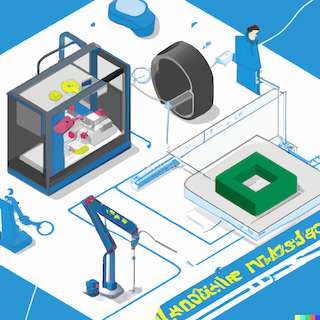
As the aerospace manufacturing industry continues to soar to new heights, it is clear that the sector is one of the most advanced and sophisticated commercial manufacturing systems in existence. It’s an industry that is constantly pushing the boundaries of technology to build highly complex, safety-critical structures and parts. But, despite this, the industry is still largely reliant on human skill and dexterity during assembly.
There have been efforts to introduce automation into aerospace manufacturing, but the uptake has been relatively low. This begs the question: why? Some may point to the size of the parts or the need for extreme accuracy. However, as with any complex issue, the problems are multifaceted. There are many contradictions and unsettled aspects still to be resolved, and there are no clear-cut answers to the automation conundrum.

One of the biggest challenges facing the aerospace industry when it comes to automation is the complexity of the manufacturing process. It is not just a matter of automating one task or process; rather, it involves automating multiple tasks that require a high degree of precision and accuracy. Additionally, the parts and structures being built in aerospace manufacturing are often incredibly complex, with intricate geometries and shapes that can be difficult to manufacture using traditional techniques.
Another challenge facing the aerospace industry when it comes to automation is the need for flexibility. Aerospace manufacturing is a highly dynamic industry, with constantly changing requirements and specifications. As a result, manufacturers need to be able to quickly adapt and change their manufacturing processes to meet new demands. This can be difficult to achieve with automated systems, which are often rigid and inflexible.
Furthermore, the cost of implementing automation in aerospace manufacturing can be prohibitively high. The technology required to automate many of the manufacturing processes in aerospace is often expensive, and the initial investment can be significant. This cost can be further exacerbated by the need for specialized personnel to operate and maintain the automated systems.
Despite these challenges, there are compelling reasons for the aerospace industry to pursue automation. One of the most significant benefits of automation is the potential to increase efficiency and reduce costs. Automated systems can work faster and with greater precision than human operators, which can result in shorter production times and lower defect rates.

Another potential benefit of automation in aerospace manufacturing is improved safety. Human error is a leading cause of accidents in the aerospace industry, and automation can help to reduce the risk of accidents by eliminating the need for human operators in dangerous or hazardous situations.
Finally, automation can help to address the skills gap in the aerospace industry. The industry is facing a shortage of skilled workers, and automation can help to mitigate this issue by reducing the need for highly skilled personnel in certain areas of the manufacturing process.
So, what needs to be done to increase the uptake of automation in aerospace manufacturing? One potential solution is to focus on developing more flexible and adaptable automated systems. This would allow manufacturers to quickly adapt their manufacturing processes to meet changing requirements and specifications, without having to invest in new systems or equipment.
Another solution is to focus on reducing the cost of implementing automation in aerospace manufacturing. This could involve developing more affordable technologies or finding ways to reduce the costs associated with operating and maintaining automated systems.
Ultimately, the key to increasing the uptake of automation in aerospace manufacturing is to continue to innovate and develop new technologies that can address the unique challenges facing the industry. By working together, industry stakeholders can help to build a more efficient, safer, and sustainable aerospace manufacturing sector that can meet the demands of tomorrow.
In conclusion, while the aerospace manufacturing industry is one of the most advanced and sophisticated commercial manufacturing systems in existence, there is still much work to be done when it comes to automation. The challenges facing the industry are multifaceted, and there are no clear-cut answers to the automation conundrum. However, with a continued focus on innovation and collaboration, the aerospace industry