Tag: clear aligners

  • Dental Industry Embraces Additive Manufacturing: From Orthodontics to Oral Surgery

    Dental Industry Embraces Additive Manufacturing: From Orthodontics to Oral Surgery

    Additive manufacturing, commonly known as 3D printing, has emerged as a transformative technology that’s reshaping various industries, from aerospace to fashion. In recent years, the dental industry has begun to embrace these innovations, leveraging the benefits of 3D printing to improve patient care and streamline the production of dental appliances and devices.

    At its core, additive manufacturing is the process of creating three-dimensional objects by depositing material, layer by layer, according to a digital design. This technology allows for the rapid production of customized, complex structures with high precision and accuracy. In the dental industry, additive manufacturing has proven to be a game-changer, enabling dental professionals to provide better-fitting appliances and prosthetics, as well as improving surgical planning and outcomes.

    This blog post will delve into the ways in which additive manufacturing and 3D printing are impacting the dental industry, focusing on three key applications: aligners, crowns, and surgical guides. We will explore how these technologies are revolutionizing orthodontics, dental prosthetics, and oral surgery, ultimately enhancing the patient experience and driving forward progress in the field of dentistry.

    Clear aligners

    One of the most significant applications of additive manufacturing in orthodontics is the production of clear aligners. These custom-made, transparent trays are designed to gradually shift teeth into the desired position, offering a more discreet and comfortable alternative to traditional metal braces. 3D printing has revolutionized the production process for clear aligners, bringing numerous benefits to both dental professionals and patients.

    Some of the key advantages of using 3D printing for aligner production include:

    • Improved precision: 3D printing allows for the creation of highly accurate aligners, ensuring a better fit and more effective treatment.
    • Customization: Each set of aligners is tailored specifically to the patient’s teeth, providing a personalized treatment plan.
    • Speed: Additive manufacturing significantly reduces production time, allowing dental professionals to deliver aligners to patients more quickly.
    • Cost-effectiveness: The streamlined production process made possible by 3D printing helps lower costs for both dental professionals and patients.

    The process of creating custom-fit clear aligners using 3D printing typically involves the following steps:

    • Digital scanning: The patient’s teeth are scanned using intraoral scanners or conventional impressions, creating a digital 3D model of their dentition.
    • Treatment planning: Using specialized software, dental professionals design a custom treatment plan by virtually moving the teeth into the desired position.
    • 3D printing: The digital models for each stage of the treatment plan are converted into a series of 3D-printable files, which are then used to produce the aligners using a high-precision 3D printer.
    • Post-processing: The printed aligners are cleaned, polished, and inspected for quality before being delivered to the patient.

    Brackets and retainers

    Additive manufacturing has also revolutionized the production of brackets and retainers, offering significant improvements in accuracy and customization compared to traditional manufacturing methods. For example, 3D printed brackets can be designed to fit the patient’s teeth more precisely, resulting in a more comfortable and effective treatment. Similarly, 3D printed retainers can be created to match the exact contours of the patient’s mouth, ensuring a better fit and preventing unwanted tooth movement after orthodontic treatment.

    The use of additive manufacturing for the production of brackets and retainers not only improves the overall quality of the appliances but also significantly reduces production times and costs. Traditional manufacturing methods for brackets and retainers often involve multiple steps and materials, resulting in longer turnaround times and increased expenses. In contrast, 3D printing streamlines the production process, allowing dental professionals to quickly create customized, high-quality orthodontic appliances at a lower cost. This ultimately translates into a more efficient and affordable treatment experience for patients.

    3D Printing and Dental Prosthetics

    Crowns and bridges

    Additive manufacturing has made a significant impact on the field of dental prosthetics, particularly in the production of crowns and bridges. These dental restorations are used to replace missing or damaged teeth, restoring both function and aesthetics to the patient’s smile. 3D printing offers several advantages over traditional manufacturing methods for crowns and bridges:

    • Customization: Additive manufacturing allows for the creation of highly precise and customized restorations, ensuring a better fit and more natural appearance.
    • Speed: The production process for 3D printed crowns and bridges is faster than traditional methods, reducing the time patients have to wait for their restorations.
    • Material options: 3D printing technologies can utilize a wide range of dental materials, including ceramics, resins, and metals, providing dental professionals with greater flexibility in choosing the best material for each patient’s needs.

    The process of creating customized crowns and bridges using additive manufacturing typically involves the following steps:

    • Digital scanning: The dentist captures a digital impression of the patient’s teeth using an intraoral scanner, creating a 3D model of the area to be restored.
    • Restoration design: Using specialized software, the dentist or dental technician designs the crown or bridge, ensuring an accurate fit and natural appearance.
    • 3D printing: The digital design is converted into a 3D-printable file and printed using a high-precision 3D printer, typically using dental materials such as ceramics, resins, or metals.
    • Post-processing: The printed restoration is cleaned, polished, and, if necessary, sintered or cured to achieve the desired strength and esthetics. It is then inspected for quality before being cemented or bonded in the patient’s mouth.

    Dentures

    The benefits of 3D printed dentures

    The production of dentures has also been revolutionized by the introduction of 3D printing. Dentures are removable appliances that replace missing teeth and help restore the function and appearance of the patient’s mouth. Some of the benefits of 3D printed dentures include:

    • Improved accuracy: 3D printed dentures can be designed to fit the patient’s mouth more precisely, resulting in a better fit and increased comfort.
    • Customization: The digital design process allows for the creation of dentures with personalized esthetics and functionality, tailored to the patient’s specific needs and preferences.
    • Speed: 3D printing reduces the production time for dentures, allowing patients to receive their new appliances more quickly.
    • Cost-effectiveness: The streamlined production process made possible by 3D printing can result in lower costs for dental professionals and patients.

    One of the most significant advantages of 3D printed dentures is their ability to provide a more personalized fit and improved patient comfort. The digital design process allows dental professionals to create dentures that closely match the unique contours of the patient’s mouth, ensuring a secure fit and reducing the need for adjustments. Additionally, the high level of customization offered by 3D printing enables dental professionals to create dentures with a more natural appearance, which can significantly enhance the patient’s overall satisfaction with their new appliance.

    Additive Manufacturing in Oral Surgery

    Pre-surgical planning

    One of the most valuable applications of additive manufacturing in oral surgery is the creation of 3D printed anatomical models for pre-surgical planning. These patient-specific models provide a tangible, true-to-scale representation of the patient’s anatomy, allowing dental professionals to visualize and plan surgical procedures more accurately. The use of 3D printed models has proven particularly beneficial for complex cases, such as those involving impacted teeth, jaw deformities, or dental implant placement.

    The use of 3D printed anatomical models for pre-surgical planning has been shown to improve surgical outcomes and reduce complications. By allowing dental professionals to gain a better understanding of the patient’s unique anatomy and the surgical site, they can anticipate potential challenges and develop more precise surgical strategies. This increased level of planning can lead to shorter surgery times, reduced blood loss, faster patient recovery, and overall better results.

    Surgical guides

    Another significant application of additive manufacturing in oral surgery is the production of 3D printed surgical guides. These custom-made devices are designed to guide dental professionals during surgical procedures, ensuring the accurate placement of dental implants, precise execution of bone grafts, or the correct positioning of osteotomy cuts. Some of the main advantages of using 3D printed surgical guides include:

    Streamlining complex dental procedures

    3D printed surgical guides have proven particularly useful in streamlining complex dental procedures, such as implant placement, bone grafting, and orthognathic surgery. By providing a clear and accurate roadmap for the dental professional to follow, surgical guides help eliminate guesswork, increase efficiency, and improve the overall success rate of these procedures. Additionally, the use of surgical guides can help reduce patient anxiety by providing them with the confidence that their surgery is being performed with the highest level of precision and planning.

    Challenges and Future Developments in Additive Manufacturing for Dentistry

    Regulatory concerns and standardization

    Despite the numerous advantages of additive manufacturing in dentistry, there are also challenges to overcome. One of the main concerns is the need for regulatory standardization to ensure consistent quality and safety across dental applications. Regulatory bodies, such as the FDA in the United States, are working on establishing guidelines and requirements for the use of 3D printing in dentistry. Ensuring that dental professionals adhere to these standards will be crucial in maintaining the trust and confidence of patients and the broader dental community.

    Technological advancements and new materials

    As additive manufacturing technology continues to evolve, new materials and processes are being developed that can further enhance the capabilities of 3D printing in dentistry. For example, the development of advanced dental resins and ceramics can lead to more durable and esthetically pleasing dental restorations. Additionally, improvements in the precision, speed, and efficiency of 3D printers can help make additive manufacturing even more accessible and cost-effective for dental practices.

    The potential for bioprinting in dental applications

    One of the most exciting future developments in additive manufacturing for dentistry is the potential for bioprinting – the 3D printing of living tissues and cells. Bioprinting has the potential to revolutionize dental treatment by enabling the creation of custom dental implants, tissue regeneration scaffolds, and even the possibility of printing entire teeth from living cells. While bioprinting is still in the early stages of development, it holds great promise for the future of dentistry and patient care.

    In conclusion, additive manufacturing and 3D printing have made a significant impact on the dental industry, offering numerous benefits across various applications, from orthodontics and dental prosthetics to oral surgery. The use of these technologies has led to improved precision, customization, and efficiency in the production of dental devices, as well as enhanced surgical planning and outcomes.

    As additive manufacturing technology continues to advance and new materials and processes are developed, the future of 3D printing in dentistry looks promising. With the potential for further innovations such as bioprinting, we can expect to see even greater improvements in dental treatment and patient care. By embracing additive manufacturing and staying informed about its latest developments, dental professionals can ensure they are well-equipped to provide the best possible care for their patients.

  • Carbon’s Gen 2 Aligner Model Solution Brings Sustainable and Cost-Effective Innovation to Clear Aligner Manufacturing.

    Carbon’s Gen 2 Aligner Model Solution Brings Sustainable and Cost-Effective Innovation to Clear Aligner Manufacturing.

    Carbon, the world’s leading 3D printing technology company, has announced its latest solution for clear aligner manufacturers that could revolutionize the industry. The Carbon® Gen 2 aligner model solution promises to bring efficiencies to the production process, enabling significant cost advantages and up to 65% increase in throughput, with less material required per print. This sustainable production solution, announced at the IDS conference in Cologne, Germany, includes new proprietary software and high-performance resin that integrate with Carbon’s existing printer hardware and aligner model workflow.

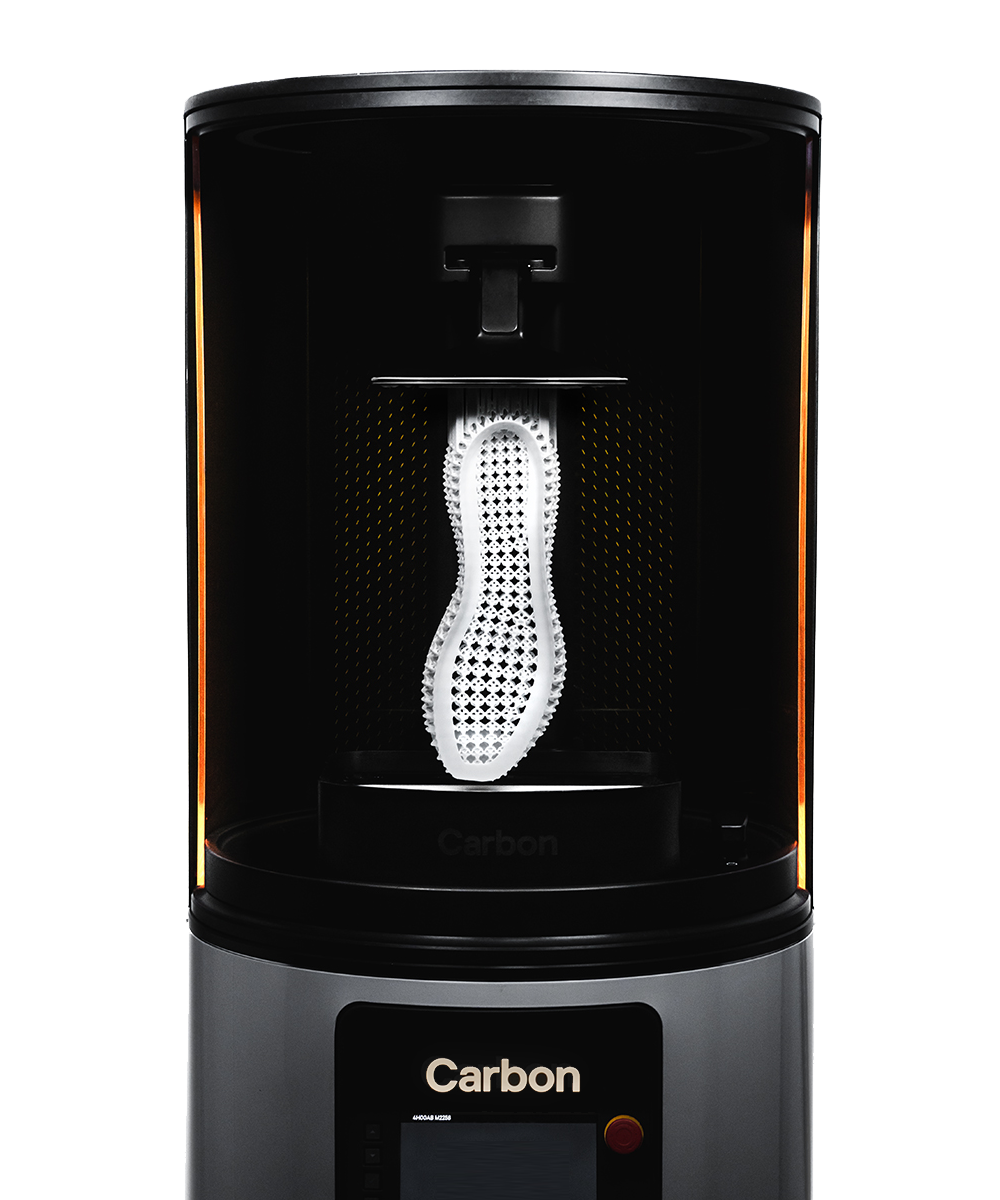
    Carbon L1 3d Printer via Carbon3d

    The Gen 2 aligner model solution is designed to offer new and existing customers integration with Carbon’s existing clear aligner workflow, which is already used by leading aligner manufacturers to produce millions of custom clear aligners worldwide each month. The solution includes the Carbon L1 printer, solventless spin cleaning solution, and API-based software that automates the hollowing, nesting, and batching of models to be printed. The new UMA 20 resin, engineered in parallel with Carbon’s new production solution, automatically hollows models, a revolutionary approach that creates a cost-effective and sustainable solution for clear aligner manufacturers.

    One of the most exciting benefits of this new solution is the potential to reduce material consumption by up to 40% per model, while increasing throughput up to 65% with the Carbon L1 printer. This means aligner manufacturers can produce more aligners in less time, at a lower cost, without compromising quality. The automated hollowing software, paired with the UMA 20 resin, enables increased part throughput, making the production process more efficient and streamlined.

    Another significant advantage of the Gen 2 aligner model solution is improved sustainability. The solution features improved solvent-free model cleaning, which eliminates solvent waste and allows resin to be reclaimed for future use. Aligner manufacturers can save money and reduce their environmental footprint by using this more sustainable production process.

    Carbon 3d

    Terri Capriolo, Senior Vice President, Oral Health at Carbon, spoke about the new solution, saying, “Working with the top clear aligner companies has given us insight into the barriers this industry faces on a daily basis. We heard from customers and we took action to create efficiencies and cost savings in the clear aligner workflow. This new aligner workflow is designed to enable Carbon customers to reduce cost per part while simultaneously improving model throughput with a more sustainable production process.”

    The Carbon® Gen 2 aligner model solution will be available to customers in the second half of 2023. It will be showcased at the IDS Conference, a leading global trade fair for the dental community, which took place in Cologne from March 14-18, 2023. Aligner manufacturers can learn more about the solution and its benefits by visiting the Carbon website.

    Overall, the Carbon® Gen 2 aligner model solution is an exciting development for the clear aligner industry. The ability to produce more aligners in less time, at a lower cost, while also reducing material consumption and improving sustainability, makes this solution a game-changer. Carbon continues to innovate and push the boundaries of 3D printing technology, and we can’t wait to see what they come up with next.