Tag: Carbon

  • Scaling Up: High Production Volume Additive Manufacturing and 3d Printing

    Scaling Up: High Production Volume Additive Manufacturing and 3d Printing

    Welcome, fellow innovators and manufacturing enthusiasts! Today, we’re diving into the exciting world of additive manufacturing and 3D printing, where mind-bending technologies are transforming the way we create and produce objects. From intricate jewelry to large-scale aerospace components, additive manufacturing is breaking new ground in a multitude of industries.

    Additive manufacturing, often used interchangeably with 3D printing, is the process of creating objects by adding material layer by layer, as opposed to traditional subtractive manufacturing methods, where material is removed to create the final product. This paradigm shift has opened up endless possibilities for intricate and complex designs, as well as significantly reducing material waste.

    In the fast-paced world of manufacturing, high production volume and speed are crucial for staying competitive. As additive manufacturing continues to evolve, it’s no surprise that manufacturers are seeking faster, more efficient methods to meet the demands of their customers. This is where high-speed additive manufacturing methods come into play, offering impressive production rates without sacrificing quality.

    We’re going to introduce you to four cutting-edge, high-speed additive manufacturing methods that are shaking up the industry: Multi Jet Fusion (MJF), Continuous Liquid Interface Production (CLIP) by Carbon, and Binder Jetting. These innovative techniques are revolutionizing the way we think about speed and scalability in the world of additive manufacturing. So, buckle up and join us as we explore the ins and outs of these game-changing technologies!

    Multi Jet Fusion (MJF)

    How it works

    Let’s kick things off with Multi Jet Fusion (MJF), a remarkable technology developed by HP that’s taking the additive manufacturing world by storm. At its core, MJF uses a combination of inkjet printing and infrared energy to selectively fuse powdered material. The process begins with a thin layer of powder being spread across the build platform. Then, a print carriage equipped with inkjet arrays applies fusing and detailing agents to the powder. An energy source, such as an infrared lamp, follows the print carriage, heating and fusing the areas where the agents have been applied. This process is repeated layer by layer until the object is complete.

    Advantages and Limitations

    MJF has several notable advantages, including exceptional speed, high-resolution details, and the ability to produce strong, functional parts. Additionally, it allows for efficient production of multiple parts simultaneously, making it ideal for small-to-medium production runs. However, there are some limitations to MJF. The technology is currently compatible with a limited range of materials, primarily nylon-based powders. Furthermore, MJF parts may require post-processing to achieve a smoother surface finish.

    Applications and Industries that Benefit from MJF

    MJF’s speed and versatility make it a fantastic choice for a variety of industries. Some of the top sectors that benefit from MJF include:

    Automotive: MJF is ideal for creating lightweight, high-performance components such as gears, brackets, and housings.

    Aerospace: Complex geometries and weight reduction are crucial in aerospace, and MJF delivers on both fronts with intricate, strong parts.

    Medical: Customization is key in medical applications, and MJF excels at creating patient-specific implants, prosthetics, and surgical tools.

    Consumer Goods: From smartphone cases to eyewear, MJF allows designers to produce intricate, functional products that meet the demands of modern consumers.

    Real-World Examples and Case Studies

    BMW: The automotive giant has embraced MJF technology to produce components for their i8 Roadster, including window guide rails and fixtures for the soft-top cover mechanism. This not only reduces production times but also helps cut down on weight and material waste.

    SmileDirectClub: This company revolutionized the orthodontics industry by using MJF to produce custom dental aligners. With the ability to create thousands of unique aligners per day, SmileDirectClub can cater to a massive number of clients while maintaining a high level of customization.

    Cytosurge: In the field of biotechnology, Cytosurge developed a breakthrough microfluidic device called FluidFM, which relies on MJF technology. This device allows for precise manipulation of cells and biomolecules, opening up new possibilities for drug development and personalized medicine.

    These examples showcase the incredible potential of MJF technology in various industries, and it’s clear that we’ve only just begun to scratch the surface of what this high-speed additive manufacturing method can achieve.

    Continuous Liquid Interface Production (CLIP) Technology

    How it works

    Next up on our list of high-speed additive manufacturing marvels is Continuous Liquid Interface Production (CLIP), a groundbreaking technology developed by Carbon. CLIP operates on a unique photopolymerization process that harnesses the power of light and oxygen to create parts from liquid resin. The process begins with a pool of UV-sensitive resin, beneath which lies a transparent, oxygen-permeable window. A digital light projection system projects UV images onto the resin, causing it to solidify layer by layer. Simultaneously, oxygen is introduced through the window, creating a thin, non-solidified layer that enables continuous, rapid part production.

    Advantages and Limitations

    CLIP offers numerous benefits, including exceptional speed, smooth surface finishes, and the ability to produce isotropic parts with consistent mechanical properties. The technology also supports a diverse range of materials, from rigid polymers to flexible elastomers. However, CLIP does have some limitations. For instance, the build volume is relatively small compared to other high-speed methods, and the cost of materials and hardware can be higher than other 3D printing technologies.

    Applications and Industries that Benefit from CLIP

    CLIP’s versatility and precision make it a fantastic choice for several industries, including:

    Healthcare: CLIP’s ability to create biocompatible, customized parts makes it perfect for medical applications such as dental aligners, surgical guides, and hearing aids.

    Automotive: CLIP can produce complex, high-performance components with a superior surface finish, such as connectors, brackets, and trim pieces.

    Aerospace: With CLIP’s capacity for creating strong, lightweight parts, it’s an excellent choice for manufacturing aerospace components like ducts, brackets, and interior fittings.

    Consumer Goods: From footwear to electronics, CLIP allows for the production of intricate, high-quality products that cater to the needs of today’s consumers.

    Real-World Examples and Case Studies

    Adidas: The sportswear giant partnered with Carbon to create the Futurecraft 4D, a line of high-performance running shoes featuring a 3D-printed midsole crafted using CLIP technology. The unique lattice structure of the midsole provides superior cushioning and support, revolutionizing athletic footwear.

    Resolution Medical: This medical device manufacturer leverages CLIP technology to produce highly accurate, patient-specific surgical guides for various orthopedic procedures. The speed and precision of CLIP enable Resolution Medical to deliver customized solutions quickly and efficiently.

    Specialized Bicycles: Embracing CLIP’s capabilities, Specialized Bicycles used the technology to develop the S-Works Power Saddle with Mirror technology. The saddle features a complex lattice structure that provides optimal comfort and support for cyclists, showcasing the potential of CLIP in high-performance sports equipment.

    These real-world examples demonstrate the powerful impact CLIP technology is having across various industries, highlighting its potential to reshape the future of additive manufacturing as we know it.

    Binder Jetting Technology

    How it works

    Last but certainly not least, let’s explore the captivating world of Binder Jetting, another high-speed additive manufacturing method that’s making waves in the industry. Binder Jetting operates by selectively depositing a liquid binding agent onto a bed of powdered material, layer by layer, to create a solid object. The process begins with the spreading of a thin layer of powder across the build platform. A print head then applies the binding agent to the powder, fusing the particles together. Once the object is complete, it’s removed from the build chamber, and any remaining loose powder is cleared away. Depending on the material, additional post-processing steps, such as sintering or infiltration, may be required to achieve the desired mechanical properties.

    Advantages and Limitations

    Binder Jetting offers several significant advantages, including the ability to work with a broad range of materials, from metals to ceramics and even sand. It also allows for full-color printing and the production of large, complex parts. However, there are some limitations to Binder Jetting, such as the need for post-processing to achieve optimal part strength and surface finish. Additionally, the technology may not be suitable for producing small, intricate details or parts with thin walls.

    Applications and Industries that Benefit from Binder Jetting

    Binder Jetting’s material versatility and large build volume make it a fantastic choice for various industries, including:

    1. Aerospace: Binder Jetting is perfect for producing large, complex aerospace components such as turbine blades, heat exchangers, and combustion chambers.
    2. Automotive: From engine blocks to exhaust systems, Binder Jetting allows manufacturers to create lightweight, high-performance parts with ease.
    3. Art and Sculpture: With its capacity for full-color printing and intricate geometries, Binder Jetting opens up new possibilities for artists and sculptors to express their creativity.

    Real-World Examples and Case Studies

    1. General Motors: In a bid to revolutionize the production of automotive parts, General Motors turned to Binder Jetting to create a proof-of-concept, lightweight seat bracket. The result was a single, consolidated part that replaced an assembly of eight individual components, showcasing the potential of Binder Jetting for weight reduction and simplified manufacturing.
    2. voxeljet: This additive manufacturing company uses Binder Jetting technology to create intricate, full-color sand molds for metal casting. With the ability to produce large, complex molds quickly and efficiently, voxeljet is transforming the foundry industry and enabling the production of innovative, high-performance components.
    3. Emerging Objects: A design studio specializing in 3D-printed architecture, Emerging Objects leverages Binder Jetting technology to create stunning, sustainable building materials from unique materials such as salt, sawdust, and recycled rubber. These innovative materials not only push the boundaries of architectural design but also pave the way for a more eco-friendly future.

    These examples highlight the immense potential of Binder Jetting technology across a diverse range of industries, illustrating how this high-speed additive manufacturing method is shaping the future of production and design.

    Comparison of Multi Jet Fusion, CLIP (Carbon), and Binder Jetting

    As we’ve explored these three remarkable high-speed additive manufacturing technologies, it’s essential to understand their differences and how they stack up against each other in various aspects:

    Speed: All three methods are known for their impressive production rates. While CLIP stands out for its continuous printing process, both Multi Jet Fusion and Binder Jetting are also significantly faster than traditional 3D printing methods, making them all strong contenders in the high-speed arena.

    Material Compatibility: Binder Jetting takes the lead in material compatibility, working with an extensive range of materials, including metals, ceramics, and sand. CLIP supports various resins, from rigid polymers to flexible elastomers, while Multi Jet Fusion is primarily compatible with nylon-based powders.

    Surface Finish: CLIP excels in producing parts with smooth surface finishes, often requiring little to no post-processing. Multi Jet Fusion parts may need some post-processing for optimal smoothness, while Binder Jetting typically requires additional steps to achieve the desired surface finish.

    Part Strength: CLIP and Multi Jet Fusion both produce strong, functional parts with consistent mechanical properties. Binder Jetting, on the other hand, may require post-processing, such as sintering or infiltration, to achieve optimal part strength.

    Cost and Scalability: All three methods are well-suited for scaling production, with Multi Jet Fusion being particularly efficient for small-to-medium production runs. Binder Jetting can be cost-effective for large-scale parts and full-color printing, while CLIP’s material and hardware costs may be higher than other 3D printing technologies.

    Selecting the Right Method for Specific Applications

    When it comes to choosing the right high-speed additive manufacturing method for your specific application, consider the following factors:

    1. Material Requirements: Evaluate the type of material your project demands and select the method that best supports it, whether it’s metal, polymer, or ceramic.
    2. Production Volume: Consider the size of your production run and choose a method that offers the ideal balance of speed, cost, and scalability.
    3. Part Complexity: Analyze the intricacy and geometry of your design to determine which method is most suitable for achieving the desired level of detail and precision.
    4. Surface Finish and Mechanical Properties: Assess your requirements for surface finish and part strength, and choose the method that best meets those needs.

    By carefully evaluating these factors, you can select the most appropriate high-speed additive manufacturing method for your project, ensuring the best possible results for your unique application.

    The Future of High Production Volume Additive Manufacturing

    As we look to the future, the realm of high production volume additive manufacturing promises even more groundbreaking technologies and innovations. We can expect to see further advancements in material science, with the development of new, high-performance materials tailored specifically for additive manufacturing processes. Additionally, improvements in hardware and software will enable faster production rates, increased precision, and even greater scalability. As the boundaries of what’s possible continue to expand, we’re likely to witness the emergence of new technologies that will further revolutionize the world of additive manufacturing.

    High production volume additive manufacturing is poised to have a transformative effect on traditional manufacturing methods. By offering unparalleled design freedom, reduced lead times, and cost-effective small-to-medium production runs, additive manufacturing technologies like Multi Jet Fusion, CLIP, and Binder Jetting are challenging the status quo. As these methods become more integrated into manufacturing workflows, we can expect a shift in the balance between traditional and additive manufacturing. Companies will increasingly adopt hybrid approaches, leveraging the strengths of both traditional and additive manufacturing to optimize their production processes and create innovative, high-performance products.

    In an era where environmental concerns are more crucial than ever, sustainability and eco-friendliness play a vital role in the future of additive manufacturing. High production volume additive manufacturing methods are inherently more resource-efficient than traditional manufacturing techniques, as they produce less waste and require fewer raw materials. Moreover, additive manufacturing enables the creation of lightweight, optimized parts that can lead to reduced energy consumption in industries such as automotive and aerospace.

    As the industry evolves, we can expect to see an increased focus on developing sustainable materials, recycling processes, and energy-efficient production methods. The future of high production volume additive manufacturing lies not only in its potential to transform the way we design and produce goods but also in its capacity to help us build a more sustainable, eco-friendly world.

    As we’ve journeyed through the exciting world of high production volume additive manufacturing, we’ve seen how high-speed methods like Multi Jet Fusion, CLIP, and Binder Jetting are revolutionizing the industry. These technologies offer unparalleled speed, material compatibility, and design freedom, allowing for the creation of innovative, high-performance products across a diverse range of industries. By pushing the boundaries of what’s possible in manufacturing, these high-speed methods are transforming the way we think about design, production, and innovation.

    Now that you’ve gained a glimpse into the future of additive manufacturing, we encourage you to explore these high-speed methods further and consider how they might benefit your own applications. Whether you’re a manufacturer, designer, engineer, or simply an enthusiast, high production volume additive manufacturing technologies present a wealth of opportunities to create unique, groundbreaking products that can reshape industries and redefine the way we live.

    By embracing the power and potential of Multi Jet Fusion, CLIP, Binder Jetting, and other high-speed additive manufacturing methods, you can join the ranks of forward-thinking innovators who are shaping the future of manufacturing and pushing the boundaries of what’s possible. So go ahead, dive into the world of high production volume additive manufacturing, and let your creativity soar!

    References :

    Powder bed and inkjet head 3D printing – Wikipedia

    3D Printing – Wikipedia

    Feature image : HP Multi Jet Fusion

  • 5 Additive Manufacturing Startups That Are Disrupting the Industry

    5 Additive Manufacturing Startups That Are Disrupting the Industry

    Additive manufacturing or 3D printing has revolutionized the manufacturing industry with its fast, efficient, and cost-effective production of parts. It has changed the way we think about manufacturing, leading to the emergence of disruptive startups that are pushing the boundaries of the industry. In this blog post, we will explore five startups that are leading the way in the additive manufacturing industry.

    Summary

    1. Carbon’s Digital Light Synthesis™ technology enables faster and more accurate production of parts with excellent mechanical properties.
    2. Desktop Metal’s advanced technologies enable faster and more cost-effective production of metal parts.
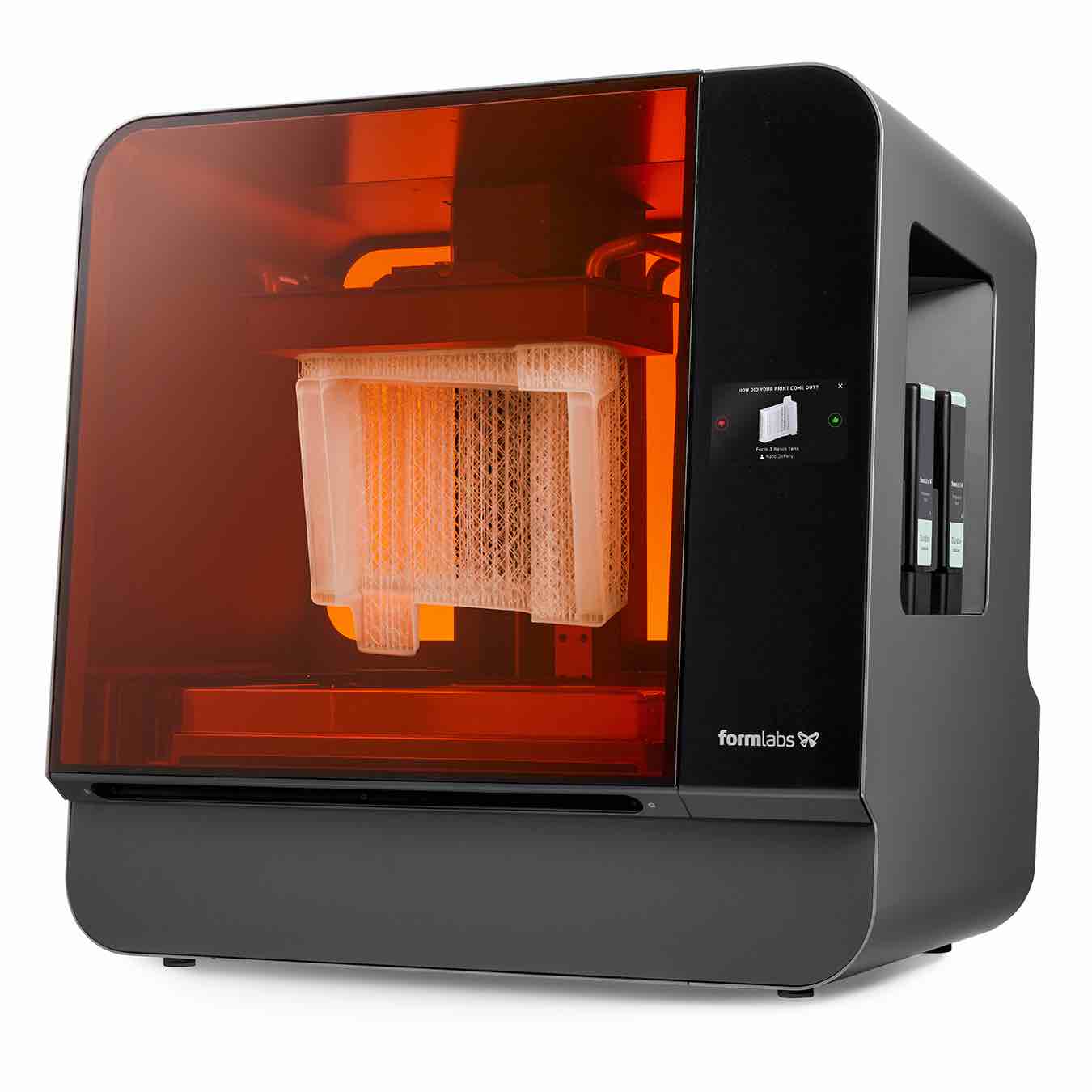
    3. Formlabs’ Form 3 and Form 3B printers use advanced stereolithography technology to produce highly detailed parts with exceptional accuracy.
    4. Xometry’s platform offers a range of manufacturing services, including 3D printing, CNC machining, and injection molding, allowing customers to access a range of manufacturing options in one place.
    5. Velo3D’s Sapphire™ system uses a unique technology that enables the production of highly complex metal parts with exceptional quality and precision.
    https://www.carbon3d.com

    1-Carbon

    Carbon is a digital manufacturing company that provides a platform for producing end-use parts using a variety of materials. The company’s innovative Digital Light Synthesis™ technology is a photochemical process that utilizes a liquid photopolymer to produce parts layer by layer. This enables faster and more accurate production of parts with excellent mechanical properties, making it ideal for a range of industries including automotive, aerospace, and consumer goods.

    One of the key benefits of Carbon’s technology is its ability to produce parts with excellent mechanical properties. The technology has been used to produce parts with strength and durability that are critical for these industries. Additionally, Carbon’s technology has been used to produce parts with complex geometries that would be difficult or impossible to produce using traditional manufacturing methods.

    Carbon has also developed a range of resins that can be used with its technology, allowing for the production of parts with a range of properties, including high stiffness, low friction, and heat resistance. These resins are ideal for use in applications where specific properties are required.

    https://www.desktopmetal.com

    2-Desktop Metal

    Desktop Metal is a 3D printing company that has developed a range of metal 3D printers for use in industrial and manufacturing applications. The company’s advanced technologies, including binder jetting and single pass jetting, enable faster and more cost-effective production of metal parts. Desktop Metal’s technology has been used to produce parts for a range of industries, including aerospace, automotive, and medical.

    One of the key benefits of Desktop Metal’s technology is its ability to produce complex metal parts quickly and cost-effectively. The technology utilizes a binder jetting process that selectively deposits a liquid binder onto a bed of metal powder, layer by layer, and then sintered to create a solid metal part. This process results in high-resolution parts with excellent mechanical properties, making it ideal for use in industries where complex geometries are common.

    Desktop Metal has also developed a range of metal alloys that can be used with its technology, allowing for the production of parts with a range of properties. These alloys include stainless steel, titanium, and copper, among others, and are ideal for use in a range of applications.

    https://formlabs.com

    3-Formlabs

    Formlabs is a 3D printing company that produces high-quality desktop 3D printers for a range of industries, including dental, medical, and engineering. The company’s Form 3 and Form 3B printers use advanced stereolithography technology to produce highly detailed parts with exceptional accuracy. Formlabs’ technology has been used to produce parts for a range of applications, including dental implants, medical devices, and engineering prototypes.

    One of the key benefits of Formlabs’ technology is its ability to produce highly detailed parts with exceptional accuracy. The technology utilizes a vat of liquid photopolymer that is selectively cured by a laser to create a solid part. This process results in high-resolution parts with exceptional accuracy, making it ideal for use in industries where precision is critical.

    Formlabs has also developed a range of resins that can be used with its technology, allowing for the production of parts with a range of properties. These resins include biocompatible materials that are ideal for use in medical applications.

    4-Xometry

    Xometry is a marketplace that connects manufacturers with customers looking for custom parts. The company’s platform offers a range of manufacturing services, including 3D printing, CNC machining, and injection molding, allowing customers to access a range of manufacturing options in one place. Xometry’s platform has been used by companies in a range of industries, including aerospace, automotive, and consumer goods.

    One of the key benefits of Xometry’s platform is its ability to provide customers with a range of manufacturing options in one place. This makes it easy for customers to find the manufacturing services they need without having to search for multiple vendors. Xometry’s platform also allows customers to access manufacturing services quickly and easily, which can help to speed up the production process.

    Xometry’s platform also offers instant quoting and design feedback, which can help customers to optimize their designs for manufacturability. This can help to reduce costs and improve the quality of the final product. More info at Xometry

    5-Velo3D

    Velo3D is a 3D printing company that specializes in metal 3D printing for aerospace, automotive, and energy applications. The company’s Sapphire™ system uses a unique technology that enables the production of highly complex metal parts with exceptional quality and precision. Velo3D’s technology has been used to produce parts for a range of industries, including aerospace, automotive, and energy.

    One of the key benefits of Velo3D’s technology is its ability to produce highly complex metal parts with exceptional quality and precision. The technology utilizes a process called SupportFree, which eliminates the need for support structures during the printing process. This allows for the production of highly complex parts that would be difficult or impossible to produce using traditional manufacturing methods.

    Velo3D has also developed a range of metal alloys that can be used with its technology, allowing for the production of parts with a range of properties. These alloys include titanium, nickel-based alloys, and aluminum, among others, and are ideal for use in a range of applications. More info at Velo3d

    Conclusion

    In conclusion, these five startups are disrupting the additive manufacturing industry and changing the way we think about manufacturing. Each of these companies has developed innovative technologies that enable faster, more efficient, and more cost-effective production of parts than traditional manufacturing methods. As these technologies continue to improve and evolve, we can expect to see even more innovation and disruption in the manufacturing industry. The future of additive manufacturing is bright, and these startups are leading the way.