Author: Addithive

  • The Future of Aerospace with Additive Manufacturing

    The Future of Aerospace with Additive Manufacturing

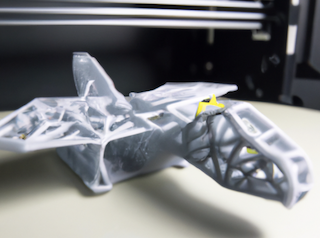
    Additive manufacturing, also known as 3D printing, has revolutionized the manufacturing industry. It has transformed the way products are designed and produced, allowing for faster production times, reduced waste, and increased customization. The aerospace industry has also taken notice of the benefits of additive manufacturing and has begun to implement this technology in their manufacturing processes. In this blog post, we will explore the future of aerospace manufacturing with additive manufacturing.

    Additive manufacturing offers several advantages to the aerospace industry. Some of the advantages are:

    1. Lightweighting: Additive manufacturing allows for the creation of complex and lightweight structures that were previously impossible to produce with traditional manufacturing methods. The ability to create lightweight structures is crucial in aerospace, as it helps to reduce fuel consumption and increase the range of aircraft.
    2. Customization: Additive manufacturing allows for the creation of highly customized parts that are tailored to specific applications. This is particularly useful in aerospace, where each aircraft is unique and requires specialized components.
    3. Reduced Waste: Additive manufacturing is a highly efficient process that produces little to no waste. This is a significant advantage in aerospace, where material waste can be costly and detrimental to the environment.
    4. Faster Production Times: Additive manufacturing can produce parts much faster than traditional manufacturing methods. This is beneficial in the aerospace industry, where aircraft downtime is costly and must be minimized.
    5. Cost Savings: While the initial cost of setting up an additive manufacturing process can be high, the cost savings over time can be significant. Additive manufacturing allows for the production of parts on-demand, eliminating the need for large inventories of parts and reducing the cost of storage.

    While additive manufacturing offers many advantages, it also has some disadvantages that must be considered. Some of the disadvantages are:

    1. Limited Materials: Additive manufacturing currently has limited material options compared to traditional manufacturing methods. This can be a disadvantage in aerospace, where certain materials are required to meet specific performance requirements.
    2. Surface Quality: The surface quality of parts produced through additive manufacturing can be inferior to those produced through traditional manufacturing methods. This can be a disadvantage in aerospace, where surface quality is essential for aerodynamic performance.
    3. Post-Processing: Parts produced through additive manufacturing often require post-processing to achieve the desired finish and performance characteristics. This can add time and cost to the manufacturing process.
    4. Equipment Maintenance: Additive manufacturing equipment requires regular maintenance to ensure optimal performance. This can be a disadvantage in aerospace, where downtime must be minimized.

    As with any new technology, there are risks associated with additive manufacturing in aerospace. Some of the risks are:

    1. Quality Control: Additive manufacturing processes require stringent quality control measures to ensure that the parts produced meet the necessary standards for performance and safety.
    2. Cybersecurity: Additive manufacturing processes are vulnerable to cybersecurity threats, which could compromise the integrity of the parts produced.
    3. Intellectual Property Theft: Additive manufacturing processes can make it easier for individuals or companies to steal intellectual property, such as designs or proprietary information.

    To mitigate these risks, aerospace companies must implement robust quality control measures, invest in cybersecurity measures, and protect their intellectual property through patents and trademarks.

    Several aerospace companies have already implemented additive manufacturing processes in their manufacturing processes. Some of the successful examples are:

    1. Airbus: Airbus has used additive manufacturing to produce parts for their A350 XWB aircraft, including brackets, ducts, and titanium components. Additive manufacturing has allowed Airbus to reduce the weight of these parts and simplify the manufacturing process.
    2. Boeing: Boeing has used additive manufacturing to produce parts for their 787 Dreamliner aircraft, including titanium brackets and composite floor beams. Additive manufacturing has allowed Boeing

    In conclusion, the future of aerospace manufacturing with additive manufacturing looks promising, with many advantages and opportunities for innovation. While there are some disadvantages and risks associated with additive manufacturing in aerospace, these can be mitigated with proper quality control measures and investment in cybersecurity and intellectual property protection. Successful examples of additive manufacturing in aerospace, such as Airbus and Boeing, demonstrate the potential of this technology to improve efficiency, reduce waste, and enhance performance. As additive manufacturing technology continues to evolve and expand, we can expect to see even more exciting advancements and applications in the aerospace industry.

  • Unlocking the Potential of Metal 3D Printing: Challenges and Opportunities in the Mobility Industry

    Unlocking the Potential of Metal 3D Printing: Challenges and Opportunities in the Mobility Industry

    Metal additive manufacturing (MAM), also known as “metal 3D printing,” has been around for over 30 years. In the past decade, however, there has been a surge of interest in the technology as it moves from prototype to low-rate and high-rate production for increasingly critical applications for more industries. With this shift comes the challenge of determining design properties for the first time in many years. Not only is it necessary to determine basic material properties, but it is also necessary to accommodate new geometries and design concepts as well. While some of the methods and approaches are common to other product forms, others are unique to MAM.

    MAM is a process that uses a laser or electron beam to melt metal powder and create complex, three-dimensional parts directly from a computer-aided design (CAD) model. The process offers several advantages over traditional manufacturing methods, including the ability to create complex geometries with less waste, shorter lead times, and lower tooling costs. However, as the technology has matured and gained wider acceptance, the need to determine design properties has become increasingly important.

    Additive manufacturing” by oakridgelabnews is licensed under CC BY 2.0.

    One of the main challenges in determining design properties for MAM is the lack of standardized testing methods. While traditional manufacturing methods such as casting, forging, and machining have established testing methods, MAM is still in the process of developing these methods. The lack of standards can make it difficult to compare results between different MAM processes and materials.

    Another challenge is the need to understand the microstructure of MAM parts. The microstructure refers to the arrangement of the atoms in the metal and can have a significant impact on the properties of the part. The microstructure of MAM parts is often different from that of parts made using traditional methods, which can make it difficult to predict the properties of the part.

    To overcome these challenges, product teams must take a methodical approach to determining design properties for MAM parts. This involves understanding the process parameters, material properties, and part geometry, and using this information to develop testing methods that can accurately predict the performance of the part.

    One approach to understanding the process parameters is to use a design of experiments (DOE) approach. DOE involves systematically varying the process parameters and measuring the resulting properties of the part. This can help identify the optimal process parameters for a given material and part geometry.

    Another approach is to develop a process map for the MAM process. A process map is a graphical representation of the process parameters and their impact on the part properties. This can help identify the key process parameters that have the most significant impact on the part properties.

    Understanding the material properties is also critical in determining design properties for MAM parts. This involves characterizing the mechanical, thermal, and chemical properties of the material. Traditional testing methods such as tensile testing, hardness testing, and impact testing can be used to determine these properties.

    In addition to the traditional testing methods, there are also some unique testing methods that are specific to MAM. One such method is the use of computed tomography (CT) scanning to analyze the internal structure of the part. This can help identify defects such as voids, cracks, and inclusions that can affect the part properties.

    Another unique testing method is the use of digital image correlation (DIC) to analyze the deformation of the part under load. DIC involves analyzing images of the part before and after loading to determine the displacement and strain of the part. This can help identify areas of the part that are experiencing high stress and may be prone to failure.

    Once the process parameters and material properties have been characterized, the next step is to determine the part geometry. This involves analyzing the CAD model and identifying areas of the part that may be prone to failure. Finite element analysis (FEA) is a common tool used to simulate the behavior of the part under different loads and boundary conditions. This can help identify areas of the part that are experiencing high stress and may be prone to failure.

    FEA can also be used to optimize the part geometry for the MAM process. This involves modifying the CAD model to minimize distortion, reduce residual stress, and improve the part properties. One approach to this is topology optimization, which involves using algorithms to generate an optimal shape for the part based on a set of design constraints.

    Once the testing methods have been developed and the part geometry has been optimized, the next step is to validate the design properties. This involves testing the part under real-world conditions to confirm that it meets the design requirements. This can include testing the part under different loads, temperatures, and environmental conditions.

    One example of MAM in the mobility industry is the use of the technology to produce lightweight, complex parts for aerospace applications. MAM has been used to produce parts such as brackets, hinges, and latches that are up to 60% lighter than their traditionally manufactured counterparts. These parts offer significant weight savings, which can lead to improved fuel efficiency and reduced emissions.

    To ensure that these parts meet the stringent safety requirements of the aerospace industry, product teams have had to develop new testing methods and standards. For example, the Federal Aviation Administration (FAA) has developed a set of guidelines for qualifying MAM parts for use in aircraft. These guidelines include requirements for material properties, process parameters, and testing methods.

    Looking to the future, there are several areas where further research is needed to fully realize the potential of MAM in the mobility industry. One area is the development of new materials that are specifically designed for the MAM process. These materials could offer improved properties over traditional materials and enable the production of parts with even greater complexity.

    Another area is the development of in-process monitoring and control systems for the MAM process. These systems could help identify defects and deviations in real-time, allowing for immediate corrective action. This could help improve the quality and consistency of MAM parts and reduce the need for post-processing.

    In conclusion, determining design properties for metal additive manufacturing in the mobility industry is a complex and challenging task. However, with the right approach and testing methods, it is possible to develop parts that meet the stringent requirements of the industry. As MAM continues to mature and gain wider acceptance, it will become increasingly important for product teams to understand the unique challenges and opportunities presented by this technology. By doing so, they can unlock the full potential of MAM to produce lightweight, complex parts that offer significant benefits in terms of cost, lead time, and performance.

  • From Digital Design to Post-Processing: The Intricate Process of Additive Manufacturing

    From Digital Design to Post-Processing: The Intricate Process of Additive Manufacturing

    In our modern age, technology continues to change the way we create, design, and produce objects. One of the most transformative technological innovations in recent years has been additive manufacturing, commonly known as 3D printing. This revolutionary process allows us to create complex objects with remarkable precision and efficiency. In this article, we will take readers on a virtual tour of a 3D printing facility and provide an in-depth look at the various steps involved in creating a 3D-printed object, as well as the possible effects of each step.

    At the heart of the additive manufacturing process is the digital design file. The design file is the blueprint for the object and contains all the necessary information about its shape, size, and structure. The file is created using specialized software that allows designers to create objects in 3D, using either vector or polygonal modeling. The software also allows designers to manipulate and refine the design, making it suitable for printing. The design file is typically saved in one of several formats, including STL, OBJ, or AMF, which are compatible with 3D printers.

    The first step in the additive manufacturing process is the preparation of the design file for printing. This involves the use of software to “slice” the 3D model into layers, each of which is a cross-section of the final object. The software then generates instructions for the 3D printer on how to build each layer, including the placement and amount of material required for each layer. The slicing process is critical because it determines the accuracy, strength, and durability of the final product. It is also essential to ensure that the design is properly oriented to avoid structural issues, such as overhangs, undercuts, or warping.

    Before the printing process can begin, several important considerations must be taken into account. One of the most critical factors is material selection. 3D printers can use a wide range of materials, including plastics, metals, ceramics, and even food. Each material has its unique properties and limitations, and the selection of the appropriate material is crucial to ensure that the final product meets the desired specifications. For example, if the object is intended for outdoor use, it should be printed with a material that is UV-resistant and weather-resistant.

    Once the material has been selected, it is time to prepare the printing parameters. This involves setting the appropriate temperature, speed, and other variables that will affect the printing process. This step requires significant expertise and experience, as minor adjustments can have a significant impact on the final product’s quality. The printing parameters can also affect the printing time, as higher temperatures and faster speeds can result in quicker printing times but may sacrifice quality.

    With the printing parameters set, the 3D printer can begin the additive manufacturing process. The printer creates the object layer by layer, adding material where it is needed and leaving spaces where it is not. This process can take several hours or even days, depending on the size and complexity of the object. During the printing process, the printer must be closely monitored to ensure that the object is printed correctly and that no issues arise, such as material jams, nozzle clogs, or other errors. Any errors can result in a failed print or an object that does not meet the required specifications.

    After the printing process is complete, the object must undergo post-processing to achieve the desired finish and functionality. Depending on the application, this can involve a wide range of techniques, such as sanding, painting, polishing, or coating. These post-processing techniques are crucial to ensure that the final product is not only visually appealing but also meets the required functional specifications. For example, sanding can smooth rough surfaces, while coating can add strength or resistance to environmental factors.

    The post-processing step can also have significant effects on the final product’s durability and strength. For instance, polishing can help to reduce the object’s surface roughness, which can increase its resistance to wear and tear. Coating can also protect the object from environmental factors such as moisture, heat, or UV radiation. These post-processing techniques are essential to ensure that the final product is not only aesthetically pleasing but also meets the required functional specifications.

    Another critical consideration in the additive manufacturing process is quality control. This involves a series of tests and inspections to ensure that the object meets the required specifications and standards. Quality control can involve various techniques, such as visual inspection, dimensional analysis, or mechanical testing. These tests are necessary to ensure that the object is safe and reliable and that it meets the necessary regulations and standards.

    In addition to the practical applications of additive manufacturing, the process also has significant implications for design and creativity. Because 3D printing allows designers to create objects with remarkable precision and complexity, it opens up a whole new realm of creative possibilities. Designers can create objects that were previously impossible or too challenging to produce using traditional manufacturing methods. This can lead to new forms of artistic expression and innovation in fields such as architecture, product design, and jewelry making.

    Moreover, additive manufacturing also has environmental benefits, as it allows for more efficient use of materials and reduces waste. Traditional manufacturing methods often produce a significant amount of waste, as materials are cut, drilled, or carved to create the desired shape. In contrast, additive manufacturing only uses the necessary amount of material, which reduces waste and improves sustainability.

    In conclusion, additive manufacturing, or 3D printing, is a revolutionary process that has the potential to transform the way we create, design, and produce objects. From digital design to post-processing, each step in the additive manufacturing process has significant implications for the final product’s quality, durability, and functionality. The use of specialized software, material selection, printing parameters, post-processing techniques, quality control, and creativity all play critical roles in the process. Additive manufacturing has already revolutionized many industries, from healthcare to aerospace, and has the potential to continue to drive innovation and creativity in the years to come.

  • Uniformity Labs Releases UniFuse™ IN718 Nickel Alloy for High-Performance L-PBF Printing

    In the world of additive manufacturing, Uniformity Labs has just released its latest innovation: UniFuse™ IN718 Nickel Alloy, optimized for L-PBF printing at 60um layer thickness. The highly advanced ultra-low porosity metal powder feedstock allows for repeatable part builds at the highest throughput, producing parts with improved and repeatable mechanical properties, even while printing at significantly higher build rates, utilizing thicker build layers, and the more efficient use of L-PBF lasers.

    But don’t take Uniformity’s word for it. Independent engineering consultancy EWI has released a detailed material property validation study on the performance of UniFuse™ IN718, conducted by Ajay Krishnan, research leader at EWI – Buffalo Manufacturing Works. The study confirms that UniFuse™ IN718 is the best-in-class material for mechanical properties, surface finish, printing yield, and part reliability, with substantially increased throughput printing at 60um layer thickness.

    via uniformitylabs

    According to Uniformity’s founder and CEO Adam Hopkins, UniFuse™ IN718 is a significant step forward for additive manufacturing, delivering on the promise of no compromise additive manufacturing. The optimized parameters for L-PBF printing at 60um layer thickness with lasers power at 400W achieved a 2.2X faster exposure time and superior, more uniform mechanical properties compared to competitors’ lower layer thickness scan strategies targeting best-in-class mechanical properties.

    With the new UniFuse™ IN718 release, Uniformity Labs has addressed the industry challenge of achieving serial production in AM economically, allowing additive manufacturing to become an increasingly better-established serial production tool. Its highly advanced ultra-low porosity metal powder feedstock, currently in production under the product brands UniFuse™ (for L-PBF) and UniJet™ (for binder jetting), has dramatically improved the ability to produce high-quality parts repeatedly and at scale.

    In conclusion, the release of UniFuse™ IN718 nickel alloy by Uniformity Labs, along with its optimized scanning parameters, is a significant development in additive manufacturing. The ability to print with 60um layer thickness and achieve 2.2 times faster exposure time with superior mechanical properties compared to competitors’ lower layer thickness strategies is a game-changer. The independent validation study conducted by EWI adds further credibility to the product and its capabilities. With the development of its ultra-low porosity metal powder feedstock, Uniformity Labs is addressing the challenge of achieving serial production in AM economically. The impact of this development on the industry is significant, as it will enable additive manufacturing to become an increasingly established serial production tool. The availability of steel, aluminum, and titanium powders under the brand UniFuse™ and UniJet™, with many others nearing availability, shows that the technology is advancing rapidly. This news is a clear indication that additive manufacturing is continuously evolving, and new innovations will undoubtedly push its limits even further in the future.

    via uniformitylabs

  • Nano Dimension’s Admaflex130 3D Printer Installed at NASA’s Marshall Space Flight Center for Sodium-Ion Battery Project

    Nano Dimension’s Admaflex130 3D Printer Installed at NASA’s Marshall Space Flight Center for Sodium-Ion Battery Project

    The landscape of 3D printing is in a perpetual state of evolution, and with each new advancement comes a wave of thrilling innovations. One such breakthrough that has captured the imagination of tech enthusiasts worldwide is the recent announcement that Nano Dimension has installed its state-of-the-art 3D printing system at NASA’s Marshall Space Flight Center. The system will be an integral component of a project aimed at 3D printing sodium-ion batteries, and Nano Dimension’s printer will play a pivotal role in ensuring the project’s success.

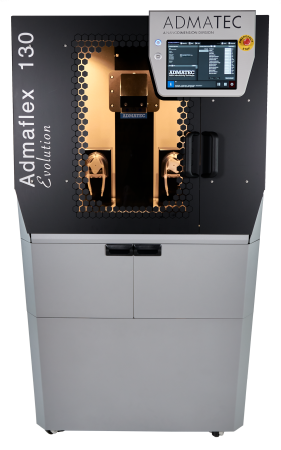
    Nano Dimension is a leading purveyor of cutting-edge 3D printing technology, specializing in Additively Manufactured Electronics and multi-dimensional polymer, metal & ceramic Additive Manufacturing 3D printers. The Admaflex130, which is the printer in question, is an outstanding product that was acquired in July 2022 from Admatec Europe B.V. This remarkable device possesses the capacity to produce a wide variety of materials, including ceramics and metals, with an astonishing degree of precision. Its Digital Light Processing (DLP) technology makes it ideal for research and development projects and 24/7 digital serial production of functional parts requiring complex geometries, high resolution, fine details, and smooth surface finishes, while maintaining exceptional material properties.

    What sets the Admaflex130 apart from the crowd is its unparalleled flexibility, allowing users to design bespoke materials and customize all printing parameters. This versatility is especially vital in research projects such as the one currently being undertaken at NASA. The efficacy of the project is contingent on the ability to print the sodium-ion batteries with exactitude, and the Admaflex130’s capacity for high-precision printing will undoubtedly prove invaluable.

    Admaflex130 – Nano Dimension

    The installation of Nano Dimension’s 3D printer at NASA’s Marshall Space Flight Center represents a significant milestone in the 3D printing industry. It speaks volumes about the printer’s reliability and quality, and NASA’s decision to trust it implicitly is a ringing endorsement of its capabilities. It also underscores the growing importance of 3D printing in research and development projects, particularly within the aerospace industry.

    Yoav Stern, Chairman and Chief Executive Officer of Nano Dimension, expressed his delight at the installation, saying, “It is difficult to imagine collaborating with an organization that is pushing the envelope of space exploration as comprehensively as NASA. We are immensely proud that they have chosen the Admaflex130 from Nano Dimension. Our team took a risk in developing a printer that could print multiple materials while maintaining open parameter settings, and they achieved remarkable success. We are confident that this system will empower NASA’s pioneering leaders to manufacture innovative applications. And who knows? Perhaps one day soon, we will see one such application making its way to Mars.”

    The installation of Nano Dimension’s 3D printing system at NASA’s Marshall Space Flight Center marks a turning point in the aerospace industry’s use of 3D printing technology. 3D printing has the potential to revolutionize the manufacturing process of various aerospace components, including engine parts, turbine blades, and even entire rocket engines. Moreover, 3D printing technology can help reduce the weight of these components, a crucial consideration for spaceflight, as every gram counts.

    NASA has been using 3D printing technology to manufacture parts for its spacecraft since the 1990s, but with recent advancements, we are only now beginning to see the technology’s true potential. The installation of Nano Dimension’s 3D printing system at NASA’s Marshall Space Flight Center is just one example of how 3D printing technology is being used to push the boundaries of what is possible in space exploration. With this cutting-edge technology, NASA can now rapidly produce complex parts that would have been difficult or impossible to manufacture using traditional methods. This not only saves time and money, but also enables NASA to create custom parts on-demand, reducing the need for large inventories of spare parts. Furthermore, 3D printing technology allows NASA to experiment with new designs and materials, which could lead to lighter, stronger, and more efficient spacecraft in the future. As the technology continues to evolve, we can expect to see even more exciting applications of 3D printing in space exploration and beyond.

    via Nano Dimension

  • Process Selection for Metal Additive Manufacturing

    Process Selection for Metal Additive Manufacturing

    In the early days of laser powder bed fusion (L-PBF) additive manufacturing (AM), there were significant limitations to the build size of the machines. However, as with all technology, advancements have been made, and machine builders have addressed that drawback by introducing larger L-PBF machines with expansive build volumes. This has opened up new possibilities for manufacturers, as larger machines mean larger parts can be produced in a single print.

    However, as these machines grow, their size capability approaches that of directed energy deposition (DED) machines. Concurrently, DED machines have gained additional axes of motion which enable increasingly complex part geometries—resulting in near-overlap in capabilities at the large end of the L-PBF build size. This convergence of capabilities between L-PBF and DED machines has led to a blurring of the lines of demarcation between different processes.

    Furthermore, competing technologies, such as binder jet AM and metal material extrusion, have also increased in capability, albeit with different starting points. Binder jet AM, for example, is a process that involves jetting a binder onto a bed of powder particles, which are then sintered together to create a solid part. Metal material extrusion, on the other hand, involves the extrusion of a continuous strand of metal through a nozzle, which is then melted and deposited layer by layer to create the desired part. These competing technologies offer their own unique advantages and disadvantages, but as with L-PBF and DED, the lines between them are becoming blurred as they advance in capability.

    This is why it is important for product teams to carefully consider the strengths and weaknesses of each process when selecting the most appropriate one for their application. The approach outlined in Internal Boundaries of Metal Additive Manufacturing: Future Process Selection provides a framework for doing just that.

    The first step in this approach is to define the requirements of the application. This involves considering factors such as part size, complexity, and material properties. For example, if the part needs to be large and structurally sound, a process like DED or metal material extrusion may be more appropriate than L-PBF. Conversely, if the part is small and intricate, L-PBF may be the better choice.

    II International Conference on Simulation for Additive Manufacturing – Sim-AM 2019” by unipavia is licensed under CC BY 2.0.

    Once the requirements have been defined, the next step is to assess the strengths and weaknesses of each process in relation to those requirements. This involves considering factors such as build volume, surface finish, and material properties. For example, L-PBF is known for its high surface finish and ability to produce parts with fine detail, while DED is better suited for producing large, structurally sound parts with rougher surface finishes.

    The third step is to evaluate the economic viability of each process. This involves considering factors such as equipment cost, material cost, and production time. For example, L-PBF may be more expensive than metal material extrusion in terms of equipment cost, but it may offer a faster production time, making it more economical for certain applications.

    TechnologySpeedCostResolutionMaterial PropertiesInvestment NeedProsCons
    Laser Powder Bed Fusion (L-PBF)MediumHighHighHighHighHigh surface finish, good for intricate partsLimited build volume, slow production time, high equipment cost
    Directed Energy Deposition (DED) – PowderMediumHighLowMediumHighLarge build volume, strong and dense partsRough surface finish, limited resolution, high equipment cost
    Binder Jet Additive Manufacturing (BJAM)FastLowLowMediumMediumFast production time, good for large partsLimited material properties, may require additional post-processing
    Sheet LaminationFastLowMediumLowHighLow equipment cost, can use various materialsLimited resolution, limited material properties
    Directed Energy Deposition (DED) – Wire-fedFastHighLowMediumMediumLarge build volume, good for repairing or adding material to existing partsLimited resolution, rough surface finish
    Electron Beam Melting (EBM)MediumHighHighHighHighHigh material purity, strong and dense partsLimited resolution, high equipment cost

    The final step is to weigh all of the factors considered in the previous steps and make a decision based on the overall suitability of each process for the application. This involves considering factors such as part performance, cost, and production time. For example, if the part needs to be large and structurally sound, DED may be the best choice despite its longer production time and higher equipment cost. Conversely, if the part is small and intricate, L-PBF may be the most economical choice despite its higher material cost.

    It is important to note that the approach outlined on this post is not a one-size-fits-all solution. Each application will have its own unique set of requirements, and the most appropriate process will depend on a variety of factors. However, by following this approach, product teams.

  • The Ethical Implications of Additive Manufacturing

    The Ethical Implications of Additive Manufacturing

    Additive manufacturing, also known as 3D printing, is a rapidly growing technology that allows for the creation of complex and intricate objects through the layer-by-layer deposition of materials. While 3D printing has been around for several decades, recent advances in technology and materials have made it more accessible and affordable, leading to its increased adoption in a variety of industries. However, as with any new technology, there are ethical implications to consider.

    One of the most significant ethical implications of additive manufacturing is the potential impact on jobs. Traditional manufacturing and distribution channels rely on large factories and assembly lines, which employ thousands of workers. However, 3D printing allows for the creation of customized, on-demand products with minimal human intervention. This means that many traditional manufacturing jobs may become obsolete, leaving workers without employment or requiring them to retrain in new fields. 2 operators can easly manage to run 10-15 machines since the most of the printing process is autonomous.

    It is essential to recognize that the displacement of workers is not unique to 3D printing. Automation and other technological advances have been impacting the job market for decades, and there is no easy solution to this problem. However, it is crucial to ensure that the benefits of additive manufacturing are shared fairly and that workers are not left behind in the transition to a more automated future.

    One potential solution is to invest in education and training programs to help workers develop the skills they need to adapt to the changing job market. For example, workers who previously operated assembly lines may be able to retrain as designers or technicians, working with 3D printers to create and maintain machines or products. Additionally, policies such as universal basic income or a shorter workweek may help ease the transition and ensure that workers have the financial stability to weather these changes.

    Another ethical consideration is the impact of additive manufacturing on the environment. While 3D printing can be more energy-efficient and produce less waste than traditional manufacturing methods, it still requires the use of materials such as plastics, which are not biodegradable and can have a significant environmental impact.

    To mitigate these negative effects, it is essential to explore alternative materials that are more sustainable and environmentally friendly. For example, researchers are exploring the use of bioplastics, which are made from renewable resources such as cornstarch or sugarcane and are biodegradable. Additionally, recycling programs for 3D printing materials can help reduce waste and ensure that materials are reused rather than discarded.

    Another potential solution is to encourage the use of 3D printing for products that have a low environmental impact. For example, 3D printing could be used to create customized medical devices, reducing the need for mass-produced products that may be over-engineered or require excessive packaging. Similarly, 3D printing could be used to create replacement parts for machines or appliances, extending their lifespan and reducing the amount of waste generated.

    A final ethical consideration is the potential for 3D printing to disrupt traditional distribution channels. With 3D printing, products can be created on-demand, reducing the need for large warehouses and shipping networks. This could potentially lead to the decentralization of manufacturing and a shift towards localized production.

    While this may have benefits such as reducing shipping emissions and increasing the availability of customized products, it could also lead to a concentration of power in the hands of those who control the 3D printing technology. Additionally, the loss of economies of scale could lead to higher costs for consumers.

    To address these concerns, it is essential to ensure that 3D printing technology is widely available and accessible. This may require government investment in research and development, as well as policies that promote competition and innovation in the 3D printing industry. Additionally, it may be necessary to regulate the use of 3D printing to ensure that it is used ethically and responsibly.

    In conclusion, additive manufacturing has the potential to revolutionize the way we create and distribute products.

  • Additive Manufacturing in the Medical Industry: Opportunities and Challenges

    Additive Manufacturing in the Medical Industry: Opportunities and Challenges

    Additive Manufacturing (AM) has completely changed the way we create products, by adding layer upon layer of material to create three-dimensional objects. The medical industry has also adopted this technology, using it to produce customized implants, prosthetics, and other medical devices. The use of AM in medicine has resulted in better patient outcomes, lower costs, and quicker production times. However, there are still some challenges that need to be addressed.

    Opportunities

    One of the biggest opportunities for additive manufacturing (AM) in the medical industry is the ability to create customized medical devices. This is particularly important because every patient is unique, and their medical needs vary. With AM, medical professionals can create implants, prosthetics, and other medical devices that are tailored to each patient’s specific needs, ensuring that they receive treatment that is more effective, comfortable, and efficient.

    Moreover, AM has allowed medical professionals to create models of organs and body parts that can aid them in planning surgeries and other medical procedures. These models can provide a better visualization of the patient’s anatomy, giving medical professionals a better understanding of the complexity of the case they are dealing with. This helps them to plan the surgery or procedure more effectively, reducing the risks and increasing the chances of success.

    In addition, AM has significant potential to reduce costs in the medical industry. Traditional manufacturing processes are often expensive and time-consuming. With AM, medical professionals can produce medical devices faster and more efficiently. This means that hospitals and healthcare providers can save money on manufacturing costs, and patients can save money on treatment costs. Furthermore, AM can help to reduce the amount of waste generated in the manufacturing process, making it a more environmentally friendly option.

    Challenges

    Despite the many opportunities that additive manufacturing (AM) presents, there are still a number of challenges that need to be overcome if it is to become a widely adopted technology in the medical industry.

    One of the biggest challenges is the lack of regulatory guidelines. While the medical industry is highly regulated, with strict guidelines in place for the manufacture and use of medical devices, these guidelines have not yet caught up with the use of AM in the medical industry. As a result, there is a risk of creating medical devices that do not meet safety standards, which could have serious consequences for patients and healthcare providers alike.

    In addition to the regulatory challenges, there is also a need for specialized training. AM technology is still relatively new, and many medical professionals do not have the training and expertise needed to use it effectively. This means that there is a need for specialized training programs to teach medical professionals how to use AM technology. Without such training programs, it will be difficult for medical professionals to fully understand the potential of AM and to use it to its fullest extent.

    Furthermore, there is also a challenge in terms of cost. While AM has the potential to revolutionize the medical industry by allowing for the production of personalized medical devices, the cost of AM technology and materials is often prohibitively high. This means that many healthcare providers may not be able to afford to invest in this technology, which could limit its adoption and impact.

    Finally, there is the challenge of scalability. While AM has shown promise in creating personalized medical devices, it has not yet been proven to be effective on a large scale. This means that there is still work to be done to ensure that AM can be used effectively in mass production settings, which will be necessary if it is to become a widely adopted technology in the medical industry.

    Conclusion

    AM presents numerous opportunities for the medical industry. One of the most promising aspects of AM is its potential to revolutionize the way we manufacture medical devices. Traditional manufacturing methods can be time-consuming and costly, and often require the production of large quantities of items. AM technology, on the other hand, allows for the production of custom-made medical devices in a much shorter timeframe.

    Another major opportunity presented by AM is the potential to transform the way we treat patients. With the ability to create patient-specific medical devices, such as implants or prosthetics, doctors can provide more personalized care to their patients. This can result in better outcomes and a higher quality of life for patients.

    However, as with any new technology, there are still challenges that need to be overcome before AM can be widely adopted in the medical industry. For example, regulatory guidelines need to be developed to ensure the safety and effectiveness of AM medical devices. This is especially important given the highly regulated nature of the medical industry. In addition, there is a need for specialized training programs to teach medical professionals how to use AM technology. This will be crucial in ensuring that healthcare providers are able to fully utilize the potential of AM in their practice.

    Overall, if these challenges can be addressed, AM has the potential to transform the way we approach healthcare. By providing more personalized care and more efficient manufacturing processes, AM can help to improve the quality of life for patients and reduce healthcare costs for individuals and healthcare systems alike.

  • Is 3D Printing the Key to Colonizing Mars, or Just a Science Fiction Fantasy?

    Is 3D Printing the Key to Colonizing Mars, or Just a Science Fiction Fantasy?

    Since the dawn of space exploration, humanity has been fascinated by the possibility of colonizing other planets. Mars, in particular, has captured the imagination of scientists, engineers, and the general public alike. However, the challenges of establishing a human settlement on the Red Planet are enormous, and many experts believe that it will require a combination of innovative technologies to make it possible. One such technology that has been suggested as a potential key to Mars colonization is 3D printing.

    3D printing, also known as additive manufacturing, is a process in which digital 3D models are transformed into physical objects by building up layers of material. This technology has already been used to create a wide range of products, from medical implants and prosthetics to airplane parts and even entire buildings. In the context of space exploration, 3D printing has the potential to revolutionize the way that we build structures and create tools and equipment.

    One of the key advantages of 3D printing in the context of Mars colonization is the ability to manufacture objects on-site, using locally available materials. Mars is rich in resources such as iron, aluminum, and silicon, which can be used as raw materials for 3D printing. This means that instead of having to transport everything from Earth, we could potentially build many of the structures and tools needed for a Martian settlement using materials that are already on the planet. This would greatly reduce the cost and complexity of the mission, and make it more feasible in the long run.

    Another advantage of 3D printing is the ability to create complex geometries and designs that would be difficult or impossible to produce using traditional manufacturing techniques. This is particularly important in the context of space exploration, where weight and volume are at a premium. By using 3D printing to create lightweight, optimized structures, we can reduce the amount of material that needs to be transported to Mars, and make the mission more efficient.

    One of the most exciting applications of 3D printing in the context of Mars colonization is the potential to print habitats and other structures using locally sourced materials. NASA, in partnership with the University of Southern California, has already developed a prototype Mars habitat that was printed using a mixture of basaltic rock and a binding agent. This structure was designed to be strong, lightweight, and radiation-resistant, and could potentially be scaled up to create larger habitats and structures in the future.

    In addition to habitats, 3D printing could also be used to create other types of infrastructure on Mars, such as roads, landing pads, and storage facilities. These structures could be built using a variety of materials, including regolith (the loose, rocky material that covers the surface of Mars), which could be processed and used as a building material.

    However, while the potential benefits of 3D printing for Mars colonization are clear, there are also significant challenges and limitations to consider. One of the biggest challenges is the harsh environment of Mars, which presents a number of technical hurdles that must be overcome in order to make 3D printing feasible. For example, the low atmospheric pressure on Mars could make it difficult to create a stable printing environment, and the extreme temperatures could cause problems with the printing process and the materials being used.

    Another challenge is the availability and quality of local resources. While Mars has a wealth of raw materials that could be used for 3D printing, it is not yet clear how easily these materials can be processed and transformed into usable materials. There are also concerns about the quality and consistency of the materials, which could affect the strength and durability of the printed structures.

    Despite these challenges, there is a growing body of research and development focused on using 3D printing for Mars colonization. In addition to NASA’s efforts, private companies such as SpaceX and Blue Origin are also exploring the potential of 3D printing for space exploration and settlement.

    One of the key areas of research is the development of new printing materials and techniques that are specifically designed for the Martian environment. For example, researchers at the European Space Agency are exploring the use of a type of biopolymer that can be produced using bacteria and can be used as a building material for 3D printing. This material is lightweight, durable, and can be produced using organic matter that could be found on Mars.

    Another area of research is focused on creating robots and other automated systems that can operate autonomously on Mars, including the ability to perform 3D printing tasks. For example, NASA’s InSight lander has a robotic arm that could potentially be used for 3D printing tasks, while the Mars 2020 mission included a small helicopter drone that could be used to scout potential 3D printing sites.

    Despite the challenges and limitations of 3D printing for Mars colonization, there is no doubt that it has the potential to play a significant role in the future of space exploration and settlement. By allowing us to manufacture objects on-site using locally available materials, 3D printing could greatly reduce the cost and complexity of missions to Mars and other planets. It could also enable us to create structures and infrastructure that are optimized for the unique conditions of extraterrestrial environments, ultimately making it possible to establish permanent human settlements beyond Earth.

    In conclusion, while 3D printing may have once seemed like a science fiction fantasy, it is now a very real and promising technology that could play a critical role in the future of space exploration and colonization. While there are still many challenges and limitations to overcome, the potential benefits of using 3D printing for Mars colonization are too great to ignore. As researchers and engineers continue to push the boundaries of this technology, we may be one step closer to making the dream of a human settlement on Mars a reality.

  • Terran 1, world’s first 3D printed rocket Revolutionizes Aerospace

    Terran 1, world’s first 3D printed rocket Revolutionizes Aerospace

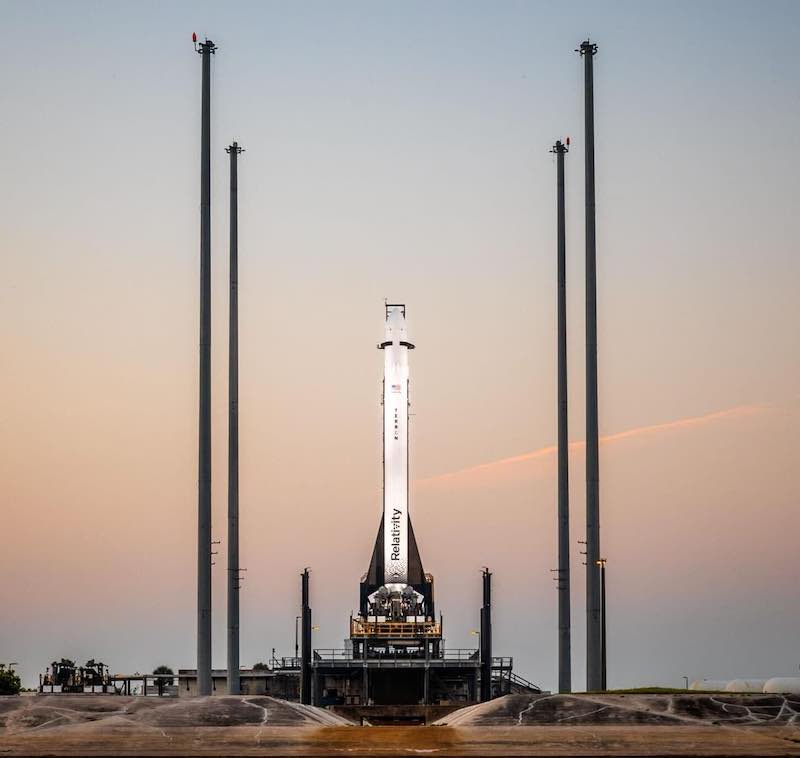
    Relativity Space writing the history by launching the world’s first 3D printed rocket, the Terran 1. This groundbreaking achievement will be a significant milestone in the aerospace industry and represents a revolutionary shift in the way we design and build rockets.

    Traditionally, rocket manufacturing has been a complex and expensive process that involves a large number of parts and specialized equipment. But with 3D printing, the potential to simplify this process and make it more cost-effective is enormous. Relativity Space has leveraged this potential to create a rocket that goes from raw material to flight, integrating artificial intelligence, robotics, and autonomous manufacturing technology.

    The Terran 1 is not only a technological marvel, but it also marks a significant shift in the aerospace industry. With 85% of its mass being 3D printed, the rocket’s primary structures are printed using a proprietary metal aluminum alloy developed in-house by Relativity. This enables the company to radically simplify the aerospace manufacturing supply chain, leading to greater flexibility and customization.

    The rocket is an expendable two-stage launch vehicle powered by liquid natural gas (LNG) and liquid oxygen (LOX) designed for future constellation deployment and resupply. It can launch up to 1,250 kilograms to low Earth orbit (LEO) for dedicated, multi-manifest and rideshare missions. With nine 3D printed Aeon 1 engines on the first stage and one 3D printed Aeon Vacuum (Vac) engine on the second stage, the rocket is 110 feet in height by 7.5 feet in diameter.

    You can watch the live launch stream above.

    The Aeon engines are fueled by liquid natural gas and liquid oxygen, utilizing the gas generator engine cycle. The tanks are autogenously pressurized with gaseous natural gas and gaseous oxygen via heat exchangers integrated into the engines. Relativity Space’s Stargate metal 3D printers enable rapid product iteration, unlocking significant improvements to product development and production.

    The potential of 3D printing in the aerospace industry is vast. The ability to print rocket parts on-demand can revolutionize the way we design and build rockets. With 3D printing, we can reduce the time it takes to produce rocket parts, reduce the cost of manufacturing, and increase the efficiency of the manufacturing process. This could lead to faster and more cost-effective space exploration.

    Relativity Space is building a highly attractive launch service offering by designing and manufacturing reusable rockets that offer high performance and reliability, while costing less to produce and fly. The company’s innovative approach to aerospace manufacturing is driving the inevitable shift toward software-defined manufacturing, which will drive innovation on and off planet Earth.

    Terran 1 – Relativityspace

    The Terran 1 launch is just the beginning of a new era in space exploration. With 3D printing and other advanced manufacturing technologies, we can revolutionize the way we explore space. The potential of additive manufacturing is vast, and we are excited to see what the future holds for this innovative technology.

    3D printing is not only a game-changer for rocket manufacturing but also for spacecraft components, satellites, and other equipment used in space exploration. This could lead to more cost-effective and efficient space missions, making it easier to explore our solar system and beyond.

    At Addithive, we are excited to see Relativity Space and other companies pushing the boundaries of what is possible with additive manufacturing. We believe that 3D printing has the potential to change the world, and we are thrilled to see how it will transform the aerospace industry and beyond.

    The Terran 1 launch is a testament to the potential of additive manufacturing to revolutionize the industry. The rocket is not only a technological marvel but also a symbol of a significant shift in the way we think about space exploration. We are excited to see what the future holds for