

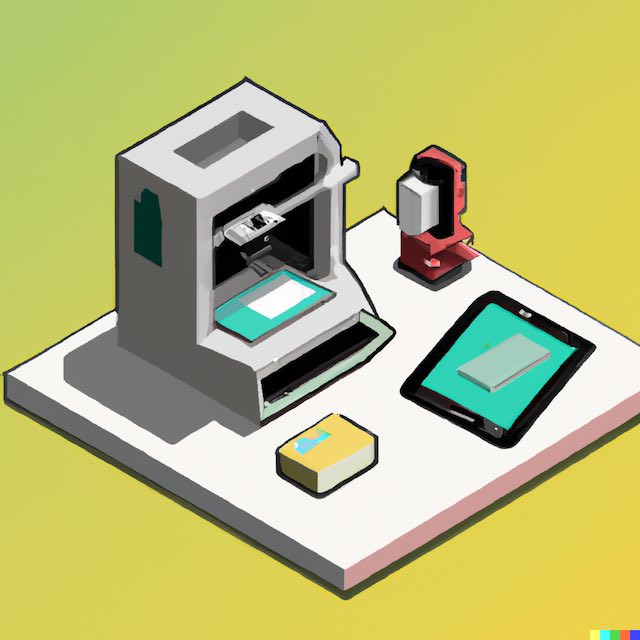
In recent years, additive manufacturing (AM), commonly known as 3D printing, has been transforming the way products are designed, prototyped, and produced. The technology has come a long way since its humble beginnings in the 1980s when Charles Hull first introduced the stereolithography process. Today, additive manufacturing spans across various industries, from healthcare and automotive to aerospace and consumer goods, offering unique design possibilities, reduced waste, and faster product development cycles.
However, like many emerging technologies, additive manufacturing has experienced its fair share of ups and downs, especially as it has navigated through the hype cycle. The hype cycle, coined by Gartner, is a graphical representation of the maturity, adoption, and social application of specific technologies. It consists of five phases: the innovation trigger, peak of inflated expectations, trough of disillusionment, slope of enlightenment, and plateau of productivity. Currently, the additive manufacturing industry is thought to be in the trough of disillusionment, a phase characterized by waning interest, failed implementations, and negative press.
Understanding the current state of the additive manufacturing industry is crucial for businesses, investors, and enthusiasts alike, as it offers insights into the challenges and opportunities that lie ahead. In this blog post, we will delve into the factors that have contributed to the trough of disillusionment, explore the emerging trends and technologies that hold promise for the future of additive manufacturing, and discuss ways to overcome the current challenges and foster a more sustainable and productive industry. By staying informed and engaged, we can help additive manufacturing overcome the trough of disillusionment and reach its full potential, transforming the way we design, produce, and consume products in the process.
Understanding the Trough of Disillusionment
The trough of disillusionment is the third phase of the hype cycle, following the peak of inflated expectations. It represents a period where the initial excitement surrounding a technology begins to wane, and reality sets in as the technology fails to meet the overly optimistic expectations set by the hype. This phase is marked by negative press, skepticism, and even the failure of some companies that were unable to navigate the challenging environment. However, it is also during this time that the technology starts to mature, as organizations learn from past mistakes and work on refining the technology, processes, and applications.

The rapid advancements in additive manufacturing technology, coupled with media hype, led many people to believe that 3D printing would revolutionize every aspect of our lives overnight. This resulted in unrealistic expectations about the technology’s capabilities, applications, and its potential to disrupt traditional manufacturing. The overhyped expectations set the stage for disappointment, as the technology’s limitations and challenges became more apparent.
While additive manufacturing has made significant progress in recent years, there are still several technical challenges that need to be addressed before it can fully replace traditional manufacturing processes. Some of these limitations include the relatively slow printing speeds, limited range of materials, and issues with part quality and consistency. Additionally, there have been concerns surrounding the accuracy and repeatability of 3D printed parts, as well as the post-processing requirements that can add time and cost to the overall production process.
Another factor that has contributed to the trough of disillusionment is the challenge of scaling additive manufacturing to compete with conventional manufacturing methods in terms of cost, efficiency, and production volumes. While 3D printing has proven to be highly effective for producing prototypes and small-scale production runs, it is often not economically viable for mass production due to its relatively high costs and slower production speeds. Furthermore, the lack of standardized processes, software, and equipment has made it challenging for businesses to adopt and integrate additive manufacturing into their existing production workflows seamlessly.
In the next section, we will explore emerging trends and technologies that aim to overcome these challenges and push additive manufacturing into the next phase of the hype cycle, the slope of enlightenment.
Emerging Trends and Technologies in Additive Manufacturing
One of the most promising trends in additive manufacturing is the development of high-performance polymers, which offer enhanced mechanical properties, chemical resistance, and thermal stability compared to traditional plastics. These materials have the potential to expand the range of applications for 3D printing, particularly in industries such as aerospace, automotive, and medical devices, where high-performance materials are often required.
The introduction of metal and ceramic materials in additive manufacturing has opened up new possibilities for creating complex, high-strength parts that were previously impossible or extremely difficult to produce using traditional methods. As the technology continues to advance, we can expect to see even more innovative applications for metal and ceramic 3D printing, such as lightweight components for aerospace and automotive industries or custom, patient-specific implants for medical applications.
Multi-material printing is an emerging trend that allows for the simultaneous use of multiple materials within a single print job. This capability enables the production of parts with varying properties, such as combinations of rigid and flexible materials or even the incorporation of electrical circuits within the printed object. Multi-material printing has the potential to unlock new design possibilities and create parts with unprecedented functionality.
Voxel-based printing is a revolutionary approach to 3D printing that allows for precise control over the material properties at the voxel level (a voxel is a three-dimensional equivalent of a pixel). This technology enables designers to create parts with varying mechanical, thermal, or optical properties within a single object, paving the way for highly complex and functional parts.

As additive manufacturing technology continues to evolve, we are seeing significant improvements in printing speeds. Faster printing speeds will not only reduce production times for prototypes and small-scale production runs but also make 3D printing more competitive with traditional manufacturing methods for mass production.
The integration of the Internet of Things (IoT) and data analytics in additive manufacturing enables real-time monitoring and optimization of the printing process. This can lead to improved efficiency, reduced waste, and enhanced part quality, ultimately making additive manufacturing more attractive for a wider range of applications.
Artificial Intelligence (AI) and machine learning algorithms can help optimize the additive manufacturing process by analyzing large amounts of data, identifying patterns, and making predictions to improve part quality, reduce printing times, and minimize material waste. AI-driven software can also help streamline the design process, making it easier for engineers and designers to create optimized, lightweight structures and complex geometries.
As additive manufacturing matures, it is increasingly being integrated into traditional production workflows. This trend, combined with advancements in materials and printing technologies, is helping to create hybrid manufacturing systems that leverage the strengths of both additive and traditional manufacturing methods. By integrating 3D printing into the production chain, manufacturers can benefit from increased flexibility, faster product development cycles, and reduced inventory costs.
Overcoming Challenges in Additive Manufacturing
One of the primary challenges in the additive manufacturing industry is the lack of skilled professionals who possess the necessary knowledge and expertise to work with these technologies. To bridge this skills gap, more education and training programs should be developed and made accessible to students, professionals, and engineers interested in 3D printing. These programs can cover topics such as design for additive manufacturing, materials science, and process optimization, ensuring a well-rounded understanding of the technology and its applications.
Building strong partnerships between educational institutions and industry players can help ensure that the curriculum remains relevant to the ever-evolving demands of the job market. These collaborations can take the form of joint research projects, internships, or even the development of specialized courses and training programs tailored to the needs of the industry.
Creating a culture of innovation within organizations is crucial for encouraging the adoption of additive manufacturing. This can involve promoting a mindset of experimentation, investing in research and development, and providing employees with the resources and opportunities to learn about and work with the technology. Companies that actively embrace additive manufacturing as a strategic part of their business are more likely to overcome the challenges and reap the benefits of this transformative technology.
Government support in the form of incentives, grants, and tax breaks can help drive the adoption of additive manufacturing by reducing the initial investment required for businesses to implement the technology. Additionally, the establishment of industry standards and regulations can help promote trust and confidence in the quality, safety, and performance of 3D printed products, further encouraging adoption.
Real-world Applications and Success Stories
Additive manufacturing has made a significant impact on the medical and dental fields by enabling the production of customized, patient-specific devices and implants. Examples include 3D printed prosthetics, surgical guides, and dental crowns, which can be tailored to the unique anatomy of each patient for improved fit and comfort. Additionally, researchers are making strides in the field of bioprinting, with the potential to create functional human tissues and organs for transplantation, drug testing, and disease modeling.
The automotive and aerospace industries have been early adopters of additive manufacturing technology, leveraging its benefits to create lightweight, complex, and high-performance components. Airbus has integrated 3D printed parts into aircraft, while automotive companies such as BMW and Ford use additive manufacturing for prototypes, tooling, and selected end-use parts.
The consumer goods and electronics sectors have also benefited from the capabilities of additive manufacturing. Examples include the production of customized eyewear frames, smartphone cases, and even footwear, which can be tailored to individual preferences and needs. Additionally, electronics manufacturers are exploring the use of 3D printing to create compact, lightweight, and intricate components, such as circuit boards, sensors, and antennas.
Additive manufacturing is increasingly being used in the construction and architecture industries to create unique, customizable, and sustainable structures. 3D printed buildings have been constructed using a variety of materials, including concrete, polymers, and even recycled plastics. These structures offer the potential for reduced construction times, lower labor costs, and less material waste. Furthermore, 3D printing enables the creation of complex geometries and intricate designs that would be difficult or impossible to achieve using traditional construction methods.
Conclusion
As the additive manufacturing industry navigates the trough of disillusionment, it is essential to recognize that this phase is a natural part of the technology’s maturation process. The challenges faced today will serve as catalysts for innovation, paving the way for a more sustainable, productive, and widespread adoption of 3D printing in the future. By addressing the technological limitations, scaling challenges, and fostering a culture of innovation, additive manufacturing is poised to enter the next phase of the hype cycle, the slope of enlightenment, and ultimately, the plateau of productivity.
The advancements in materials, printing technologies, and integration with Industry 4.0 and smart manufacturing open up a myriad of opportunities and potential growth areas for additive manufacturing. These innovations will enable the technology to penetrate new markets, create novel applications, and drive further disruption in traditional manufacturing sectors. As the industry continues to evolve, it is crucial for businesses, investors, and enthusiasts to recognize the potential for growth and stay informed about the latest developments in the field.
To ensure that you are well-positioned to capitalize on the opportunities presented by additive manufacturing, we encourage you to stay informed and engaged in the 3D printing community. This includes following industry news, participating in forums and conferences, and collaborating with others who share your passion for this transformative technology. By staying connected and informed, you can help shape the future of additive manufacturing and play a part in unlocking its full potential.
If you’re interested in learning more about the latest trends, technologies, and success stories in additive manufacturing, be sure to subscribe to our blog and follow us on social media. Together, we can navigate the trough of disillusionment and drive the industry towards a more prosperous, innovative, and sustainable future.
Leave a Reply