

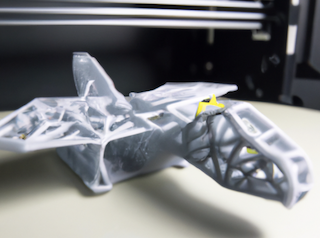
Additive manufacturing, also known as 3D printing, has revolutionized the manufacturing industry. It has transformed the way products are designed and produced, allowing for faster production times, reduced waste, and increased customization. The aerospace industry has also taken notice of the benefits of additive manufacturing and has begun to implement this technology in their manufacturing processes. In this blog post, we will explore the future of aerospace manufacturing with additive manufacturing.

Additive manufacturing offers several advantages to the aerospace industry. Some of the advantages are:
- Lightweighting: Additive manufacturing allows for the creation of complex and lightweight structures that were previously impossible to produce with traditional manufacturing methods. The ability to create lightweight structures is crucial in aerospace, as it helps to reduce fuel consumption and increase the range of aircraft.
- Customization: Additive manufacturing allows for the creation of highly customized parts that are tailored to specific applications. This is particularly useful in aerospace, where each aircraft is unique and requires specialized components.
- Reduced Waste: Additive manufacturing is a highly efficient process that produces little to no waste. This is a significant advantage in aerospace, where material waste can be costly and detrimental to the environment.
- Faster Production Times: Additive manufacturing can produce parts much faster than traditional manufacturing methods. This is beneficial in the aerospace industry, where aircraft downtime is costly and must be minimized.
- Cost Savings: While the initial cost of setting up an additive manufacturing process can be high, the cost savings over time can be significant. Additive manufacturing allows for the production of parts on-demand, eliminating the need for large inventories of parts and reducing the cost of storage.
While additive manufacturing offers many advantages, it also has some disadvantages that must be considered. Some of the disadvantages are:
- Limited Materials: Additive manufacturing currently has limited material options compared to traditional manufacturing methods. This can be a disadvantage in aerospace, where certain materials are required to meet specific performance requirements.
- Surface Quality: The surface quality of parts produced through additive manufacturing can be inferior to those produced through traditional manufacturing methods. This can be a disadvantage in aerospace, where surface quality is essential for aerodynamic performance.
- Post-Processing: Parts produced through additive manufacturing often require post-processing to achieve the desired finish and performance characteristics. This can add time and cost to the manufacturing process.
- Equipment Maintenance: Additive manufacturing equipment requires regular maintenance to ensure optimal performance. This can be a disadvantage in aerospace, where downtime must be minimized.
As with any new technology, there are risks associated with additive manufacturing in aerospace. Some of the risks are:
- Quality Control: Additive manufacturing processes require stringent quality control measures to ensure that the parts produced meet the necessary standards for performance and safety.
- Cybersecurity: Additive manufacturing processes are vulnerable to cybersecurity threats, which could compromise the integrity of the parts produced.
- Intellectual Property Theft: Additive manufacturing processes can make it easier for individuals or companies to steal intellectual property, such as designs or proprietary information.
To mitigate these risks, aerospace companies must implement robust quality control measures, invest in cybersecurity measures, and protect their intellectual property through patents and trademarks.
Several aerospace companies have already implemented additive manufacturing processes in their manufacturing processes. Some of the successful examples are:
- Airbus: Airbus has used additive manufacturing to produce parts for their A350 XWB aircraft, including brackets, ducts, and titanium components. Additive manufacturing has allowed Airbus to reduce the weight of these parts and simplify the manufacturing process.
- Boeing: Boeing has used additive manufacturing to produce parts for their 787 Dreamliner aircraft, including titanium brackets and composite floor beams. Additive manufacturing has allowed Boeing
In conclusion, the future of aerospace manufacturing with additive manufacturing looks promising, with many advantages and opportunities for innovation. While there are some disadvantages and risks associated with additive manufacturing in aerospace, these can be mitigated with proper quality control measures and investment in cybersecurity and intellectual property protection. Successful examples of additive manufacturing in aerospace, such as Airbus and Boeing, demonstrate the potential of this technology to improve efficiency, reduce waste, and enhance performance. As additive manufacturing technology continues to evolve and expand, we can expect to see even more exciting advancements and applications in the aerospace industry.
Leave a Reply