

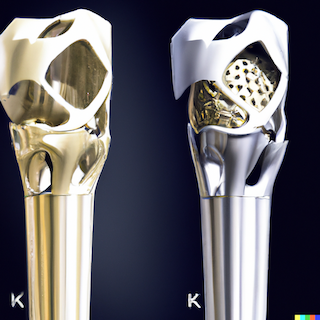
Additive Manufacturing (AM) has completely changed the way we create products, by adding layer upon layer of material to create three-dimensional objects. The medical industry has also adopted this technology, using it to produce customized implants, prosthetics, and other medical devices. The use of AM in medicine has resulted in better patient outcomes, lower costs, and quicker production times. However, there are still some challenges that need to be addressed.
Opportunities
One of the biggest opportunities for additive manufacturing (AM) in the medical industry is the ability to create customized medical devices. This is particularly important because every patient is unique, and their medical needs vary. With AM, medical professionals can create implants, prosthetics, and other medical devices that are tailored to each patient’s specific needs, ensuring that they receive treatment that is more effective, comfortable, and efficient.
Moreover, AM has allowed medical professionals to create models of organs and body parts that can aid them in planning surgeries and other medical procedures. These models can provide a better visualization of the patient’s anatomy, giving medical professionals a better understanding of the complexity of the case they are dealing with. This helps them to plan the surgery or procedure more effectively, reducing the risks and increasing the chances of success.
In addition, AM has significant potential to reduce costs in the medical industry. Traditional manufacturing processes are often expensive and time-consuming. With AM, medical professionals can produce medical devices faster and more efficiently. This means that hospitals and healthcare providers can save money on manufacturing costs, and patients can save money on treatment costs. Furthermore, AM can help to reduce the amount of waste generated in the manufacturing process, making it a more environmentally friendly option.

Challenges
Despite the many opportunities that additive manufacturing (AM) presents, there are still a number of challenges that need to be overcome if it is to become a widely adopted technology in the medical industry.
One of the biggest challenges is the lack of regulatory guidelines. While the medical industry is highly regulated, with strict guidelines in place for the manufacture and use of medical devices, these guidelines have not yet caught up with the use of AM in the medical industry. As a result, there is a risk of creating medical devices that do not meet safety standards, which could have serious consequences for patients and healthcare providers alike.
In addition to the regulatory challenges, there is also a need for specialized training. AM technology is still relatively new, and many medical professionals do not have the training and expertise needed to use it effectively. This means that there is a need for specialized training programs to teach medical professionals how to use AM technology. Without such training programs, it will be difficult for medical professionals to fully understand the potential of AM and to use it to its fullest extent.
Furthermore, there is also a challenge in terms of cost. While AM has the potential to revolutionize the medical industry by allowing for the production of personalized medical devices, the cost of AM technology and materials is often prohibitively high. This means that many healthcare providers may not be able to afford to invest in this technology, which could limit its adoption and impact.
Finally, there is the challenge of scalability. While AM has shown promise in creating personalized medical devices, it has not yet been proven to be effective on a large scale. This means that there is still work to be done to ensure that AM can be used effectively in mass production settings, which will be necessary if it is to become a widely adopted technology in the medical industry.

Conclusion
AM presents numerous opportunities for the medical industry. One of the most promising aspects of AM is its potential to revolutionize the way we manufacture medical devices. Traditional manufacturing methods can be time-consuming and costly, and often require the production of large quantities of items. AM technology, on the other hand, allows for the production of custom-made medical devices in a much shorter timeframe.
Another major opportunity presented by AM is the potential to transform the way we treat patients. With the ability to create patient-specific medical devices, such as implants or prosthetics, doctors can provide more personalized care to their patients. This can result in better outcomes and a higher quality of life for patients.
However, as with any new technology, there are still challenges that need to be overcome before AM can be widely adopted in the medical industry. For example, regulatory guidelines need to be developed to ensure the safety and effectiveness of AM medical devices. This is especially important given the highly regulated nature of the medical industry. In addition, there is a need for specialized training programs to teach medical professionals how to use AM technology. This will be crucial in ensuring that healthcare providers are able to fully utilize the potential of AM in their practice.
Overall, if these challenges can be addressed, AM has the potential to transform the way we approach healthcare. By providing more personalized care and more efficient manufacturing processes, AM can help to improve the quality of life for patients and reduce healthcare costs for individuals and healthcare systems alike.
Leave a Reply to Mastering Design for Laser Powder Bed Fusion Additive Manufacturing: A Comprehensive Guide – Addithive – 3D Printing | Additive Manufacturing BlogCancel reply