Additive manufacturing or 3D printing has revolutionized the manufacturing industry with its fast, efficient, and cost-effective production of parts. It has changed the way we think about manufacturing, leading to the emergence of disruptive startups that are pushing the boundaries of the industry. In this blog post, we will explore five startups that are leading the way in the additive manufacturing industry.
Summary
- Carbon’s Digital Light Synthesis™ technology enables faster and more accurate production of parts with excellent mechanical properties.
- Desktop Metal’s advanced technologies enable faster and more cost-effective production of metal parts.
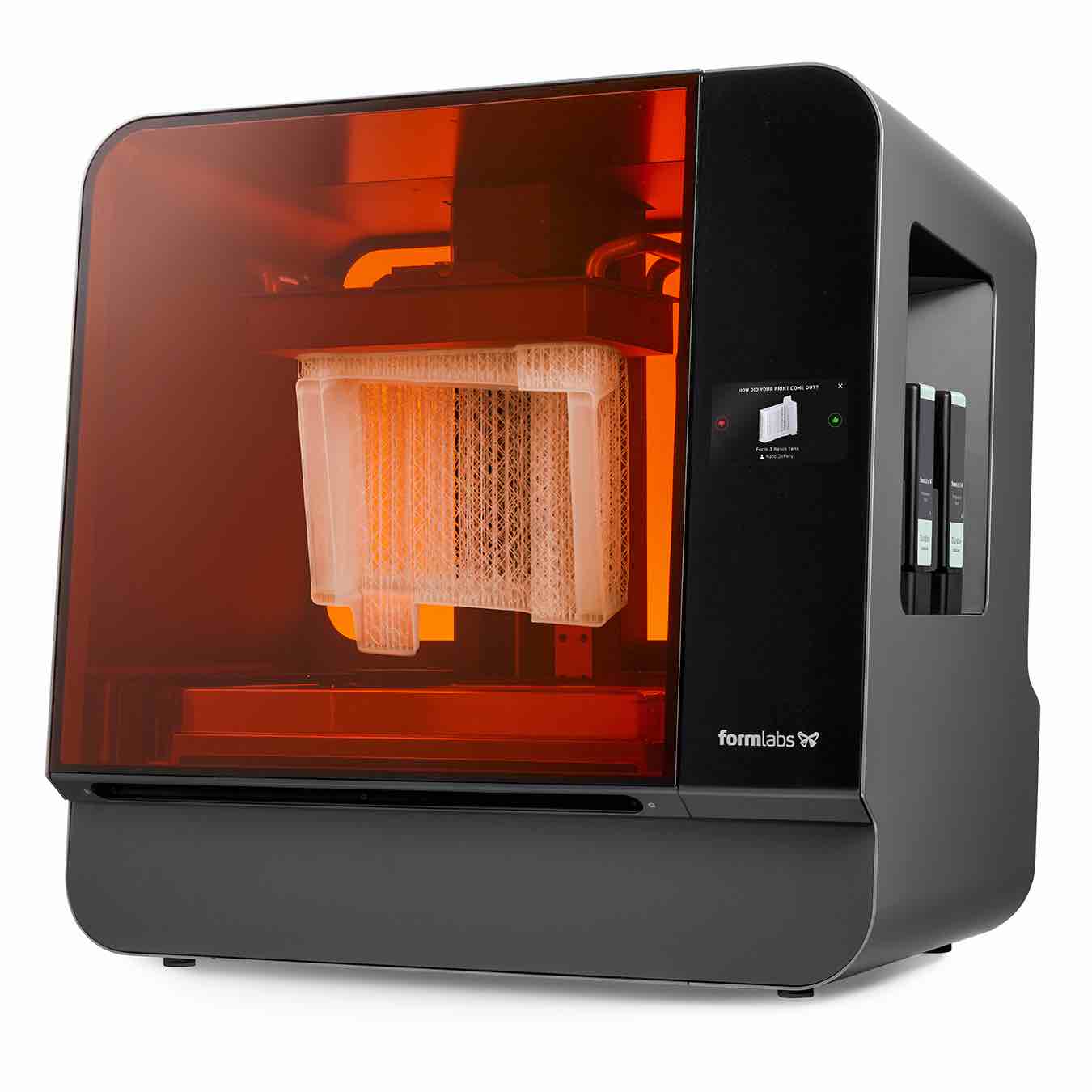
- Formlabs’ Form 3 and Form 3B printers use advanced stereolithography technology to produce highly detailed parts with exceptional accuracy.
- Xometry’s platform offers a range of manufacturing services, including 3D printing, CNC machining, and injection molding, allowing customers to access a range of manufacturing options in one place.
- Velo3D’s Sapphire™ system uses a unique technology that enables the production of highly complex metal parts with exceptional quality and precision.

1-Carbon
Carbon is a digital manufacturing company that provides a platform for producing end-use parts using a variety of materials. The company’s innovative Digital Light Synthesis™ technology is a photochemical process that utilizes a liquid photopolymer to produce parts layer by layer. This enables faster and more accurate production of parts with excellent mechanical properties, making it ideal for a range of industries including automotive, aerospace, and consumer goods.
One of the key benefits of Carbon’s technology is its ability to produce parts with excellent mechanical properties. The technology has been used to produce parts with strength and durability that are critical for these industries. Additionally, Carbon’s technology has been used to produce parts with complex geometries that would be difficult or impossible to produce using traditional manufacturing methods.
Carbon has also developed a range of resins that can be used with its technology, allowing for the production of parts with a range of properties, including high stiffness, low friction, and heat resistance. These resins are ideal for use in applications where specific properties are required.

2-Desktop Metal
Desktop Metal is a 3D printing company that has developed a range of metal 3D printers for use in industrial and manufacturing applications. The company’s advanced technologies, including binder jetting and single pass jetting, enable faster and more cost-effective production of metal parts. Desktop Metal’s technology has been used to produce parts for a range of industries, including aerospace, automotive, and medical.
One of the key benefits of Desktop Metal’s technology is its ability to produce complex metal parts quickly and cost-effectively. The technology utilizes a binder jetting process that selectively deposits a liquid binder onto a bed of metal powder, layer by layer, and then sintered to create a solid metal part. This process results in high-resolution parts with excellent mechanical properties, making it ideal for use in industries where complex geometries are common.
Desktop Metal has also developed a range of metal alloys that can be used with its technology, allowing for the production of parts with a range of properties. These alloys include stainless steel, titanium, and copper, among others, and are ideal for use in a range of applications.

3-Formlabs
Formlabs is a 3D printing company that produces high-quality desktop 3D printers for a range of industries, including dental, medical, and engineering. The company’s Form 3 and Form 3B printers use advanced stereolithography technology to produce highly detailed parts with exceptional accuracy. Formlabs’ technology has been used to produce parts for a range of applications, including dental implants, medical devices, and engineering prototypes.
One of the key benefits of Formlabs’ technology is its ability to produce highly detailed parts with exceptional accuracy. The technology utilizes a vat of liquid photopolymer that is selectively cured by a laser to create a solid part. This process results in high-resolution parts with exceptional accuracy, making it ideal for use in industries where precision is critical.
Formlabs has also developed a range of resins that can be used with its technology, allowing for the production of parts with a range of properties. These resins include biocompatible materials that are ideal for use in medical applications.
4-Xometry
Xometry is a marketplace that connects manufacturers with customers looking for custom parts. The company’s platform offers a range of manufacturing services, including 3D printing, CNC machining, and injection molding, allowing customers to access a range of manufacturing options in one place. Xometry’s platform has been used by companies in a range of industries, including aerospace, automotive, and consumer goods.
One of the key benefits of Xometry’s platform is its ability to provide customers with a range of manufacturing options in one place. This makes it easy for customers to find the manufacturing services they need without having to search for multiple vendors. Xometry’s platform also allows customers to access manufacturing services quickly and easily, which can help to speed up the production process.
Xometry’s platform also offers instant quoting and design feedback, which can help customers to optimize their designs for manufacturability. This can help to reduce costs and improve the quality of the final product. More info at Xometry
5-Velo3D
Velo3D is a 3D printing company that specializes in metal 3D printing for aerospace, automotive, and energy applications. The company’s Sapphire™ system uses a unique technology that enables the production of highly complex metal parts with exceptional quality and precision. Velo3D’s technology has been used to produce parts for a range of industries, including aerospace, automotive, and energy.
One of the key benefits of Velo3D’s technology is its ability to produce highly complex metal parts with exceptional quality and precision. The technology utilizes a process called SupportFree, which eliminates the need for support structures during the printing process. This allows for the production of highly complex parts that would be difficult or impossible to produce using traditional manufacturing methods.
Velo3D has also developed a range of metal alloys that can be used with its technology, allowing for the production of parts with a range of properties. These alloys include titanium, nickel-based alloys, and aluminum, among others, and are ideal for use in a range of applications. More info at Velo3d
Conclusion
In conclusion, these five startups are disrupting the additive manufacturing industry and changing the way we think about manufacturing. Each of these companies has developed innovative technologies that enable faster, more efficient, and more cost-effective production of parts than traditional manufacturing methods. As these technologies continue to improve and evolve, we can expect to see even more innovation and disruption in the manufacturing industry. The future of additive manufacturing is bright, and these startups are leading the way.