Tag: Space Exploration

  • Redwire Subsidiary Awarded Contract with European Space Agency to Revolutionize Tissue Manufacturing in Space and on Earth

    Redwire Subsidiary Awarded Contract with European Space Agency to Revolutionize Tissue Manufacturing in Space and on Earth

    In a groundbreaking development for the future of space exploration and biomedical research, Redwire Corporation, a prominent player in the space industry, has announced that its subsidiary, Redwire Space NV, has secured a 14 million euro contract from the European Space Agency (ESA). This exciting partnership aims to develop the 3D-BioSystem Facility, an advanced 3D bioprinting system that will enhance tissue manufacturing capabilities for long-duration space missions and have significant implications for life on Earth.

    A Giant Leap for Bioprinting:

    The 3D-BioSystem Facility, designed and developed by Redwire Space NV, will be a cutting-edge modular system that harnesses the power of 3D bioprinting technology. With its ability to sustain a multitude of experiments, this facility represents a significant leap forward in microgravity bioprinting capabilities. The system will consist of a 3D bioprinter, 3D cell culture units, and an incubator, enabling the production of tissue samples directly in space. These samples can then be further processed onboard or returned to Earth for further analysis and application.

    Paving the Way for Space Exploration:

    One of the primary goals of the 3D-BioSystem Facility is to enable long-duration spaceflight to destinations such as the Moon and Mars. The ability to bioprint cell constructs in microgravity is crucial for sustaining astronauts during these ambitious missions. By leveraging tissue engineering and regenerative medicine, the facility will contribute to the development of vital resources and medical treatments for space travelers. Moreover, the system could potentially revolutionize the way we understand cell-to-cell interactions, advance drug efficacy and toxicity testing through organoid creation, and pave the way for printing vascularized tissue and transplantable organ patches.

    International Space Station

    Advancing Biomedical Research on Earth:

    The impact of the 3D-BioSystem Facility extends far beyond the realm of space exploration. By enhancing our understanding of tissue engineering and bioprinting, the facility holds immense promise for improving healthcare and advancing medical research here on Earth. Through studying cell behavior in three-dimensional environments and investigating the effects of microgravity on tissue growth, scientists can gain crucial insights into complex diseases and develop innovative therapies. The facility’s potential applications range from personalized medicine to drug discovery, creating opportunities to address unmet medical needs and improve patient outcomes.

    Boosting European Technological Independence:

    The partnership between Redwire Space NV and the European Space Agency is also significant in terms of fostering European technological non-dependence and competitiveness. By developing state-of-the-art space infrastructure and leveraging advanced manufacturing techniques, Europe can secure its place as a leader in space innovation. This not only ensures the continent’s access to space benefits but also contributes to the expansion of the global space economy.

    International Space Station

    Redwire’s Track Record and On-Orbit Capabilities:

    Redwire Corporation has established itself as a frontrunner in microgravity bioprinting, exemplified by its BioFabrication Facility (BFF) currently operating on the International Space Station (ISS). The BFF-Meniscus-2 investigation, a collaboration between Redwire and the Uniformed Services University of the Health Sciences Center for Biotechnology, showcases the potential of space bioprinting to treat meniscal injuries. With the 3D-BioSystem Facility joining the ranks, Redwire’s on-orbit capabilities continue to advance biomedical research, plant biology, and advanced materials manufacturing, fostering scientific discovery and facilitating the development of beneficial products for Earth.

    The Redwire subsidiary’s contract with the European Space Agency marks a significant milestone in the field of additive manufacturing and space exploration. The 3D-BioSystem Facility’s development represents a
  • Nano Dimension’s Admaflex130 3D Printer Installed at NASA’s Marshall Space Flight Center for Sodium-Ion Battery Project

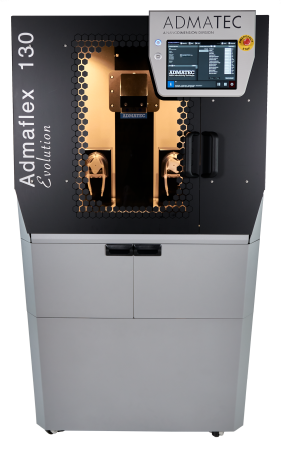
    Nano Dimension’s Admaflex130 3D Printer Installed at NASA’s Marshall Space Flight Center for Sodium-Ion Battery Project

    The landscape of 3D printing is in a perpetual state of evolution, and with each new advancement comes a wave of thrilling innovations. One such breakthrough that has captured the imagination of tech enthusiasts worldwide is the recent announcement that Nano Dimension has installed its state-of-the-art 3D printing system at NASA’s Marshall Space Flight Center. The system will be an integral component of a project aimed at 3D printing sodium-ion batteries, and Nano Dimension’s printer will play a pivotal role in ensuring the project’s success.

    Nano Dimension is a leading purveyor of cutting-edge 3D printing technology, specializing in Additively Manufactured Electronics and multi-dimensional polymer, metal & ceramic Additive Manufacturing 3D printers. The Admaflex130, which is the printer in question, is an outstanding product that was acquired in July 2022 from Admatec Europe B.V. This remarkable device possesses the capacity to produce a wide variety of materials, including ceramics and metals, with an astonishing degree of precision. Its Digital Light Processing (DLP) technology makes it ideal for research and development projects and 24/7 digital serial production of functional parts requiring complex geometries, high resolution, fine details, and smooth surface finishes, while maintaining exceptional material properties.

    What sets the Admaflex130 apart from the crowd is its unparalleled flexibility, allowing users to design bespoke materials and customize all printing parameters. This versatility is especially vital in research projects such as the one currently being undertaken at NASA. The efficacy of the project is contingent on the ability to print the sodium-ion batteries with exactitude, and the Admaflex130’s capacity for high-precision printing will undoubtedly prove invaluable.

    Admaflex130 – Nano Dimension

    The installation of Nano Dimension’s 3D printer at NASA’s Marshall Space Flight Center represents a significant milestone in the 3D printing industry. It speaks volumes about the printer’s reliability and quality, and NASA’s decision to trust it implicitly is a ringing endorsement of its capabilities. It also underscores the growing importance of 3D printing in research and development projects, particularly within the aerospace industry.

    Yoav Stern, Chairman and Chief Executive Officer of Nano Dimension, expressed his delight at the installation, saying, “It is difficult to imagine collaborating with an organization that is pushing the envelope of space exploration as comprehensively as NASA. We are immensely proud that they have chosen the Admaflex130 from Nano Dimension. Our team took a risk in developing a printer that could print multiple materials while maintaining open parameter settings, and they achieved remarkable success. We are confident that this system will empower NASA’s pioneering leaders to manufacture innovative applications. And who knows? Perhaps one day soon, we will see one such application making its way to Mars.”

    The installation of Nano Dimension’s 3D printing system at NASA’s Marshall Space Flight Center marks a turning point in the aerospace industry’s use of 3D printing technology. 3D printing has the potential to revolutionize the manufacturing process of various aerospace components, including engine parts, turbine blades, and even entire rocket engines. Moreover, 3D printing technology can help reduce the weight of these components, a crucial consideration for spaceflight, as every gram counts.

    NASA has been using 3D printing technology to manufacture parts for its spacecraft since the 1990s, but with recent advancements, we are only now beginning to see the technology’s true potential. The installation of Nano Dimension’s 3D printing system at NASA’s Marshall Space Flight Center is just one example of how 3D printing technology is being used to push the boundaries of what is possible in space exploration. With this cutting-edge technology, NASA can now rapidly produce complex parts that would have been difficult or impossible to manufacture using traditional methods. This not only saves time and money, but also enables NASA to create custom parts on-demand, reducing the need for large inventories of spare parts. Furthermore, 3D printing technology allows NASA to experiment with new designs and materials, which could lead to lighter, stronger, and more efficient spacecraft in the future. As the technology continues to evolve, we can expect to see even more exciting applications of 3D printing in space exploration and beyond.

    via Nano Dimension