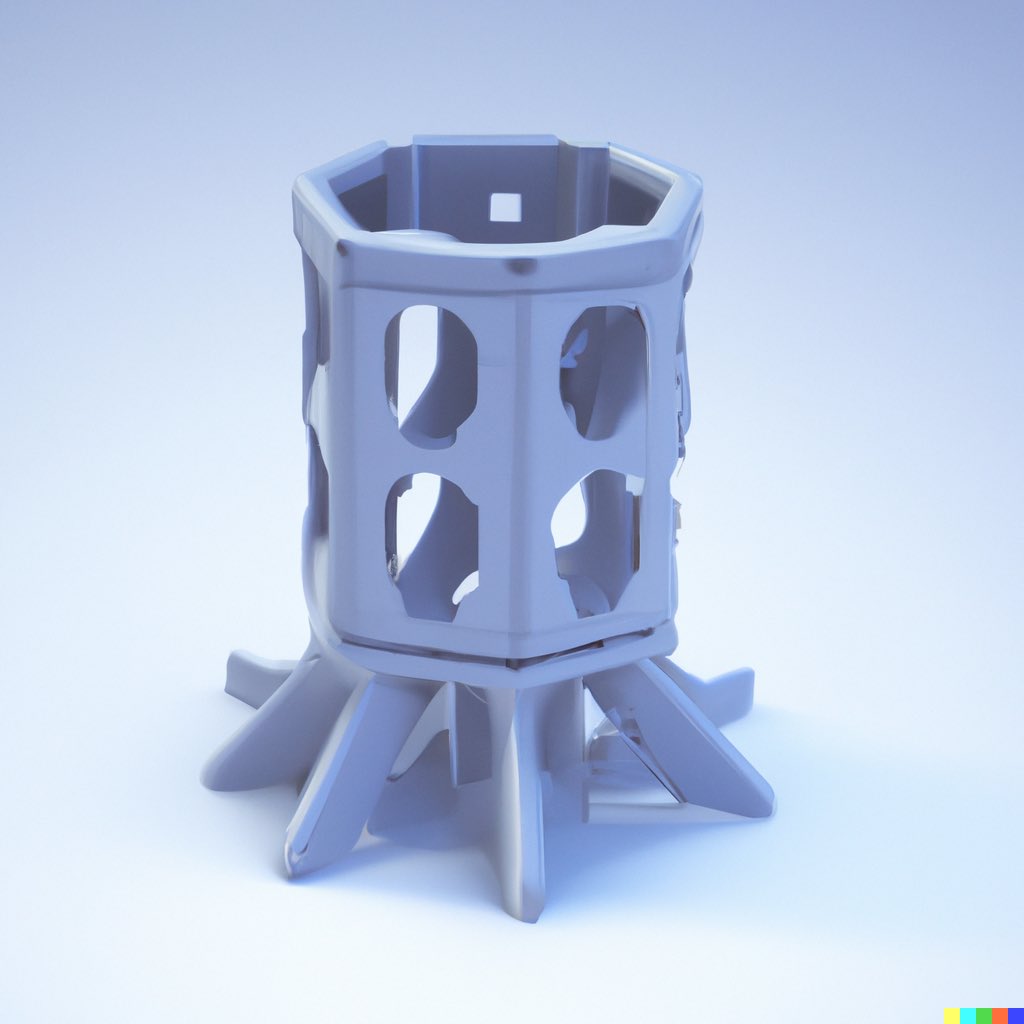
Additive manufacturing can produce geometry that is difficult or impossible to make with conventional processes. But geometric complexity is not automatically valuable. Every internal channel, lattice, consolidated interface and unsupported feature can add design, build, cleaning, inspection, repair and qualification burden.
Complexity is not free. AM changes where complexity is paid for—from shape-specific tooling into software, process control, post-processing and verification.
The three types of complexity
| Complexity type | Examples | Potential value | Typical risk |
|---|---|---|---|
| Geometric complexity | Internal channels, lattices, undercuts, curved passages and topology-optimized shapes | Performance or weight improvement | Supports, powder removal, distortion and inspection |
| Functional complexity | Heat exchange, fluid mixing, energy absorption, sensing or multiple functions in one body | Higher system performance | Harder validation and coupled failure modes |
| Organizational complexity | More software, suppliers, process steps, data and approvals | Digital flexibility and supply-chain redesign | Change control, traceability and capability gaps |
A successful AM design reduces total system complexity even when the printed geometry becomes more complex.
When complexity creates real value
Internal flow and thermal geometry
Conformal cooling channels, compact heat exchangers, fuel passages and mixing structures can create performance that drilled holes, brazed plates or cast cores cannot easily match. These are strong AM candidates when the internal surfaces can be cleaned, tested and manufactured repeatably.
Part consolidation
Combining several components can remove fasteners, welds, seals, inventory and assembly steps. Consolidation is valuable when it reduces system-level failure modes or cost. It is weak when it creates one expensive, unrepairable component from several simple serviceable parts.
Topology optimization and lightweighting
AM can place material along load paths and remove low-value mass. The resulting organic geometry can improve weight-sensitive systems, but it must preserve manufacturing access, minimum feature capability, fatigue performance and inspection.
Lattices and cellular structures
Lattices can provide stiffness-to-weight, energy absorption, thermal area, permeability or bone-ingrowth behavior. Their value depends on cell size, strut capability, surface condition, orientation and the ability to verify the internal structure.
Mass customization
Patient-matched medical devices, dental products, wearables and personalized tooling can vary geometry without new hard tooling. The manufacturing system must constrain customization within approved design rules.
The complexity cost stack
| Stage | How complexity adds cost |
|---|---|
| Design | Computational geometry, optimization, simulation and more design iterations |
| Data preparation | Large files, difficult meshes, orientation and support strategy |
| Printing | Longer exposure paths, thermal accumulation, fragile features and higher failure consequence |
| Material removal | Trapped powder, resin, binder or support material |
| Post-processing | Hard-to-reach supports, surfaces, heat-treatment distortion and special fixtures |
| Machining | Difficult datums, limited tool access and interrupted cuts |
| Inspection | CT, advanced metrology, sectioning or indirect evidence |
| Qualification | More worst-case locations, coupled features and process sensitivity |
| Production | Lower yield and greater loss when one feature fails |
| Service | Repair, cleaning, maintenance and replacement of consolidated hardware |
Printability is only the first gate
A part can be printable and still be unsuitable for production. A production-ready complex part must pass five gates:
- Buildable: It can be produced without unacceptable supports, collapse, distortion or thermal failure.
- Cleanable: Powder, resin, binder, support and processing debris can be removed.
- Finishable: Required surfaces can be machined, polished, coated or otherwise completed.
- Inspectable: Critical dimensions and defects can be verified with adequate probability of detection.
- Serviceable: The part can be assembled, maintained, repaired or economically replaced.
Internal channels: the hidden challenge
Internal channels are one of AM’s most valuable capabilities and one of its largest industrial risks. Review:
- Minimum hydraulic diameter and aspect ratio
- Self-supporting cross-section or internal supports
- Powder or resin escape paths
- Line-of-sight for cleaning or finishing
- As-built roughness and pressure loss
- Dimensional measurement method
- Detection of blockage, lack of fusion or thin walls
- Leak and pressure-test strategy
- Repair or disposition if a channel fails inspection
A channel should not be added merely because the printer can create it. It should provide enough thermal, fluid or assembly value to justify its lifecycle controls.
Supports: geometry’s temporary tooling
AM is often described as tool-free, but support structures can function as single-use tooling. They can:
- Anchor the part
- Conduct heat
- Resist distortion
- Support overhangs
- Protect delicate features
They also add material, build time, removal labor, surface damage and access requirements. Design complexity that demands inaccessible supports may be economically worse than a simpler conventionally manufactured geometry.
Inspection is a design input
NIST identifies complex surface topography, lattices, internal geometry, anisotropic properties and internal defects as major measurement and qualification challenges for AM. Inspection should therefore be selected while the geometry is still being designed.
| Feature | Possible inspection approach | Limitation |
|---|---|---|
| External geometry | CMM, optical scanning or structured light | Line-of-sight and reflective or rough surfaces |
| Internal channels | Industrial CT, borescope, flow or pressure test | Part size, material density and resolution |
| Internal defects | CT, radiography or ultrasonic methods | Defect orientation, thickness and geometry |
| Surface-connected defects | Visual, penetrant or magnetic methods where applicable | Rough surfaces can reduce sensitivity |
| Lattice structure | CT, mass, flow and representative destructive testing | Large data volume and limited access |
| Material condition | Witness coupons, hardness, microscopy and mechanical testing | Coupon may not represent every complex feature |
Read Addithive’s NDT guide.
Part consolidation: calculate the net effect
Before consolidating an assembly, compare both sides:
| Potential gain | Potential loss |
|---|---|
| Fewer joints and leak paths | One defect can scrap the complete part |
| Lower assembly labor | More expensive inspection |
| Lower inventory and supplier count | Reduced second-source flexibility |
| Lower mass and envelope | More difficult repair or replacement |
| Improved flow or thermal performance | Internal surfaces can be inaccessible |
| Fewer tolerance stack-ups | One large complex tolerance problem |
The best consolidated designs remove weak interfaces while preserving serviceability and verification.
Complexity and production yield
Complex features can increase the probability that at least one requirement fails. If a part contains several independent high-risk features, overall yield can fall rapidly even when each feature has a high individual success rate.
For example, if five critical features each have a 98% chance of passing and their outcomes are independent, the theoretical probability that all five pass is approximately 90%. Real failure modes are often correlated, but the example illustrates why complexity must be linked to production data.
- Track yield by feature and location.
- Identify the feature driving scrap.
- Separate design failure from process instability.
- Use representative production nesting.
- Include downstream machining and inspection yield.
- Redesign features that consume disproportionate qualification cost.
A complexity-value scorecard
Score each dimension from 0 to 5 before committing to AM:
| Dimension | 0 | 5 |
|---|---|---|
| Performance value | No measurable benefit | Major system-level improvement |
| Tooling avoidance | Existing tooling is efficient | Tooling is prohibitive or impossible |
| Part consolidation | No useful reduction | Removes major assembly and failure modes |
| Material efficiency | Conventional route already efficient | Very high-value material or buy-to-fly saving |
| Production volume fit | Far above AM capacity | Ideal low-volume or customized demand |
| Post-process accessibility | Supports and surfaces inaccessible | All operations straightforward |
| Inspectability | Critical features cannot be verified | Clear validated inspection route |
| Qualification maturity | New material and process development required | Qualified route and relevant data exist |
| Repairability | Failure requires total expensive replacement | Service and disposition are manageable |
| Accepted-part economics | Clearly unfavorable | Strong advantage at realistic yield |
A high geometric-complexity score is not a reason to print. Strong candidates score high on value, accessibility, inspectability and economics at the same time.
Red flags in complex AM design
- The geometry was made complex because AM allows it, not because the product needs it.
- Internal supports cannot be removed.
- Powder, resin or debris can become trapped.
- No credible inspection method exists for a critical feature.
- A lattice is specified without validated process-specific properties.
- Topology optimization ignores machining and datum strategy.
- Part consolidation removes replaceable wear components.
- The design depends on nominal printer resolution rather than demonstrated capability.
- A failed small feature scraps a large high-value build.
- Qualification coupons do not represent the critical geometry.
- The business case excludes CT, support removal or finishing.
- The design cannot be transferred to another machine or supplier.
Design review checklist
- What measurable system value does each complex feature create?
- Can a simpler geometry deliver most of the value?
- Which orientation balances performance, supports, distortion and inspection?
- How will material and supports be removed?
- Which surfaces require machining or finishing?
- How will internal dimensions and defects be verified?
- Which feature controls first-pass yield?
- Does consolidation improve or reduce serviceability?
- Does the qualification plan represent the worst-case geometry?
- Does the accepted-part economics model include every complexity cost?
Conclusion
Additive manufacturing changes the economics of geometric complexity, but it does not eliminate complexity cost. The best AM parts use difficult geometry to reduce total system mass, assembly, tooling or performance constraints while remaining buildable, cleanable, finishable, inspectable and serviceable.
Related Addithive resources: AM vs Conventional Manufacturing · Surface Finishing for Metal AM · Scaling AM Production