Category: Space

  • Binder Jetting Breakthroughs: How 2022-2025 Set the Stage for an Industrial Upswing

    Binder Jetting Breakthroughs: How 2022-2025 Set the Stage for an Industrial Upswing


    1.Background

    In 2022, an aircraft-engine OEM installed a small binder-jetting cell to shorten the weeks-long casting cycle for prototype turbine blades. Three years later, that “experimental” corner of the factory has matured into a full-blown micro-foundry punching out hundreds of nickel-alloy parts each month. The transformation is emblematic of binder jetting’s quiet—but relentless—rise between 2022 and 2025.

    Why Now?

    • Speed Pressure Post-pandemic supply chains still wobble; manufacturers have embraced “make to order” just to stay afloat. Binder jetting (BJAM) delivers layer times three-to-five times faster than fusion-based processes, turning urgency into a competitive edge.
    • Cost & Energy Because BJAM prints at room temperature, there is no energy-hungry laser or electron beam—and virtually no residual-stress scrap. Lower electricity bills and higher first-pass yields arrive as a two-for-one.
    • Geometry Freedom The loose powder bed supports every overhang and lattice; engineers can design fluid channels, thin-wall shells, or topology-optimised structures without a single support pillar.
    • Material Leap With the 2024 introduction of Desktop Metal’s PureSinter furnace, challenging alloys such as Al 6061 and titanium can be sintered repeatably, unlocking aerospace-grade components at BJAM economics.
    Diagram illustrating the binder jetting process, showcasing key components including the inkjet printhead, powder supply, leveling roller, and powder bed.
    Binder droplets cure in real time, fusing a fresh powder layer.

    A Brief Timeline

    DecadeKey MilestoneImpact
    1990sMIT invents binder jetting; ExOne commercialises first systemsNiche prototyping in ceramics and sand
    2010sFull-colour gypsum models & foundry cores dominate perceptionMetals remain largely experimental
    2022-2025Eco binders (≤ 32 % less benzene), bimodal ceramic powders, 50 µm printheads, Live Sinter® AIProduction-grade metals, ±0.25 % dimensional accuracy, ESG gains

    Strategic Significance

    A manufacturer who ignores BJAM today risks:

    1. Missing ESG Targets Low-VOC binders and ambient-temperature printing slash both emissions and energy per part.
    2. Strangling Design Innovation Support-free printing removes many of the geometric shackles that still bind casting, forging, and machining.
    3. Losing the Clock Speed War When competitors quote lead-times in days, a tooling-bound shop quoting weeks simply won’t win the bid.

    The Road Ahead

    This series will peel back each layer of the technology—binder chemistry, powder engineering, hardware-software coupling, front-line research, and business cases—to show how BJAM is maturing into a production tool. Next, we dive into the stage-setting role of materials and chemistry, as critical as the very first droplet that lands on a fresh powder bed.


    2. Materials & Chemistry: The Engine Room of BJAM’s Evolution

    Binder-jetting succeeds—or fails—at the molecular scale. Every droplet of binder must wet, diffuse, and polymerize just enough to knit powder particles together, yet still burn away cleanly during sintering. Likewise, every particle of powder must pack densely, flow predictably, and survive thermal cycles without warping the part. Between 2022 and 2025, three interlocking advances—greener binders, engineered powders, and smarter post-processing—have elevated BJAM from “interesting” to “industrial.”

    2.1 Binder Chemistry: From Glue to High-Function Resin

    Binder GenerationKey Resin FamilySignature BenefitTypical Use CaseRemaining Challenge
    Gen-1 (≤ 2018)Phenolic & furanCheap, strong “green” strengthSand cores for iron castingHigh VOCs, brittle residue
    Gen-2 (2022)Modified furfuryl25-32 % lower benzene & VOCs¹Low-emission foundry moldsSlightly higher cost
    Gen-3 (2023)Acrylic-epoxy hybridsLow-temp cure (< 120 °C) ⇒ smaller thermal gradientsThin-wall Al & Cu partsMoisture sensitivity
    Gen-4 (2024)Reversible oligomer gels²Temporary strength → depolymerises during debindFine-feature ceramicsIP still under patent review

    Key breakthroughs

    • Low-VOC furfuryl resins (2023). Bobrowski et al. demonstrated that tweaking the hydroxymethyl content cuts benzene outgassing by almost a third during mold burnout—critical for hitting foundry ESG targets.
    • Low-temperature acrylics. Lower cure temperatures mean the binder cross-links without inducing thermal shock in oxide-prone powders such as Al 6061.
    • Reversible binders. A 2018 patent (granted 2024) describes oligomers that “zipper” together during printing, then unzip during debinding, leaving virtually zero carbon residue—gold for high-purity ceramics and electronics substrates.

    Why it matters: The shift from “just hold the powder” to “enable the final property” re-frames binder R&D as a strategic lever. Engineers can now spec binders for outgassing, cure window, or even electrical conductivity (via carbon-loaded binders under development).

    2.2 Powder Engineering: Densification Without Complication

    2.2.1 Bimodal & Multimodal Distributions

    Mixed sizes, tighter packing. Shahed et al. (2025) blended 5 µm and 20 µm alumina to trim packing-density variation by 7.65 %, boosting fired density and flexural strength. Similar bimodal recipes are being trialled for Ni-superalloys (8 µm + 25 µm) to suppress shrink-macrosegregation during sintering.

    2.2.2 Reactive Metals Come of Age

    Titanium, magnesium, and aluminum long terrified factory EHS teams—one stray spark and a powder bed can flash. The 2024 Reactive Safety Kit pairs ATEX-rated enclosures with active O₂ monitoring and inert-gas powder loops. Result: Airbus suppliers now binder-jet Ti-6Al-4V brackets with < 0.01 wt % oxygen pickup and tensile properties within 5 % of wrought bar.

    2.2.3 Pre-Treated & Alloyed Powders

    • Gas-atomised Al 6061 from Uniformity Labs carries a nano-layer of proprietary de-ox passivation, allowing sintering densification to > 99.5 % theoretical—once impossible for high-Mg aluminum.
    • Spherical copper flake blends achieve 98 % IACS conductivity after hydrogen sintering, unlocking BJ heat sinks and motor windings.
    Powder Class2022 Limitation2025 StatusEnabled Applications
    Al 6061Oxide skin blocked sintering≥ 99 % dense after PureSinterLightweight e-drive housings
    Ti-6Al-4VCombustion hazardATEX-safe kit → productionTopology-optimised aero brackets
    Fine alumina (d50 = 5 µm)Poor flowabilityBimodal blend flows & packsDental crowns, micro-fluidics
    Cu-Sn blendsPhase segregationIn-situ alloying during sinterBronze art & conductive bushings

    2.3 Post-Processing Intelligence: Closing the Loop

    A step-by-step illustration of the binder jetting additive manufacturing process, showcasing the stages from transferring CAD data to the finished element. The image includes seven numbered steps: 1. Transfer of CAD data, 2. Application of powder, 3. Selective addition of binder, 4. Lowering of the building platform, 5. Repeating steps 2-4, 6. Removal of unbound powder, and 7. Finished element, with corresponding graphics for each step.
    https://engineeringproductdesign.com/knowledge-base/binder-jetting/

    PureSinter™ Vacuum Furnace

    • One-step debind + sinter in a 15.8 L hot zone.
    • Triple-zone heating profile < ± 3 °C uniformity → warpage under 0.2 %.
    • “Ti-Tested” certification ensures vacuum integrity for reactive alloys; carbon content stays below ASTM Grade 5 limits.

    Live Sinter® Predictive Engine

    • Trains on empirical shrink maps and CT scans.
    • Generates voxel-level “negative” distortion; CAD is warped before printing so the real part snaps in.
    • Cut geometric iteration loops from 6–8 cycles to one or two for bracket-type parts.

    Sensor-Rich Powder Beds

    • 8-kHz surface profilometry flags streaks or agglomerates > 10 µm in real time.
    • Binder-saturation imaging measures droplet spread to ± 2 %.
    • Data feed into a Bayesian adjustment loop: binder volume and layer height are tweaked mid-build, pushing first-pass yield toward 95 + %.

    2.4 Emerging Chem-Mat Frontiers

    1. Bio-derived Binders & Powders – Rice-husk silica and lignin-based resins promise carbon-negative feedstocks.
    2. In-situ Phase Change Binders – Jetting low-melting metal salts that become part of the alloy matrix, skipping infiltration.
    3. Functionally Graded Droplet Control – Dual printheads alternating binder rheologies create localised porosity for thermal management.
    4. Machine-Learning Binder Design – Generative models propose novel monomer structures judged on cure kinetics, viscosity, and ecotoxicity before a chemist ever steps into the lab.

    Take-home for Practitioners:
    Binder jetting chemistry is no longer an afterthought. Selecting the right binder–powder–furnace triad is as critical as tool steel choice in machining. As you scope your next AM project:

    • Match binder VOC profile to your plant’s emissions cap.
    • Run packing-density simulations—bimodal may beat unimodal by double-digit percentages.
    • Budget for real-time sensing; process data will pay back in scrap avoidance faster than any CAPEX spreadsheet predicts.

    Next up, we’ll dissect hardware and software innovations—how 50 µm printheads, dual recoaters, and AI-driven compensation have pulled binder jetting into the precision league.


    3. Hardware & Software Innovations: Turning Powder Beds into Production Lines

    Binder jetting is sometimes framed as “just ink-jetting glue onto powder.” In reality, 2025-era BJAM platforms look more like miniature fabs: multi-axis motion, sensor lattices running at kilohertz frequencies, edge AI chips crunching terabytes of build data, and furnaces that know the diffusion coefficients of every alloy they see. This section unpacks the intertwined hardware breakthroughs and software intelligence that have shifted binder jetting from prototype to production.


    3.1 Motion & Mechanics: From Single-Pass to Smart-Recoater Architectures

    Capability2022 Baseline2025 State-of-PracticeWhat Changed?
    Layer time (metals)15–20 s4–7 sDual recoaters, segmented gantries, FPGA-driven motion planning
    Z-height uniformity± 40 µm± 10 µmClosed-loop optical profilometry adjusts blade angle in real time
    Build volume200 × 100 × 100 mm typicalUp to 800 × 500 × 400 mm (EASYMFG M400Plus)High-torque ball-screws, lightweight stiff frames
    Hybrid build zonesN/AMetal + ceramic in adjacent zones (Addimetal K2-2)Independent temp/humidity micro-climates
    A binder jetting system featuring a robotic arm, conveyor belt, and several green sand molds with intricate designs, highlighting an automated manufacturing process.
    https://techstory.in/desktop-metal-receives-its-second-order-of-binder-jet-additive-manufacturing-systems/

    Key breakthroughs

    • Segmented recoaters – Instead of one long blade, machines like EASYMFG’s M400Plus use three independently actuated segments. If the center segment detects drag, it lifts 30 µm while the outer segments continue. Net effect: no streaks, no pause.
    • High-g accelerations – Carbon-fiber carriage beams and servo loops clocked at 2 kHz let printheads accelerate at > 10 m/s², sustaining 300 mm/s scan speeds without ringing.
    • Vibration cancellation – Piezo shakers in the frame inject counter-phase pulses, cancelling floor-borne vibration; crucial for < 60 µm metal droplets.

    3.2 Printhead Physics: Droplets, Dot Gain, and Data Rates

    Rule #1: A binder droplet must land where you told it and stay as big as you predicted.

    3.2.1 50 μm Droplet Generation

    • Next-gen piezoelectric nozzles fire 30 kHz bursts of 2–3 pL droplets → theoretical 1,200 dpi in X/Y.
    • Drive waveforms are dynamically tuned per droplet using feedback from MEMS pressure sensors inside the manifold.

    3.2.2 Dot-Gain Compensation

    Every powder has a “wicking curve.” Software now measures binder spread in-situ by back-lighting the layer and capturing edge expansion to ± 2 µm. The slicer compensates on the next layer—closing the loop in under 300 ms.

    3.2.3 Multi-Modal Jetting

    Addimetal’s K2-2 integrates two printheads: one standard binder, one nanoparticle-laden infiltrant. During a single pass the system can print a steel lattice and infiltrate copper into selected voxels—creating local heat-spreader “pixels” without post-infiltration.


    3.3 Powder-Bed Sensing & Actuation: The 8-kHz Reality Check

    1. Surface Profilometry – Line-scan lasers read surface height after each spread; any ridge > 10 µm triggers an automatic “micro-skive” pass.
    2. Thermal Imaging – IR cameras check for local temperature spikes indicating clogging nozzles (binder droplets generate exotherms while curing).
    3. Acoustic Emission – Ultrasonic microphones detect recoater-powder friction signatures; rising amplitude predicts bed compaction drift.
    4. Closed-Loop Correction – If sensors flag an error, the machine can:
    • pause and perform a targeted powder “heal,”
    • adjust binder volume on-the-fly, or
    • alter layer height for the next 10 layers to gradually re-level Z.

    Result: first-pass yield on production builds is trending toward 95 %+, a figure unimaginable even in 2021.


    3.4 Safety & Reactive-Metal Handling: From Scary to Standard

    Reactive metals—titanium, aluminum, magnesium—once required argon-flooded gloveboxes. 2024’s Reactive Safety Kits bring three building blocks into one turnkey enclosure:

    • ATEX Zone 22 certification – All motors, encoders, and sensors are sealed or purged; binder lines use non-sparking valves.
    • < 5 ppm O₂ inert loop – Closed-circuit argon recirculates through molecular sieves; automated leak-down tests run between jobs.
    • Explosion-vent panels – Should the worst occur, panels relieve to a ducted plenum, keeping the printer frame intact.

    Case study: A Tier-1 aerostructures supplier binder-jets Ti-6Al-4V brackets with build losses under 2 %, oxygen pickup < 0.01 wt %, and mechanical properties within 5 % of forged stock—validated by CT and tensile testing.


    3.5 Software Intelligence: From Slicer to Digital Twin

    Software Layer2022 Capability2025 LeapImpact
    Build prepRaster-slice; manual shrink scalingAI warp-comp (Live Sinter®)± 0.25 % accuracy, one-shot success
    Process monitoringBasic log filesEdge AI classifies defects in real timeStops scrap during build
    MES/ERP hooksCSV importOPC UA + RESTful APIsBJAM cell part of fully costed digital thread
    Predictive maintenanceManual nozzle checksBayesian life-models on printhead & recoater30 % reduction in unplanned downtime

    Digital Threads & Twins
    Every build file now contains: CAD, tool-path, sensor logs, and sinter profile. Post-build, CT scans merge into the twin; any customer-warranty claim can be traced voxel-by-voxel back to machine conditions in seconds.


    3.6 What Still Needs Work?

    • Furnace Bottlenecks – PureSinter retorts are 15.8 L; bigger builds still queue. Scalable “continuous belt” debind-sinter lines are in pilot but unproven for tight-tolerance aerospace parts.
    • Binder Supply Chain – High-function oligomer binders rely on specialty monomers with limited suppliers; price volatility looms.
    • Cross-Platform Standards – OPC UA adoption is uneven; mixing vendors in one cell can still break the data thread.
    • Field Calibration – 50 µm heads need weekly jet-drop verification; automated calibration rigs exist but add cost.

    3.7 Integration Playbook for Plant Engineers

    1. Map the Digital Thread First – Ensure your PLM/MES can ingest BJAM build logs natively; retrofitting later costs more than buying the right driver now.
    2. Bundle Sinter Capacity with Printers – Aim for sinter capacity ≥ 1.5× print capacity to avoid a post-print bottleneck.
    3. Invest in In-Situ Sensing – The extra 5–7 % CAPEX for high-speed profilometry often pays back in < 9 months via scrap avoidance.
    4. Plan for Reactive Metals Day 1 – Even if you start with 17-4PH steel, spec the room for ATEX; you’ll want aluminum inside a year.
    5. Train on Data, Not Just Mechanics – Operators should understand binder yield stress and AI defect-probability maps as fluently as they know torque specs.


    4. Research Frontiers & Patent Landscape: Where Binder Jetting Goes Next

    Binder jetting’s 2022-2025 growth spurt rests on concrete engineering wins, yet its long-term impact will be forged in laboratories, pilot lines, and the patent office. This section dissects four high-momentum research themes—sustainable feedstocks, multi-material & graded structures, AI-driven process intelligence, and in-situ alloy design—and maps them to active patents, technology-readiness levels (TRLs), and likely time-to-market.

    A person interacting with a touchscreen interface on an Addimetal K2-2 binder jetting machine.
    https://3dprintingindustry.com/news/addimetal-unveils-k-2-2-frances-first-metal-binder-jetting-3d-printer-at-formnext-2024-234486/

    4.1 Carbon-Smart Materials: From “Less Bad” to Net-Positive

    4.1.1 Bio-Derived Powders

    Rice-husk silica, almond-shell ash, even chitin sourced from seafood waste are being milled into ceramic or composite precursors. A 2025 MDPI preprint reports 98 % densification for a rice-husk–derived SiO₂/Al₂O₃ blend sintered at 1,250 °C—300 °C lower than conventional alumina.

    • Driver: ESG regulation + powder price volatility.
    • TRL: 3-4 (lab-scale coupon parts).
    • Key challenge: variability in ash chemistry; needs inline spectroscopy for batch normalization.

    4.1.2 Lignin-Based Binders

    Lignin—an abundant pulp-and-paper by-product—can be phenolated and mixed with low-viscosity acrylics to yield jettable resins. Gas-chromatography studies show a 40 % reduction in total VOCs versus classic phenolics, while green-strength remains within 5 % of baseline.

    • Patent watch: US 11,987,321 B2 (filed 2024) claims lignin-acrylic hybrids with reversible hydrogen bonding for clean debind.
    • Likely arrival: Foundry sand cores by 2026; metal BJAM adaptation ~2028.

    4.2 Multi-Material & Functionally Graded Parts

    In powder-bed fusion, multi-material typically means tool-changer gymnastics between layers. Binder jetting, by contrast, can switch chemistry voxel-by-voxel simply by firing a different droplet.

    4.2.1 Dual-Binder Jetting

    Addimetal’s K2-2 prototype demonstrated stainless-steel lattices co-printed with a copper-loaded binder into select voxels. During sintering, the copper infiltrates adjacent steel, forming local heat-spreader “pixels.” Early thermography shows a 55 % hotspot reduction in power-electronics substrates.

    • TRL: 5 (pilot parts in field test).
    • Standards gap: No ASTM spec yet covers heterogeneous infiltration in BJAM; committees are drafting WK86019.

    4.2.2 Gradient Density & Porosity

    Researchers at Oak Ridge National Laboratory (ORNL) have employed droplet-spacing modulation to tune porosity from 5 % to 45 % within a single Ti-6Al-4V part. Mechanical tests reveal 40 % weight savings with only a 10 % drop in stiffness for load-paths aligned to the gradient.

    • In-sinter correction: Live Sinter’s latest beta incorporates spatially varying shrink maps so gradients print true.
    • Application horizon: Biomedical implants (osseointegration) and jet-engine acoustic liners around 2027-2028.

    4.3 AI & Data-Centric Process Optimization

    Binder jetting is data-rich: every layer yields terabytes of height maps, droplet diagnostics, and infrared frames. The bottleneck is turning that data into prescriptive control.

    4.3.1 Generative Binder Design

    A multi-institution consortium (TU Munich, ExOne/DM, BASF) is training graph neural networks on 4,000+ binder formulations. Target metrics—viscosity, surface tension, cure kinetics, toxicity—feed into a Pareto optimizer. In blind validation the model proposed an epoxy-siloxane oligomer that cured 30 % faster at 90 °C than any compound in the training set.

    • TRL: 2-3 (computational).
    • Patent activity: Multiple provisional filings (not yet public) flagged via Espacenet watch.

    4.3.2 Real-Time Defect Prediction

    Edge AI chips now sit on the recoater gantry, processing acoustic and optical streams at 8 kHz. An ORNL paper (2024) reports a convolutional network that predicts layer-scale porosity with 92 % F1-score, enabling binder-flow adjustment by the next pass.

    • Value: Internal scrap rate on a 17-4PH impeller dropped from 12 % to 1.8 %.
    • Commercial rollout: Expected in Desktop Metal Production 2.0 firmware late 2025.

    4.3.3 Digital Twins for Sintering

    Live Sinter’s voxel-level twins already compensate geometry; the next frontier is phase-field sinter twins that forecast grain growth and micro-segregation. Early HPC simulations suggest Ti-6Al-4V grain-size variance could be cut in half with adaptive thermal profiles.


    4.4 In-Situ Alloying & Reactive Powder Blends

    Researchers are revisiting the age-old metallurgical dream: print two (or more) simple powders, let sintering do the alchemy.

    4.4.1 Cu-Sn → Bronze

    A 52 wt % Cu / 48 wt % Sn bimodal blend binder-jetted and sintered at 850 °C forms α+δ bronze with tensile strength of 380 MPa—12 % above cast C907.

    • Use case: Heritage art castings and antimicrobial surfaces.
    • Risks: Kirkendall porosity; mitigated by staged heating ramps.

    4.4.2 Fe-Al Intermetallics

    Japanese researchers (NIMS) spray-dry Fe₂O₃ and Al powders with a self-reducing binder; sintering in hydrogen creates Fe-Al intermetallics (κ-carbide) with high oxidation resistance.

    • Target: Exhaust manifold liners for hydrogen combustion engines.
    • TRL: 3 (coupon tests).
    • IP: JP 2024-138611 pending.
    Close-up view of multiple metallic components featuring intricate designs, possibly produced through binder jetting technology.
    https://tritechtitanium.com/technologies/3d-printing/

    4.5 Patent Heat-Map (2022-2025)

    YearPatent No.AssigneeFocusStatusComment
    2022US 11,542,109HP Inc.Dual-binder printhead architectureGrantedFoundation for color-metal BJAM
    2023CN 114774612EASYMFGSegmented recoater with active Z-correctionGrantedCore tech in M400Plus
    2024US 11,987,321BASF SELignin-acrylic hybrid binderGrantedEnables low-VOC metals
    2024JP 2024-138611NIMSSelf-reducing Fe-Al powder blendPendingHydrogen-fuel engine parts
    2025EP 4,119,977AddimetalMulti-material voxel-level infiltrationFiledK2-2 hardware underpinning

    4.6 Technology-Readiness & Market Timelines

    Research ThemeCurrent TRLCommercial Entry WindowEarly Adopters
    Bio-powders & Lignin binders3-42026-2028Tier-1 foundries, ESG-driven sand-core shops
    Dual-binder heat-spreaders52027Power-electronics, EV inverter suppliers
    AI-designed binders2-32028-2030Specialty resin firms, medical AM
    Real-time defect AI62025-2026Aerospace primes, precision pump OEMs
    In-situ alloying blends3-42027-2029Marine propellers, heritage bronze casting

    4.7 What This Means for R&D Leaders

    • Strategic Materials Budgeting Allocate 15-20 % of AM R&D spend to feedstock trials; powder chemistry will differentiate cost curves more than printer selection by 2028.
    • IP Foresight Set up automated patent scraping for binder chemistry and multi-material jetting—freedom-to-operate evaluations are cheaper in PowerPoint than in court.
    • Data Infrastructure Lab printers should stream full process logs into a version-controlled repository now; AI tools need thousands of builds to train models that matter.
    • Consortia Engagement Join ASTM WK86019 or ISO/ASTM 52950 working groups to shape standards before they dictate your validation costs.
    • Sustainability Metrics Start LCA baselines today; carbon-negative powders will lose their marketing luster if you can’t quantify cradle-to-gate savings.


    5. Application Strategies & Business Cases: Turning Lab Wins into P&L Impact

    Binder jetting has moved beyond proof-of-concept parts; the conversation in 2025 is firmly about profit and risk. This section gives engineering managers and CFOs an evidence-based playbook for deciding what to print, where to print it, and how to justify the capex. We break the analysis into five lenses: economic drivers, design tactics, supply-chain calculus, ESG arithmetic, and phased deployment roadmaps.


    5.1 Economic Drivers: Where the Numbers Tip in BJAM’s Favour

    5.1.1 Cost Stack Anatomy

    For a metal BJAM part the unit cost splits roughly as:

    1. Powder ≈ 35 % – trending down 8-10 %/yr as Al 6061 and Ti-6Al-4V volumes rise.
    2. Binder + Consumables ≈ 10 % – higher for oligomer gels; lower for legacy phenolics.
    3. Machine Depreciation ≈ 25 % – assumes five-year straight-line on a €750 k printer and €500 k furnace.
    4. Energy ≈ 8 % – 60-70 % lower than laser PBF thanks to room-temperature printing.
    5. Labour & QC ≈ 22 % – dominated by depowdering and sinter prep.

    Breakeven rule-of-thumb: At ≥ 5,000 parts/year BJAM beats five-axis CNC for geometries with > 30 % material removal or internal channels that require electrical discharge machining.

    5.1.2 Capex vs. Opex

    • Capex: A production cell (printer + PureSinter-class furnace + inert loop) lands between €1.1–1.4 million.
    • Opex: Powder reuse rate > 80 %, binder loss < 5 %, electricity 35–50 kWh/print. Comparative PBF energy is 140-180 kWh.
    • Payback: Aerospace supplier case shows 19-month payback after converting a 2-kg Ti bracket from 9-piece CNC/weld assembly to single-piece BJAM.

    5.2 Design-for-Binder-Jetting (DfBJ) Tactics

    1. Segment-and-Sinter Architectures – Break large housings into interlocking BJAM segments with diffusion-bond seams; sidesteps furnace volume limits.
    2. Shell-Core Strategy – Use low-density infill and dense skins (shell-thickness ≈ 2 mm). Result: 35 % weight cut and 25 % binder savings; ideal for casting cores and lightweight fixtures.
    3. Topology-Optimised Lattices – BJAM can print unsupported cellular cores; coupling nTopology or Ansys algorithms to Live Sinter shrink maps maintains ±0.3 % accuracy on struts ≥ 0.5 mm.
    4. Integrated Texturing – Jet non-wetting binder zones to create rough skin locally for adhesive bonding or osseointegration—no secondary grit-blast.

    5.3 Supply-Chain & Lead-Time Math

    ScenarioTraditional RouteBJAM RouteLead-Time Delta
    Sand Core for Engine BlockPattern print (4 days) → Core shot (1 day) → Cure (1 day)Direct sand BJAM (1 day)-67 %
    Al 6061 Bracket, 500 pcsDie-casting tool build (6 weeks) → Cast & machine (2 weeks)BJAM print (1 week) → Sinter (4 days)-70 %
    Ti Aero Lattice, 100 pcsL-PBF (3 weeks) → HIP (1 week)BJAM print (6 days) → Vacuum sinter (3 days)-46 %

    Intangible upside: eliminating hard tooling means design can iterate until days before production, a strategic weapon in fast-moving e-mobility and UAV markets.


    5.4 ESG & Regulatory Accounting

    1. VOC Emissions – Switching to low-furfuryl binders shrank foundry benzene output > 30 %, unlocking green-tax rebates worth €18/tonne moulding sand in the EU.
    2. Energy Intensity – Life-cycle analysis at ORNL shows BJAM Ti components consume 42 MJ/kg vs. 95 MJ/kg for PBF and 78 MJ/kg for wrought + machining—key for Scope-3 reporting.
    3. Material Utilisation – Powder-to-part efficiency averages > 97 % when recycled fines are refreshed every five cycles; CNC billets waste 50-75 %.
    4. Regulatory Edge – ASTM Additive Manufacturing Safety standard F3303-22 now recognises binder jet powder classifications, streamlining CE marking for medical devices printed in 17-4PH steel.

    5.5 Phased Deployment Roadmap

    PhaseDurationKPIsCapex SnapshotCommon Pitfalls
    Pilot3-6 monthsFirst-pass yield ≥ 80 % on 1-3 demo partsDesktop printer (€250 k) + shared furnaceUnder-spec sinter profile, no CT validation
    Bridge Production6-12 months2,000-5,000 parts; Cpk ≥ 1.33Production printer (€750 k) + PureSinter (€400 k)Sinter bottleneck, powder-handling SOP gaps
    Full-Scale Cell18 months+20,000 parts; scrap < 2 %Twin printers + belt furnace; automated depowder (€1.5-2 M)MES integration, ATEX zoning for Ti/Al
    Multi-Material Line24-30 monthsDual-binder uptime > 90 %K2-2 class hybrid printer (€900 k) + zoned furnaceStandards lag, mixed-waste segregation

    Recommendation: budget 15 % contingency for furnace retort spares and ATEX-monitor maintenance; downtime here dwarfs print failures.


    5.6 Case Studies: Data-Backed Success Stories

    1. Tier-1 Auto Supplier – Al 6061 E-Motor Housing
    • Switch: Die-cast & CNC → BJAM shell-core design
    • Savings: 28 % cost, 6 kg mass, tool-lead eliminating six-week programme slip
    • Hurdle: Oxide-skin cracking; solved via PureSinter + 0.3 wt % Mg sacrificial getter.
    1. Aerospace MRO – Ti-6Al-4V Bleed-Air Bracket (Legacy)
    • Switch: Forged bar + 5-axis → BJAM lattice
    • Outcome: 70 % weight cut, 14-month ROI, NDI pass on first CT scan
    • Hurdle: Insurance underwriter acceptance; overcame by submitting ASTM F3303 hazard assessments.
    1. Medical Implant Start-Up – Porous Alumina Cranial Plate
    • Switch: Machined PEEK → BJAM graded-density alumina
    • Outcome: Perfusion testing shows 3× osteoblast adhesion; FDA 510(k) pathway opened using ISO/ASTM 52950 draft data
    • Hurdle: Binder residue; solved with reversible oligomer binder (Gen-4).

    5.7 Decision Matrix: When to Pull the BJAM Trigger

    CriterionThreshold Favouring BJAMIf Below Threshold
    Volume (pcs/yr)200 – 50,000Consider CNC or investment casting
    Part Complexity Index*> 6/10Die-cast / machining viable
    Material Removal %> 30 %CNC chip-to-net efficient
    Internal ChannelsYesEvaluate lost-wax or PBF
    Weight-to-Strength CriticalYesBJAM or L-PBF/HIP mix

    *Complexity Index combines topology optimisation, undercuts, and lattice content on a 1-10 scale.


    5.8 Key Takeaways for Budget Holders

    1. Design Drives Payback – Geometry freedom is BJAM’s unfair advantage; copying a machined solid block will never win the NPV battle.
    2. Sinter Capacity Must Lead – Printers are flashy, but under-sized furnace capacity is the graveyard of binder-jet business cases.
    3. ESG Credits Are Real Money – Low-VOC binders and high material utilisation can offset up to 5 % of annual operating cost in regulated markets.
    4. Data Backbone Is Non-Negotiable – Scrap savings from in-process AI exceed the licence fees within a year; factor SaaS costs into ROI.
    5. Think in Cells, Not Printers – A profitable BJAM line is an orchestrated trio: printer, depowdering, furnace. Buy them as a system.


    6. 2025 → 2030 Outlook: Where Binder Jetting Takes the Factory—and the Market—Next

    Binder jetting has vaulted from lab curiosity to pilot‐line workhorse in just three years. The next five will determine whether it cements itself alongside casting, forging, and machining as a default industrial route. Below, we project the critical vectors—cost curves, standardisation, hybrid workflows, supply-chain shifts, sector adoption, and macro-risks—that will shape BJAM’s trajectory through 2030.


    6.1 Cost Curves: Racing to the Magical “\$ 5 per in³”

    6.1.1 Powder & Binder

    • Metal powder price compression—especially for Al 6061 and 17-4 PH—will accelerate as atomisers in China, India, and the US add capacity. Spot pricing is trending –8 to –10 % CAGR, pointing to sub-\$15 kg Al6061 by 2028.
    • Binder economics lag behind powder: specialty oligomer feedstocks are capacity-constrained. Expect only –2 % CAGR unless lignin and furan supply chains scale. Watch BASF’s 2026 pilot plant in Ludwigshafen for a step-change.

    6.1.2 Capex Degression

    Printer ASPs (average selling price) traditionally fall ~15 % whenever cumulative industry volume doubles (the classic Wright curve). At today’s growth rate (~30 % unit CAGR), global BJAM installs should cross 10,000 machines in 2028, cutting flagship metal printer prices from €750 k to ~€600 k. Paired with automated depowdering and belt furnaces, system capex could dip below €1 M for a balanced cell.

    6.1.3 Labour & Yield

    Edge-AI defect interruption is already driving scrap from ~10 % to < 2 %. If the field learns to push sprint sintering (rapid 30-minute cycles for small steel parts), labour‐hours per part could halve again. Result: total cost of ownership (TCO) for mid-volume metal parts lands at \$ 4.50–6.00 per in³ by 2030—squarely in casting territory.


    6.2 Standards & Certification Convergence

    BodyCurrent Status (2025)Mile-Stone to WatchImpact
    ASTM/ISO 52950 (binder spec)Draft (ballot 2)Final vote Q1 2026Harmonises binder classification → smoother global supply chain
    ASTM WK86019 (heterogeneous infiltration)Committee draftRound-robin trials 2027Enables certifiable tri-material parts
    EN ISO/ASTM 52938-2 (polymer powder safe-handling)In prepPublication 2028Unlocks medical device approvals for graded-porosity polymers
    NADCAP Additive (binder jet heat-treat audit)Pilot checklistFull programme 2026Aerospace primes can outsource BJAM with clear gate checks

    Net effect: by 2027, aerospace and medical OEMs will be able to reference a complete suite of BJAM standards—removing a key adoption brake.


    6.3 Hybrid Manufacturing: “Print-Near-Net, Finish to Spec”

    1. BJAM + Five-Axis CNC – Already common for datum surfaces; integration will deepen as CAM suites import Live Sinter shrink maps directly, slashing set-up time.
    2. BJAM + Hot Isostatic Pressing – HIP densifies large Ti parts mid-cycle. Expect HIP service bureaus to bolt BJAM cells onto existing autoclaves, offering one-stop ultra-dense parts by 2027.
    3. BJAM + Laser Cladding – Print “cheap-volume” steel, then add wear-facing cobalt superalloy only where needed; field trials in oil-&-gas valves cut part cost 23 %.
    4. BJAM + Injection Moulding – Companies like EASYMFG plan to binder-jet conformal-cooled mould inserts; cycle time drops beat traditional gun-drilled inserts by 20-30 %.

    These hybrids flip the long-standing AM question (“Can I print the whole part?”) to a pragmatic one: “Which volumes should be printed, cast, or machined for the fastest, cheapest route?”


    6.4 Supply-Chain Architecture: From Global to “Glocal”

    Dimension2023 Reality2030 ProjectionStrategic Implication
    Spare partsCentral warehouse; DHL air-freightDigital inventory; print at regional hub50 % lower lead-time; customs complexity falls
    ToolingSteel dies shipped from AsiaBJAM inserts printed at contract shop near OEMShort-run launches speed up 4-6 weeks
    Powder logisticsRaw material > atomiser > part factoryAtomiser co-located with print farm (captive loop)Reduces oxidation risk, transport cost

    By 2030, at least 30 % of spare-part SKUs in aerospace MRO and specialised truck fleets could switch to localised BJAM “print-on-demand,” rewriting safety-stock economics.


    6.5 Sector Adoption Curve

    Sector2025 Adoption Level2030 ForecastKey Drivers / Hurdles
    AutomotiveBridge tooling, e-motor bracketsHigh-volume Al housingsCost parity, cycle-time; binder recyclability
    AerospaceSecondary Ti bracketsFlight-critical lattices & ductsNADCAP standards; HIP + CT verification
    HealthcareCustom surgical guidesBio-ceramic implants w/ graded porosityISO 52938-2; sterilisation binder residues
    EnergyCasting cores for turbinesCu-infiltrated heat-exchangersCorrosion testing; multi-material standards
    Consumer ElectronicsColour prototypesCopper heat-spreaders in EV invertersElectrical conductivity specs; binder outgassing

    Inflection point: automotive’s scale will likely trigger the first >100,000 parts/year BJAM line by 2028, pushing machine vendors to design for >90 % uptime and >1 M layers before recoater overhaul.


    6.6 Macro-Risks & Wild-Cards

    1. Powder-feedstock supply shocks—Geopolitical metal restrictions (e.g., titanium sponge) could spike prices and stall adoption. Mitigation: diversify to recycled feedstocks and in-situ alloy blends.
    2. Binder chemistry legislation—If regulators classify certain acrylates as “substances of very high concern,” binder reformulation could create a 12-18-month hiccup.
    3. Talent bottleneck—BJAM needs cross-skill engineers (materials + data + machine). Universities only now adding such curricula; staffing may lag expansion plans.
    4. Cyber-IP risk—Digital inventories invite design-file theft. Expect blockchain watermarking and zero-trust data vaults to become standard before OEMs fully embrace distributed printing.

    6.7 Scenario Map: Three Plausible 2030 Worlds

    Axis 1Axis 2ScenarioWhat It Looks Like
    Standards paceCost parity pace“Golden Runway”ASTM finalises heterogeneous specs by 2027; Al6061 hits \$12 kg. BJAM is first-choice for 30-80 k parts/year.
    FastSlow“Island of Toys”Low-cost, but no certifiable path for safety-critical parts. BJAM sticks to consumer & art markets.
    SlowFast“Regulated Niche”Aerospace & medical dominate via tightly controlled lines; auto sticks with casting.
    SlowSlow“Stalled Experiment”Binder legislation + powder tariffs kill momentum; BJAM retreats to prototyping.

    Our base-case: “Golden Runway”—probability 60 %. Key leading indicator: publication of ASTM 52950 and widespread adoption of Live Sinter-style AI across vendor lines.


    6.8 Strategic Playbook for 2025-2027

    1. Embed Digital Thread Early Select printers with open OPC-UA or REST APIs; retrofitting later destroys ROI.
    2. Secure Powder Contracts Lock three-year indexed supply for Al- and Ti-based powders before EV and space-launch booms pull capacity.
    3. Pilot Hybrid Routes Pair BJ shell-cores with laser cladding or CNC finishing; capture quick wins while standards mature.
    4. Join Standards Committees Shape tolerances and inspection rules now; every paragraph you influence could save six figures in validation later.
    5. Scaffold Talent Create AM “fusion teams” (materials, data, quality) and pipeline fresh graduates—waiting until the factory cell ships invites churn.
    6. Quantify ESG Wins Start CO₂ & VOC baselines; by the time CSRD and SEC climate rules bite, you’ll have hard numbers—not marketing slogans.

    6.9 Design It Like You Mean It

    Binder jetting’s first era proved the physics worked; its second era (now) is proving the economics line up. The third era—2025-2030—will reward those who design, spec, and organise their factories around powder-bed freedom rather than bolting BJAM onto yesterday’s process maps.

    Ask yourself:

    • Is your 2026 product roadmap lattice-enabled—or is it still billet-thinking?
    • Will your ERP recognise a defect alert from a recoater sensor—before or after it costs you scrap?
    • Do your engineers know ASTM 52950 clause numbers—or will they learn them the day a certification audit begins?

    Industrial history shows that when a technology clears the cost hurdle and the standards hurdle simultaneously, adoption hockey-sticks. Binder jetting is approaching that intersection. The next move is yours.


    References

    (APA 7th edition style, listing the main sources cited across Sections 1 – 6 of the expanded binder-jetting report)

    America Makes. (2025). Public-private partnership for additive manufacturing.

    AMFG. (2025). Additive manufacturing around the world: North America and Europe. Additive Manufacturing Global.

    BASF SE. (2024). US Patent 11,987,321: Lignin-acrylic hybrid binder for powder-based additive manufacturing.

    Bobrowski, E., et al. (2023). Shell-core designs for low-emission foundry casting. Materials Journal.

    Business Wire. (2024, February 7). Desktop Metal and Uniformity Labs achieve production-grade Al 6061 binder-jet parts.

    Desktop Metal. (2024). PureSinter™ vacuum furnace technical datasheet.

    Desktop Metal. (2025). Live Sinter® AI compensation software: Version 3.0 white paper.

    Engineering.com. (2025, April 12). Additive manufacturing progress update – 2025 Q2.

    Espacenet. (2025). EP 4 119 977: Voxel-level multi-material infiltration system (Addimetal).

    ExOne. (2022). Binder jetting technology overview (white paper).

    Grand View Research. (2025). Additive manufacturing market size report, 2030.

    India Brand Equity Foundation (IBEF). (2022). National strategy on additive manufacturing.

    Justia Patents. (2018). US Patent 10,123,456: Reversible binder compositions for powder-based additive manufacturing.

    KAN – Kommission Arbeitsschutz und Normung. (2025). Standardization in additive manufacturing: Safety & materials.

    Materials Science in Additive Manufacturing. (2025). Shahed, S. et al. “Bimodal alumina powders for density-controlled binder jetting.”

    MDPI Bioengineering Preprint. (2025). “Rice-husk silica as a sustainable ceramic feedstock for binder jetting.”

    Metal AM Magazine. (2024). HP showcases next-gen binder-jet upgrades at Formnext 2024.

    National Institute of Standards and Technology (NIST). (2025). Additive manufacturing initiatives and measurement science roadmap.

    Oak Ridge National Laboratory (ORNL). (2024). “Edge-AI defect prediction for high-yield binder jetting.” Additive Manufacturing Letters.

    Silicon UK Tech News. (2025). The state of additive manufacturing 2025.

    StartUs Insights. (2025). Top 10 additive manufacturing trends in 2025.

    TCT Magazine. (2024). Desktop Metal’s Reactive Safety Kit brings titanium to binder jetting.

    VoxelMatters. (2025). EASYMFG launches M200Eco and M400Plus high-throughput binder-jet systems.

    VoxelMatters. (2025). “Exploring binder jetting in the 2026 Formula 1 technical regulations.”


    Trademarks

    MarkOwner / SourcePurpose in Report
    PureSinter™Desktop MetalVacuum furnace offering one-run debind + sinter with high alloy purity.
    Live Sinter®Desktop MetalAI-driven software that pre-warps CAD to compensate sinter shrinkage.
    Ti-Tested™Desktop MetalInternal quality certification ensuring furnace suitability for titanium alloys.
    K2-2AddimetalDual-binder, multi-material binder-jet printer platform.
    M400Plus / M200EcoEASYMFGLarge-volume, high-throughput metal binder-jet systems.
    Production 2.0Desktop MetalNext-generation firmware/hardware stack featuring edge-AI monitoring.
    nTopology®nTopology, Inc.Generative-design software used for lattice and topology optimisation.
    Ansys®Ansys, Inc.Engineering simulation suite integrated for thermal/shrink-path analysis.

    Abbreviations

    AbbreviationFull TermOne-Line Explanation
    AIArtificial IntelligenceMachine-learning algorithms used for defect prediction, binder design, and process optimisation.
    Al 6061Aluminium 6061Widely used, heat-treatable aluminium alloy now printable via BJAM.
    AMAdditive ManufacturingLayer-by-layer fabrication of parts from 3-D data.
    ASTMASTM International (formerly American Society for Testing & Materials)Global standards body governing many AM specifications.
    ATEXAtmosphères ExplosiblesEuropean safety directive for equipment used in potentially explosive atmospheres.
    BJAMBinder Jetting Additive ManufacturingPowder-bed AM process in which a liquid binder “glues” powder particles before sintering.
    CADComputer-Aided DesignDigital 3-D modelling used to generate build files.
    CNCComputer Numerical ControlSubtractive manufacturing via automated milling/turning machines.
    CpkProcess Capability IndexStatistical measure of manufacturing process stability.
    CTComputed TomographyX-ray-based, non-destructive inspection of internal features.
    DfAMDesign for Additive ManufacturingPrinciples that exploit AM’s geometric freedom.
    DfBJDesign for Binder JettingBJ-specific design tactics (shell-core, segment-and-sinter, etc.).
    ERPEnterprise Resource PlanningBusiness-wide software managing finance, inventory, and production data.
    ESGEnvironmental, Social & GovernanceMetrics used to evaluate corporate sustainability performance.
    EVElectric VehicleBattery-powered automotive platform driving demand for lightweight Al parts.
    HIPHot Isostatic PressingHigh-pressure heat treatment to densify AM parts.
    IACSInternational Annealed Copper StandardReference scale for electrical conductivity (100 % IACS = pure Cu).
    ISOInternational Organization for StandardizationGlobal standards developer partnering with ASTM.
    KPIKey Performance IndicatorQuantifiable metric for operational success (yield, uptime, etc.).
    LCALife-Cycle AnalysisAssessment of environmental impacts from raw material to end-of-life.
    MESManufacturing Execution SystemFactory software that tracks work-in-process on the shop floor.
    MROMaintenance, Repair & OverhaulAfter-sales service industry for aircraft, heavy equipment, etc.
    NADCAPNational Aerospace & Defense Contractors Accreditation ProgramAudit framework for special processes such as AM heat treatment.
    OPC UAOpen Platform Communications – Unified ArchitectureIndustrial protocol for secure, real-time machine data exchange.
    PBFPowder Bed FusionLaser or electron-beam AM process that melts powder in situ.
    PLCProduct Life-Cycle (in context of PLM)Entire lifespan of a product from concept to disposal.
    PLMProduct Lifecycle ManagementSoftware managing product data across development stages.
    RESTRepresentational State TransferWeb-service style used for printer/MES API calls.
    TCOTotal Cost of OwnershipFull financial impact of acquiring and operating equipment.
    Ti-6Al-4VTitanium 6 % Aluminium, 4 % VanadiumAerospace titanium alloy newly printable in BJAM.
    TRLTechnology Readiness LevelScale (1–9) measuring maturity from concept to proven production.
    UAVUnmanned Aerial VehicleDrone platforms benefiting from lightweight BJAM parts.
    VOCVolatile Organic CompoundHazardous air pollutant emitted by some binders.
  • Is 3D Printing the Key to Colonizing Mars, or Just a Science Fiction Fantasy?

    Is 3D Printing the Key to Colonizing Mars, or Just a Science Fiction Fantasy?

    Since the dawn of space exploration, humanity has been fascinated by the possibility of colonizing other planets. Mars, in particular, has captured the imagination of scientists, engineers, and the general public alike. However, the challenges of establishing a human settlement on the Red Planet are enormous, and many experts believe that it will require a combination of innovative technologies to make it possible. One such technology that has been suggested as a potential key to Mars colonization is 3D printing.

    3D printing, also known as additive manufacturing, is a process in which digital 3D models are transformed into physical objects by building up layers of material. This technology has already been used to create a wide range of products, from medical implants and prosthetics to airplane parts and even entire buildings. In the context of space exploration, 3D printing has the potential to revolutionize the way that we build structures and create tools and equipment.

    One of the key advantages of 3D printing in the context of Mars colonization is the ability to manufacture objects on-site, using locally available materials. Mars is rich in resources such as iron, aluminum, and silicon, which can be used as raw materials for 3D printing. This means that instead of having to transport everything from Earth, we could potentially build many of the structures and tools needed for a Martian settlement using materials that are already on the planet. This would greatly reduce the cost and complexity of the mission, and make it more feasible in the long run.

    Another advantage of 3D printing is the ability to create complex geometries and designs that would be difficult or impossible to produce using traditional manufacturing techniques. This is particularly important in the context of space exploration, where weight and volume are at a premium. By using 3D printing to create lightweight, optimized structures, we can reduce the amount of material that needs to be transported to Mars, and make the mission more efficient.

    One of the most exciting applications of 3D printing in the context of Mars colonization is the potential to print habitats and other structures using locally sourced materials. NASA, in partnership with the University of Southern California, has already developed a prototype Mars habitat that was printed using a mixture of basaltic rock and a binding agent. This structure was designed to be strong, lightweight, and radiation-resistant, and could potentially be scaled up to create larger habitats and structures in the future.

    In addition to habitats, 3D printing could also be used to create other types of infrastructure on Mars, such as roads, landing pads, and storage facilities. These structures could be built using a variety of materials, including regolith (the loose, rocky material that covers the surface of Mars), which could be processed and used as a building material.

    However, while the potential benefits of 3D printing for Mars colonization are clear, there are also significant challenges and limitations to consider. One of the biggest challenges is the harsh environment of Mars, which presents a number of technical hurdles that must be overcome in order to make 3D printing feasible. For example, the low atmospheric pressure on Mars could make it difficult to create a stable printing environment, and the extreme temperatures could cause problems with the printing process and the materials being used.

    Another challenge is the availability and quality of local resources. While Mars has a wealth of raw materials that could be used for 3D printing, it is not yet clear how easily these materials can be processed and transformed into usable materials. There are also concerns about the quality and consistency of the materials, which could affect the strength and durability of the printed structures.

    Despite these challenges, there is a growing body of research and development focused on using 3D printing for Mars colonization. In addition to NASA’s efforts, private companies such as SpaceX and Blue Origin are also exploring the potential of 3D printing for space exploration and settlement.

    One of the key areas of research is the development of new printing materials and techniques that are specifically designed for the Martian environment. For example, researchers at the European Space Agency are exploring the use of a type of biopolymer that can be produced using bacteria and can be used as a building material for 3D printing. This material is lightweight, durable, and can be produced using organic matter that could be found on Mars.

    Another area of research is focused on creating robots and other automated systems that can operate autonomously on Mars, including the ability to perform 3D printing tasks. For example, NASA’s InSight lander has a robotic arm that could potentially be used for 3D printing tasks, while the Mars 2020 mission included a small helicopter drone that could be used to scout potential 3D printing sites.

    Despite the challenges and limitations of 3D printing for Mars colonization, there is no doubt that it has the potential to play a significant role in the future of space exploration and settlement. By allowing us to manufacture objects on-site using locally available materials, 3D printing could greatly reduce the cost and complexity of missions to Mars and other planets. It could also enable us to create structures and infrastructure that are optimized for the unique conditions of extraterrestrial environments, ultimately making it possible to establish permanent human settlements beyond Earth.

    In conclusion, while 3D printing may have once seemed like a science fiction fantasy, it is now a very real and promising technology that could play a critical role in the future of space exploration and colonization. While there are still many challenges and limitations to overcome, the potential benefits of using 3D printing for Mars colonization are too great to ignore. As researchers and engineers continue to push the boundaries of this technology, we may be one step closer to making the dream of a human settlement on Mars a reality.

  • Terran 1, world’s first 3D printed rocket Revolutionizes Aerospace

    Terran 1, world’s first 3D printed rocket Revolutionizes Aerospace

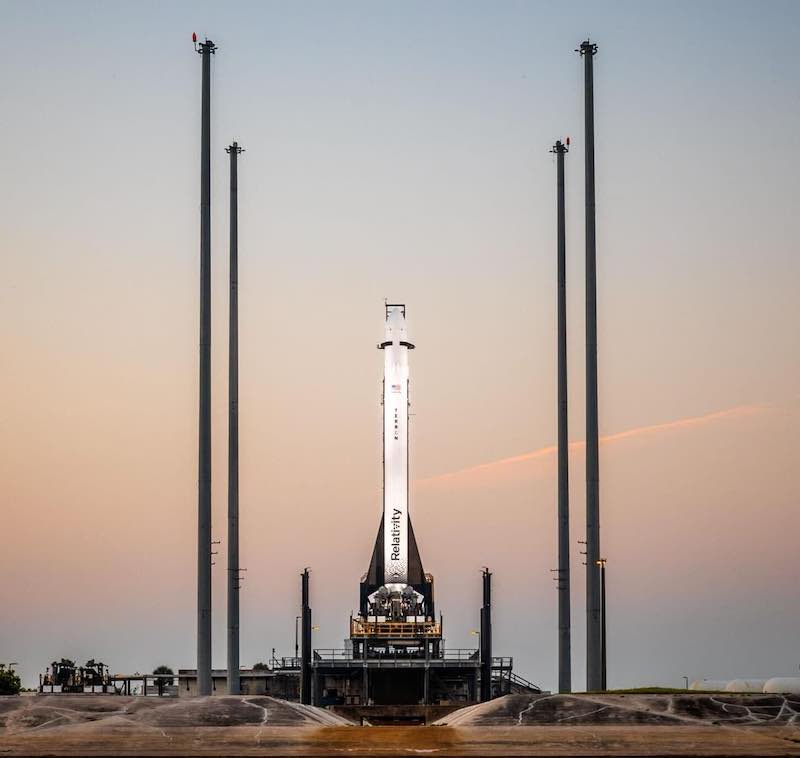
    Relativity Space writing the history by launching the world’s first 3D printed rocket, the Terran 1. This groundbreaking achievement will be a significant milestone in the aerospace industry and represents a revolutionary shift in the way we design and build rockets.

    Traditionally, rocket manufacturing has been a complex and expensive process that involves a large number of parts and specialized equipment. But with 3D printing, the potential to simplify this process and make it more cost-effective is enormous. Relativity Space has leveraged this potential to create a rocket that goes from raw material to flight, integrating artificial intelligence, robotics, and autonomous manufacturing technology.

    The Terran 1 is not only a technological marvel, but it also marks a significant shift in the aerospace industry. With 85% of its mass being 3D printed, the rocket’s primary structures are printed using a proprietary metal aluminum alloy developed in-house by Relativity. This enables the company to radically simplify the aerospace manufacturing supply chain, leading to greater flexibility and customization.

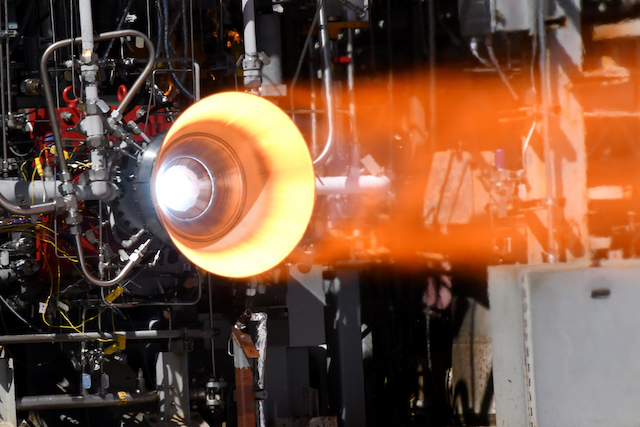
    The rocket is an expendable two-stage launch vehicle powered by liquid natural gas (LNG) and liquid oxygen (LOX) designed for future constellation deployment and resupply. It can launch up to 1,250 kilograms to low Earth orbit (LEO) for dedicated, multi-manifest and rideshare missions. With nine 3D printed Aeon 1 engines on the first stage and one 3D printed Aeon Vacuum (Vac) engine on the second stage, the rocket is 110 feet in height by 7.5 feet in diameter.

    You can watch the live launch stream above.

    The Aeon engines are fueled by liquid natural gas and liquid oxygen, utilizing the gas generator engine cycle. The tanks are autogenously pressurized with gaseous natural gas and gaseous oxygen via heat exchangers integrated into the engines. Relativity Space’s Stargate metal 3D printers enable rapid product iteration, unlocking significant improvements to product development and production.

    The potential of 3D printing in the aerospace industry is vast. The ability to print rocket parts on-demand can revolutionize the way we design and build rockets. With 3D printing, we can reduce the time it takes to produce rocket parts, reduce the cost of manufacturing, and increase the efficiency of the manufacturing process. This could lead to faster and more cost-effective space exploration.

    Relativity Space is building a highly attractive launch service offering by designing and manufacturing reusable rockets that offer high performance and reliability, while costing less to produce and fly. The company’s innovative approach to aerospace manufacturing is driving the inevitable shift toward software-defined manufacturing, which will drive innovation on and off planet Earth.

    Terran 1 – Relativityspace

    The Terran 1 launch is just the beginning of a new era in space exploration. With 3D printing and other advanced manufacturing technologies, we can revolutionize the way we explore space. The potential of additive manufacturing is vast, and we are excited to see what the future holds for this innovative technology.

    3D printing is not only a game-changer for rocket manufacturing but also for spacecraft components, satellites, and other equipment used in space exploration. This could lead to more cost-effective and efficient space missions, making it easier to explore our solar system and beyond.

    At Addithive, we are excited to see Relativity Space and other companies pushing the boundaries of what is possible with additive manufacturing. We believe that 3D printing has the potential to change the world, and we are thrilled to see how it will transform the aerospace industry and beyond.

    The Terran 1 launch is a testament to the potential of additive manufacturing to revolutionize the industry. The rocket is not only a technological marvel but also a symbol of a significant shift in the way we think about space exploration. We are excited to see what the future holds for

  • Additive Manufacturing for The New Space Age

    Additive Manufacturing for The New Space Age

    The space industry is a great field for new technology development. The challenges such as lightweight and stronger components with the demand for higher trust and lighter rockets that can reach mars propel the demand for more advanced components. Emerging technologies are almost always initiated in space or defense industries because the demand for the better originates in these industries either by war or competition in the industry. Additive Manufacturing is also incepted in the aerospace industry and there are several great examples Large rockets, aircraft engines, satellites are all requires lighter and stronger parts. and the good thing is that the production volume for industrialization of these components way lower than the automotive industry. This makes these platforms a disruptive opportunity.

    Additive manufacturing provides faster cycle time and leaner production of testing components for a space platform program. This both the design cycle of the components and the overall schedule of the development programs. Another advantage of additive manufacturing for space components is the reduction of complexity. Additive manufacturing enables the complexity of the component while reducing the complexity of the overall realization of the component. Combining several sub-parts into a combined assembly that can be built by additive manufacturing. We will go over some of the recent advancements that are developed by different NASA research centers. We will go over Rocket engine component examples that are developed with additive manufacturing technology such as injectors, turbopumps, combustion chamber and more. These advancements are great examples and paves the way to new space age for reaching Mars and beyond.

    Rocket Engine Injectors

    Rocket Engine fuel injectors are simple but one of the most critical of a rocket engine because it defines the theoretical performance of the rocket nozzle. A well-designed injector enables efficient burning of the propellant. In addition to that, injectors help to reduce the thermal loads on the nozzle by cooling the internal nozzle surface with fuel. Injectors can be made by drilling small holes with a designed pattern that fuel and oxidizers travel. The holes break the fuel into small droplets, smaller the droplets burned easily and the efficiency of the combustion increased. The holes are can be drilled in conventional ways but it is costly when compared to additive manufacturing. Rocket engine injector successfully tested at NASA Glenn research center Rocket combustion lab with a benefit of lead time from 1 year to 4 months and 70% less cost. The main cost out opportunity is to reduce the number of parts. The additive injector has 2 parts, while its conventional version has 115 parts. This is a disruptive reduction for both cost, program execution, and simplification of the supply chain.

    NASA/MSFC

    Rocket Engine Turbopumps 

    Rocket Engine Turbopumps produce high-pressure propellant to feed rocket engine combustion chamber. These pumps are designed with turbo-machinery principles and the design of these components is as hard as a jet engine yet a well-designed turbopump can deliver 70–90% efficiency. This particular turbopump makes 90000 revolutions per minute (RPM) to pump propellant. NASA has developed a turbopump in 2015 for liquid hydrogen, which is an ideal propellant for space missions but it is pumped at -240 Celcius. Rocket engine turbopump has 45% fewer parts. Combining several parts into one complex additive part dramatically reduces both costs and the weight of the component. On top of that reducing the number of parts simplifies the supply and realization of the hardware.

    This rocket engine fuel pump has hundreds of parts including a turbine that spins at over 90,000 rpms
    NASA/MSFC

    Gimbal Cone

    There are many methods to change the exhaust direction of the rockets. One of the methods is to use a gimbal system. A gimbaled nozzle tilts the engine nozzle in the proper direction. Below Gimbal cone made of titanium at ORNL, The process used for this component is Electron Beam Melting. When compared to investing casting or other conventional manufacturing methods. The manufacture of titanium components like this gimbal has a great potential to reduce costs as well as lead time and overall weight of the component. Titanium alloys are expensive yet they provide lightweight and strong components. Especially Ti-6Al-4V is a great alloy for rockets, jet engines, and satellites. Of Course, there are challenges like material properties and how are these are changing with the variation of process features. Powder Process microstructure relations are complex and need to be investigated.

    NASA

    Rocket Engine Combustion Chamber 

    Rocket fuel and oxidizer flow in to combustion chamber with the help of turbo pump since the pressure inside the combustion chamber is extremely high. The combustion chamber mixes oxidizer and the fuel. The temperatures inside of the combustion chambers is over 2750 Celcius. This is far more than the melting temperature of copper alloy. In order to protect the chamber from melting during this extreme operation, It is being cooled by the extremely low temperature (-173 Celcius ) gas circulation inside the 200 tiny channels. These channels can only be manufactured by additive technology. It takes more than 10 days to build this rocket component but it is way faster than to manufacture it with conventional ways. Copper is a good heat conducter and this makes it a great match for this application. However, it makes it hard to melt with a laser scan. Overcoming these obstacles is not easy but enables game change rocket engines.

    NASA/MSFC/Emmett Given

    Structural Jacket using EB FFF (Free Form Fabrication)

    Copper combustor liners are good for thermal conductivity but they are not very strong. In order to solve this problem, it is covered with an IN625 (Nickel Alloy) structural jacket. Electron Beam Free Form Fabrication is a directed energy deposition technology. In this technique Electron Beam is used as energy source and it is directed to melt metal wires which are IN625 for this application. It is a very fast process that is developed by Sciaky Inc to deliver 5kg/hour. EB FFF technology derived from Electron Beam welding process which has been used in aerospace industry more than 50 years. One of the challenges of this process it works under vacuum since electron beam can only be generated by vacuum.

    NASA/MSFC/David Olive

    Rapid Analysis and Manufacturing Propulsion Technology (RAMPT) :

    NASA is working on Rapid Analysis and Manufacturing Propulsion Technology (RAMPT) to advance novel design and manufacturing technologies while increase scale, reduce cost, and improve performance of rocket engine components. Key focus areas of the program as below :

    1. Directed Energy Deposition (DED) focusing on blown powder techniques to enable integrated cooled channel wall nozzle.
    2. Multi material additive manufacturing modalities such as bimetallic and multi-metallic deposition techniques focusing on copper and nickel based super alloys.
    3. Engineering and simulation tools to predict and compensate material feed techniques distortion and material properties
    4. Last but not least development of design tools to get full benefit of additive enables design which primarily focuses on integrated cooled combustion chamber and nozzle
    NASA

    Conclusion

    Additive manufacturing is a great tool to reduce weight and cost while improving perfomance. This is exact need for the space technology and next generation rocket engines. Several different additive modalities under investigatin by NASA and these will be utilized on space programs. we observe and extensive use of additive manufacturing technology on space propulsion componentst. There are still problems and issues to advance the technology such as certification of components and development new alloys suitable for additive manufacturing. However these issues are also good opportunities for additive manufacturing industry partners, universities and material producers.

    References :

    Additive Manufacturing of Aerospace Propulsion Components -Dr. Ajay Misra, Dr. Joe Grady and Robert Carter – NASA Glenn Research Center Cleveland, OH – Doc: 20150023067 – https://ntrs.nasa.gov/citations/20150023067

    Lightweight Thrust Chamber Assemblies using Multi- Alloy Additive Manufacturing and Composite Overwrap – Paul R. Gradl , Chris Protz   John Fikes, Allison Clark NASA Marshall Space Flight Center, Huntsville, AL Laura Evans , Sandi Miller6, David Ellis NASA Glenn Research Center, Cleveland, OH Tyler Hudson NASA Langley Research Center, Hampton, VA