Category: News

  • Additive Manufacturing is No Longer the Future

    Additive Manufacturing is No Longer the Future

    It’s the Engine of Industrial Transformation

    By mid-2025, additive manufacturing (AM) has broken out of the prototyping corner and taken center stage as a pillar of Industry 4.0. With a global market value projected to soar from $20.37 billion in 2023 to $88.28 billion by 2030, at a staggering 23.3% CAGR, AM is no longer an emerging technology—it is a strategic enabler of design freedom, supply chain resilience, and sustainable production.

    What’s driving this explosive trajectory? A potent mix of next-generation hardware, novel material breakthroughs, automation-first workflows, and globally coordinated regulatory frameworks. And yet, for all its promise, AM’s future hinges on our ability to scale precision, ensure repeatability, and harmonize standards. This article unpacks the current state and near-future outlook for additive manufacturing through three pivotal lenses: technological innovationregulatory evolution, and regional momentum.


    From Prototype to Production – How Next-Gen Additive Technologies Are Breaking Barriers

    “From five-micron tolerance to decentralized, high-volume output, AM is reinventing how we think about manufacturing itself.”

    By 2025, the range and maturity of AM technologies have expanded dramatically. Innovations now span nearly every corner of the additive toolbox, each solving a specific pain point in the production chain:

    🔧 Precision and Performance

    High-resolution powder bed fusion systems like Aixway3D’s Precision-100 deliver tolerances as tight as 2–5 microns, enabling aerospace-grade parts with minimal post-processing. Meanwhile, selective laser sintering (SLS) solutions from 3DPS now hit 1 mm wall thickness with 0.2 mm precision—capabilities critical for functional parts in aerospace and healthcare.

    Additive manufacturing machine with a control panel, a screen, and various components designed for precision 3D printing.
    https://aixway3d.de

    🤖 Automation and Scaling

    Automation has moved from vision to implementation. AM-Flow’s robotic workflows and Printinue’s continuous production loops allow fully digitized, lights-out manufacturing. These systems aren’t just cost savers—they’re the scaffolding for decentralized, on-demand production hubs.

    🧪 Material Science at the Forefront

    Sustainability and performance are converging. f3nice is commercializing recycled metal powders, while Foundation Alloy focuses on high-performance, application-specific metals. In the polymer world, RAYSHAPE’s DLP machines and NematX’s liquid crystal polymers (LCP) are redefining precision and durability.

    🧬 Biological Integration

    Bioprinting is transitioning from lab experiment to clinical pilot. Brinter’s modular bioprinters are enabling scaffold fabrication for tissue engineering, while medical-grade resins are entering the DLP mainstream thanks to Boston Micro Fabrication.

    🏭 High-Volume Breakthroughs

    Q.big 3D’s QUEEN 1 introduces Volumetric Filament Grid Fusion (VFGF), enabling affordable large-part production. Pair this with Phasio’s decentralized manufacturing software, and the result is an elastic production model, ready for reshoring supply chains.

    A modern 3D printer, labeled 'QUEEN 1' by Q.big 3D, designed for high-volume additive manufacturing, featuring a sleek black and white exterior.
    https://www.qbig3d.de/

    Yet, for all the progress, challenges persist: throughput in metal AM remains relatively low; material costs are still high for certain alloys and biocompatible resins; and post-processing—though improving—is often the bottleneck in full-stack workflows.


    The Rules Are Changing – Regulation, Standardization, and Safety in a Maturing Ecosystem

    “AM’s growth is as much about digital lasers as it is about legal lines.”

    As additive manufacturing moves into regulated industries—healthcare, aerospace, defense—the rulebook is expanding fast. The real story of 2025 isn’t just what we can print, but what we’re allowed to.

    the word compliance written in scrabble letters

    🧭 Healthcare: Navigating FDA Waters

    The U.S. FDA’s framework for additive medical devices demands rigorous testing on porosity, mechanical integrity, and traceability. While this ensures patient safety, smaller companies often face steep regulatory and cost barriers. Quality assurance software, in-situ monitoring, and ISO-aligned certification programs are becoming baseline requirements.

    ✈ Aerospace & Safety Protocols

    The EN ISO/ASTM 52938-1 standard in Europe now governs laser beam and powder machine safety, with ISO/ASTM 52931 setting the groundwork for metallic material properties. These standards are essential—but introduce a lag between tech innovation and regulatory acceptance. The result? Slower integration of novel materials in high-stakes use cases.

    🧠 Intellectual Property in a Digital World

    2025 IP landscape is shifting. With digital inventories and mass customization, we’re entering an era of design ownership complexity. Licensing platforms and blockchain verification may offer the next frontier in securing AM intellectual property.

    🔒 Sector-Specific Limits: Formula 1 & Defense

    Regulation isn’t always enabling. Formula 1’s 2026 technical guidelines now limit AM for critical components like heat exchangers—highlighting how even proven technologies can be gated when safety margins are razor-thin.

    So what’s the path forward? Ongoing standardization and government-supported certification labs—like those seen in India and the U.S.—are helping harmonize global frameworks. But until regulations match innovation speed, AM will need to navigate cautiously through fragmented compliance landscapes.


    Around the World in 3D – Regional Powerhouses and National Strategies

    “In the global AM race, innovation is local—but ambition is universal.”

    The geographic spread of additive manufacturing tells a compelling story: while the technology is global, its development is deeply regional. Each powerhouse has distinct goals, advantages, and policy frameworks.

    close up of globe

    🇺🇸 North America – Defense, Healthcare, and Private Capital

    With >34% global market share, the U.S. leads in AM R&D and deployment. Initiatives like America Makes and NIST’s metrology efforts drive certification and workforce development. The sector thrives on defense and aerospace demand, bolstered by deep venture capital pools (over $600M in VC funding in 2018 alone).

    🇪🇺 Europe – Innovation Through Standardization

    Home to EOS, Materialise, and Voxeljet, Europe’s AM leadership rests on strong public-private R&D. EU initiatives fund sustainability-focused programs, while standardization bodies build the backbone for cross-border interoperability.

    🇮🇳 India – AM as a Strategic Leapfrog

    India’s 2022 National Strategy set bold goals: 100 startups, 100,000 trained workers, and 50 certified AM products by 2025. With Atal Tinkering Labs and seven state-funded AM centers, India is fast-tracking homegrown innovation. Healthcare and tooling are immediate beneficiaries.

    🇨🇳 China – Industrialization and Scale

    Though detailed 2025 stats were lacking, policy momentum points to AM’s central role in China’s manufacturing modernization. With strengths in automotive and consumer electronics, China’s scale advantage and national industrial policies make it a formidable player.

    Regional insights also reveal who’s betting big on decentralized manufacturing. For instance, India’s state-level partnerships and U.S. startups using Phasio’s cloud-driven tools point toward a future of “digital-first factories”—where agility, not just output, defines competitiveness.


    The Next Five Years Will Redefine What We Call a Factory

    Additive manufacturing in 2025 isn’t a novelty—it’s a necessity. As supply chains de-risk, as sustainability moves from CSR to ROI, and as engineers demand more from geometry and performance, AM answers the call.

    But the real transformation lies ahead. From 2025 to 2030, we’ll likely see:

    • Cost parity with traditional methods through high-throughput and automated workflows
    • Explosive material diversity, including bioresorbable implants and aerospace-grade recycled alloys
    • Mainstream adoption of hybrid AM-CNC lines for mass customization
    • Wider use of digital inventories, fundamentally changing spare parts and MRO economics


    If you’re leading innovation in engineering or manufacturing, now is the time to ask: Is your product portfolio designed for AM? Are your teams trained in DfAM principles? Are your suppliers AM-capable?

    The next industrial leap won’t be won by those who wait for standards to stabilize or costs to drop—it will be led by those who experiment, partner, and evolve with the technology.

    The additive future is not just being built. It’s being printed—one micron at a time.


    Technical Terms:

    • AM – Additive Manufacturing
    • PBF – Powder Bed Fusion
    • SLS – Selective Laser Sintering
    • DLP – Digital Light Processing
    • LCP – Liquid Crystal Polymer
    • VFGF – Volumetric Filament Grid Fusion
    • FDM – Fused Deposition Modeling
    • WAAM – Wire Arc Additive Manufacturing
    • DED – Direct Energy Deposition

    Design and Process Frameworks:

    • DfAM – Design for Additive Manufacturing
    • TRL – Technology Readiness Level
    • CAD – Computer-Aided Design

    Standards and Regulatory Bodies:

    • EN ISO/ASTM 52938-1 – European/International Standard for Safety in Laser-Based Additive Manufacturing Machines
    • ISO/ASTM 52931 – Standard for Metallic Materials in Additive Manufacturing
    • FDA – Food and Drug Administration
    • NIST – National Institute of Standards and Technology

    Organizations and Initiatives:

    • R\&D – Research and Development
    • VC – Venture Capital
    • IP – Intellectual Property

    📚 Works Cited

    America Makes. Public-Private Partnership for Additive Manufacturing. 2025.

    AMFG. Additive Manufacturing Around the World: North America and Europe. Additive Manufacturing Global, 2025.

    Engineering.com. Additive Manufacturing Progress Update – April 2025. 2025.

    Grand View Research. Additive Manufacturing Market Size Report, 2030. 2025.

    India Brand Equity Foundation (IBEF). National Strategy on Additive Manufacturing. 2022.

    KAN – Kommission Arbeitsschutz und Normung. Standardization in Additive Manufacturing. 2025.

    Massivit. 3D Printing Trends: Additive Manufacturing 2025. 2025.

    MotoPaddock. Additive Medical Implants 2025: Rapid Growth & Disruptive Innovation. 2025.

    National Institute of Standards and Technology (NIST). Additive Manufacturing Initiatives. 2025.

    ScienceDirect. Economic and Regulatory Perspectives on Additive Manufacturing. 2025.

    Silicon UK Tech News. The State of Additive Manufacturing 2025. 2025.

    StartUs Insights. Top 10 Additive Manufacturing Trends in 2025. 2025.

    VoxelMatters. Exploring Additive Manufacturing in the 2026 Formula 1 Technical Regulations. 2025.

  • Shapeways and the Future of AI-Powered Robotics

    Shapeways and the Future of AI-Powered Robotics

    The world of manufacturing is undergoing a seismic shift, and at the forefront of this transformation is Shapeways Holdings, Inc. (NASDAQ: SHPW). As a global leader in digital manufacturing, Shapeways has recently announced a staggering 90% year-over-year growth in the robotics sector. But what’s driving this surge? The answer lies in the increasing adoption of artificial intelligence (AI) within robotics applications.

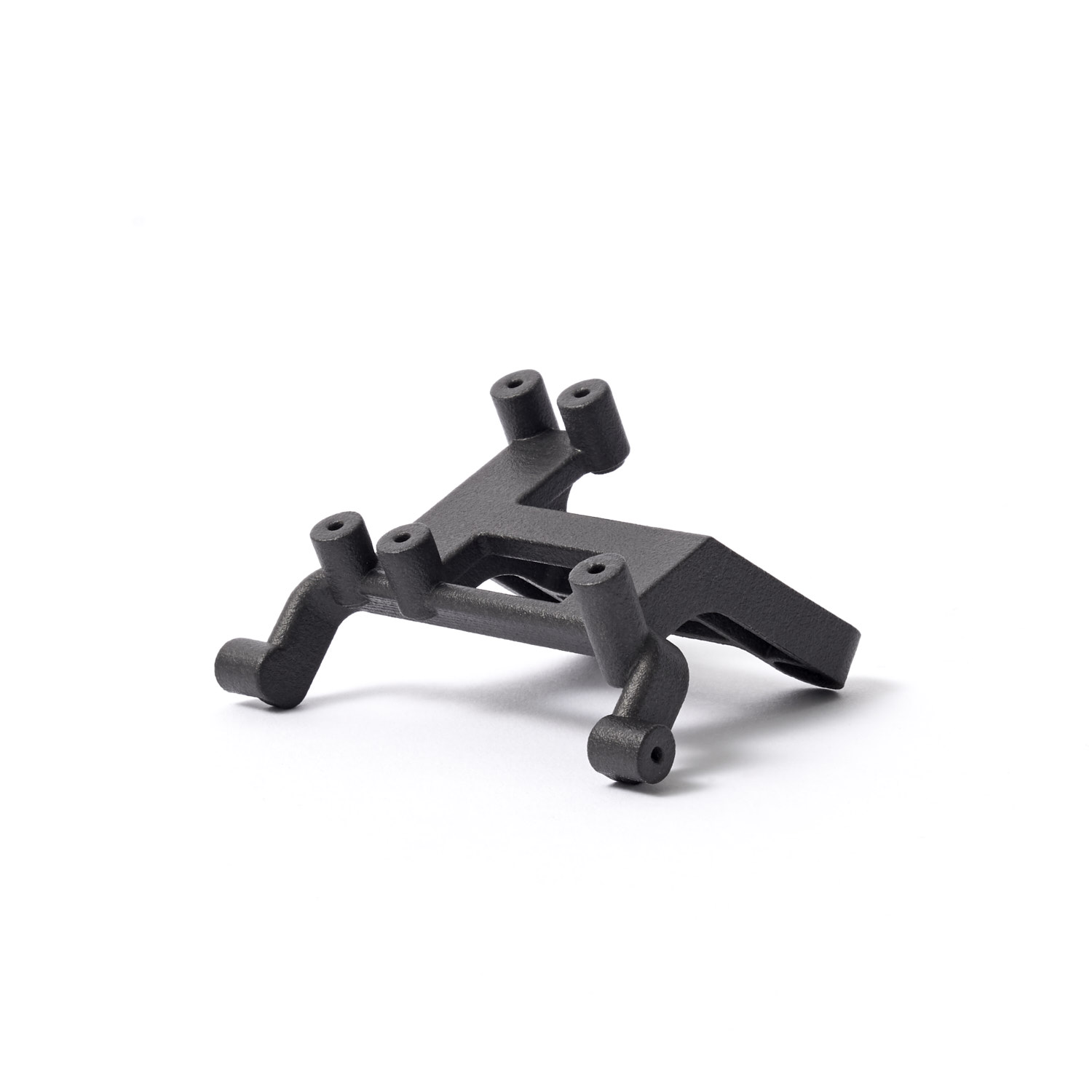
    Shapeways parts
    Shapeways parts

    The AI and Robotics Synergy

    The integration of AI into robotics is not just a trend; it’s a revolution. Companies are increasingly relying on Shapeways to meet the burgeoning demand for AI-powered robotic products. The reason? Shapeways’ Enterprise Manufacturing Solutions offering, which has been instrumental in acquiring new business from long-standing customer relationships.

    The numbers speak for themselves. With the robotics industry projected to be worth a whopping $260 billion by 2030, Shapeways is strategically positioning itself as a pivotal player. A testament to this is their recent expansion of a multi-year partnership with a leading robotics firm specializing in AI-driven robots for healthcare.

    Shapeways parts
    Shapeways parts

    Digital Manufacturing: The Game Changer

    Shapeways’ success doesn’t just stem from its ability to manufacture parts. It’s their innovative approach to digital manufacturing that’s making waves. As Aidan O’Sullivan, GM of Enterprise Solutions for Shapeways, rightly points out, the value of digital manufacturing for robotics is immense. It offers scalability, customization, and efficiency, minimizing overheads and maximizing output.

    But it’s not just about additive manufacturing. Shapeways’ expertise in tooling and molding, especially for high-volume parts, plays a pivotal role in their success story.

    The Broader Impact

    Shapeways’ impact isn’t limited to healthcare. They’ve also expanded their partnership with a top robotics manufacturer in the industrial supply chain, witnessing a fourfold increase in revenue year-over-year. This underscores the versatility and flexibility of digital manufacturing, especially when powered by AI and automation.

    According to Precedence Research, the global market valuation of AI in manufacturing is set to reach a staggering USD $68.4 billion by 2032. This projection underscores the transformative potential of AI in reshaping the manufacturing landscape.

    Looking Ahead

    As Greg Kress, CEO for Shapeways, emphasizes, the company’s dedication goes beyond mere manufacturing. They’re committed to fostering innovative advancements in the robotics sector. With AI’s increasing adoption, robotics is set to become even more integrated across various industries, automating processes and harnessing innovation.

    In conclusion, as robotics continues to evolve with AI capabilities, Shapeways is uniquely positioned to drive innovative solutions across sectors. For those keen on delving deeper into this fascinating intersection of AI, robotics, and manufacturing, keeping an eye on Shapeways’ journey might offer valuable insights.

    Source: Shapeways Holdings, Inc. Press Release

  • Formlabs Launches TPU 90A Powder, the First Elastomer Material for Fuse Series 3D Printers

    Formlabs Launches TPU 90A Powder, the First Elastomer Material for Fuse Series 3D Printers

    Attention all 3D printing enthusiasts! The news is out and it’s hot off the press. Formlabs, the leading 3D printing company, has just announced the release of their newest material for Fuse Series printers – TPU 90A Powder! This tough elastomer powder is a game-changer for a variety of industries, including healthcare, consumer goods, manufacturing, and engineering.

    This high-performance material is no joke, folks. Its strength and flexibility enable the production of fully functional parts in-house, giving engineers and manufacturers complete design freedom and a seamless workflow on the Fuse Series SLS 3D printing ecosystem. That’s right, you read it correctly. Fully functional parts created in-house. Who wouldn’t want that kind of control over their supply chain?

    But wait, there’s more. TPU 90A Powder is not only ideal for manufacturing aids and end-use parts, but it’s also perfect for creating soft touch components such as grippers, padding, and cushions. The possibilities are endless with this material.

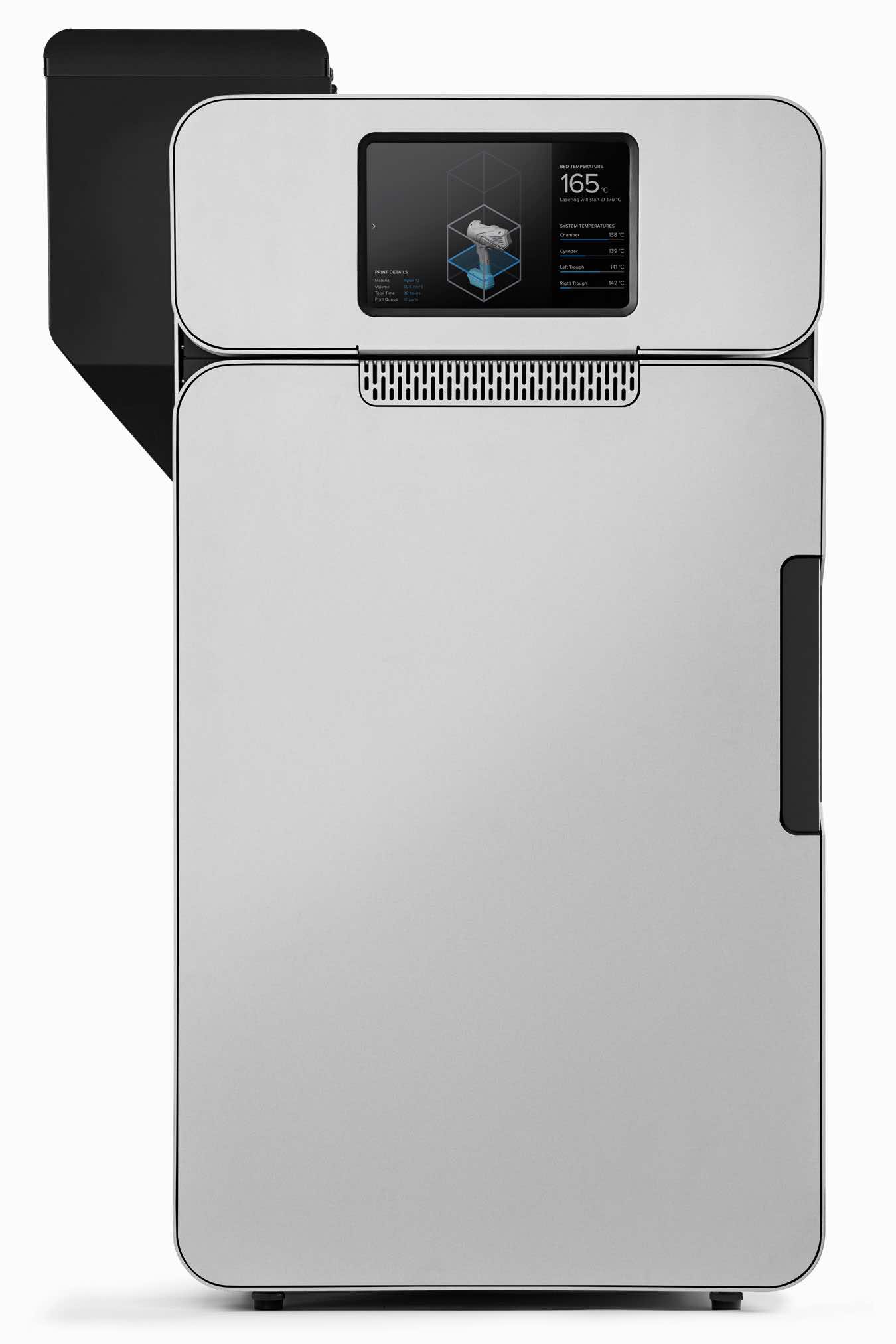
    Formlabs Fuse System

    What’s more, TPU 90A Powder is validated for skin contact, making it a prime candidate for medical applications. Prosthetics, orthotics, and other patient-specific devices requiring custom designs are no match for this material. Its softness and flexibility ensure optimal comfort and performance, ultimately improving outcomes in patient care and streamlining the medical device manufacturing process.

    Formlabs’ Chief Product Officer, Dávid Lakatos, couldn’t be more excited about the release of TPU 90A Powder. “With the release of TPU 90A Powder, we’re proud to offer a material that expands the possibilities for 3D printing across many industries, enabling users to create flexible, skin-safe parts tailored to their specific applications,” Lakatos said.

    And if you’re worried about the cost, fear not. TPU 90A Powder boasts a low cost per part for low volume production of 3D printed, flexible parts. Plus, with a refresh rate of 20%, there’s lower waste and higher efficiency, making it a smart investment for any business.

    But wait, there’s more! Formlabs’ TPU 90A Powder is part of their growing library of SLS materials, enabling their customers to create parts with a range of properties including stiffness, softness, ductility, and thermal stability. It’s no wonder Formlabs is the leading 3D printing company in the game.

    Formlabs TPU 90A SLS Powder Parts via Formlabs

    And the best part? You can get your hands on this innovative material right now. That’s right, TPU 90A Powder is available for order, and Formlabs will be showcasing it at the Formlabs booth at AMUG 2023 (booth D14).

    So, what are you waiting for? Get your creative juices flowing and let your imagination run wild with the possibilities of TPU 90A Powder. With its strength, flexibility, and skin-safe properties, the sky’s the limit when it comes to what you can create. Let’s get printing!

  • Carbon’s Gen 2 Aligner Model Solution Brings Sustainable and Cost-Effective Innovation to Clear Aligner Manufacturing.

    Carbon’s Gen 2 Aligner Model Solution Brings Sustainable and Cost-Effective Innovation to Clear Aligner Manufacturing.

    Carbon, the world’s leading 3D printing technology company, has announced its latest solution for clear aligner manufacturers that could revolutionize the industry. The Carbon® Gen 2 aligner model solution promises to bring efficiencies to the production process, enabling significant cost advantages and up to 65% increase in throughput, with less material required per print. This sustainable production solution, announced at the IDS conference in Cologne, Germany, includes new proprietary software and high-performance resin that integrate with Carbon’s existing printer hardware and aligner model workflow.

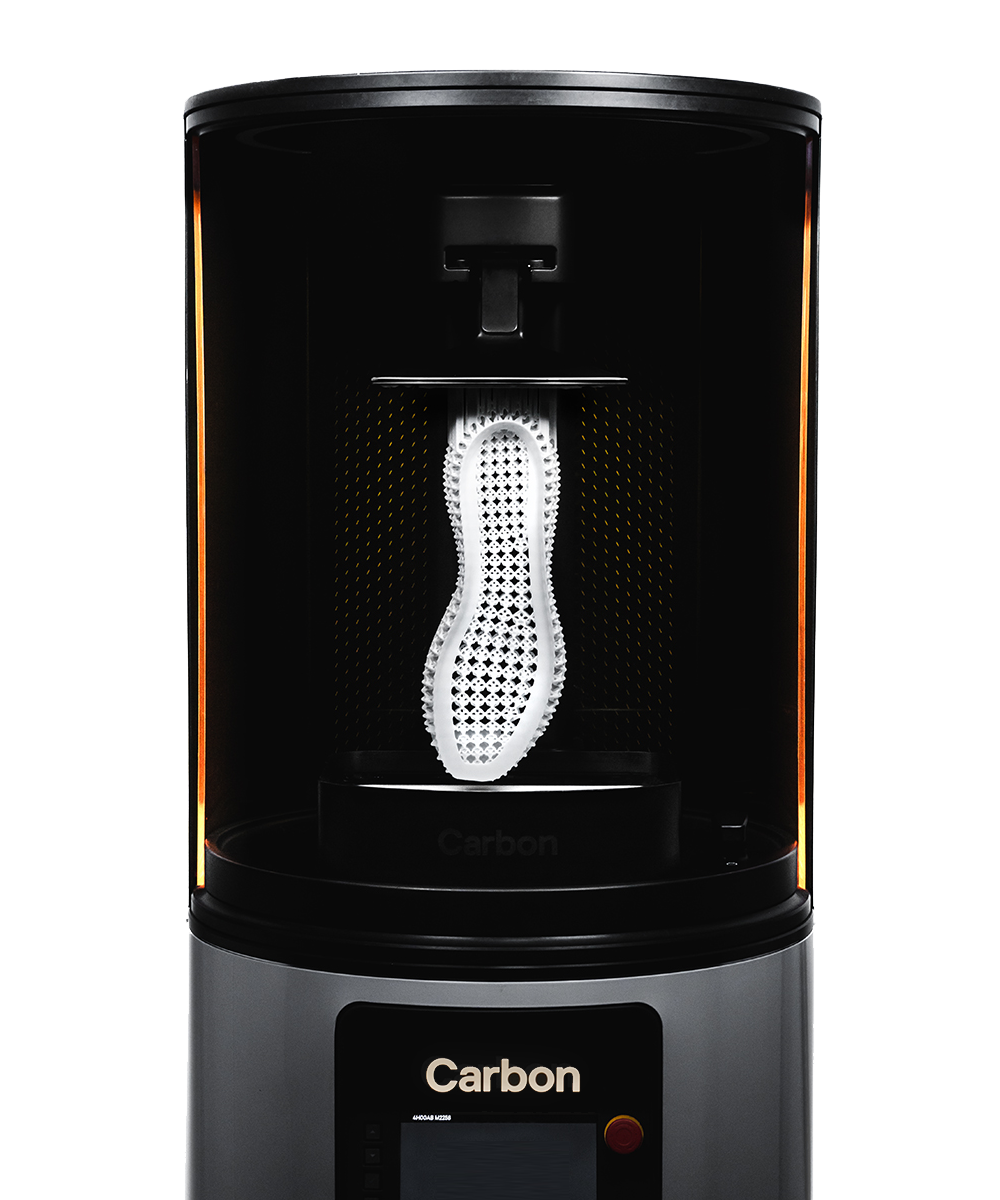
    Carbon L1 3d Printer via Carbon3d

    The Gen 2 aligner model solution is designed to offer new and existing customers integration with Carbon’s existing clear aligner workflow, which is already used by leading aligner manufacturers to produce millions of custom clear aligners worldwide each month. The solution includes the Carbon L1 printer, solventless spin cleaning solution, and API-based software that automates the hollowing, nesting, and batching of models to be printed. The new UMA 20 resin, engineered in parallel with Carbon’s new production solution, automatically hollows models, a revolutionary approach that creates a cost-effective and sustainable solution for clear aligner manufacturers.

    One of the most exciting benefits of this new solution is the potential to reduce material consumption by up to 40% per model, while increasing throughput up to 65% with the Carbon L1 printer. This means aligner manufacturers can produce more aligners in less time, at a lower cost, without compromising quality. The automated hollowing software, paired with the UMA 20 resin, enables increased part throughput, making the production process more efficient and streamlined.

    Another significant advantage of the Gen 2 aligner model solution is improved sustainability. The solution features improved solvent-free model cleaning, which eliminates solvent waste and allows resin to be reclaimed for future use. Aligner manufacturers can save money and reduce their environmental footprint by using this more sustainable production process.

    Carbon 3d

    Terri Capriolo, Senior Vice President, Oral Health at Carbon, spoke about the new solution, saying, “Working with the top clear aligner companies has given us insight into the barriers this industry faces on a daily basis. We heard from customers and we took action to create efficiencies and cost savings in the clear aligner workflow. This new aligner workflow is designed to enable Carbon customers to reduce cost per part while simultaneously improving model throughput with a more sustainable production process.”

    The Carbon® Gen 2 aligner model solution will be available to customers in the second half of 2023. It will be showcased at the IDS Conference, a leading global trade fair for the dental community, which took place in Cologne from March 14-18, 2023. Aligner manufacturers can learn more about the solution and its benefits by visiting the Carbon website.

    Overall, the Carbon® Gen 2 aligner model solution is an exciting development for the clear aligner industry. The ability to produce more aligners in less time, at a lower cost, while also reducing material consumption and improving sustainability, makes this solution a game-changer. Carbon continues to innovate and push the boundaries of 3D printing technology, and we can’t wait to see what they come up with next.

  • Desktop Metal and Sandvik Additive Manufacturing Qualify Copper Alloy C18150 for Production System™: Joint Automotive Project Unveiled at AMUG 2023

    Desktop Metal and Sandvik Additive Manufacturing Qualify Copper Alloy C18150 for Production System™: Joint Automotive Project Unveiled at AMUG 2023

    Desktop Metal, in partnership with Sandvik Additive Manufacturing and a top five global automaker, has announced that copper alloy C18150, also known as chromium zirconium copper, has been DM Qualified for binder jet 3D printing on the Production System. This material is commonly used in electrical and electronic components due to its high-strength and high-conductivity properties. The automaker is testing a unique 3D printed part design, which is being developed for a future production application, in C18150 using Sandvik’s Osprey metal powder. The companies will discuss details of this joint automotive project during a presentation at AMUG 2023 in Chicago. With the addition of C18150, Desktop Metal now offers a world-leading 23 metal materials on its binder jet 3D printing systems, including the Shop System, Production System, and X-Series platforms.

    Chromium zirconium copper offers a combination of strength, conductivity, and corrosion resistance that makes it suitable for a wide range of industrial and commercial applications. The material has now been qualified for use on the high-speed Printing System platform in collaboration with Sandvik Additive Manufacturing, who provided C18150 powder that routinely delivered as-sintered densities of 98-99% when printed on the P-1. The automaker will scale a part design in C18150 for serial production on the Production System P-50 after additional development.

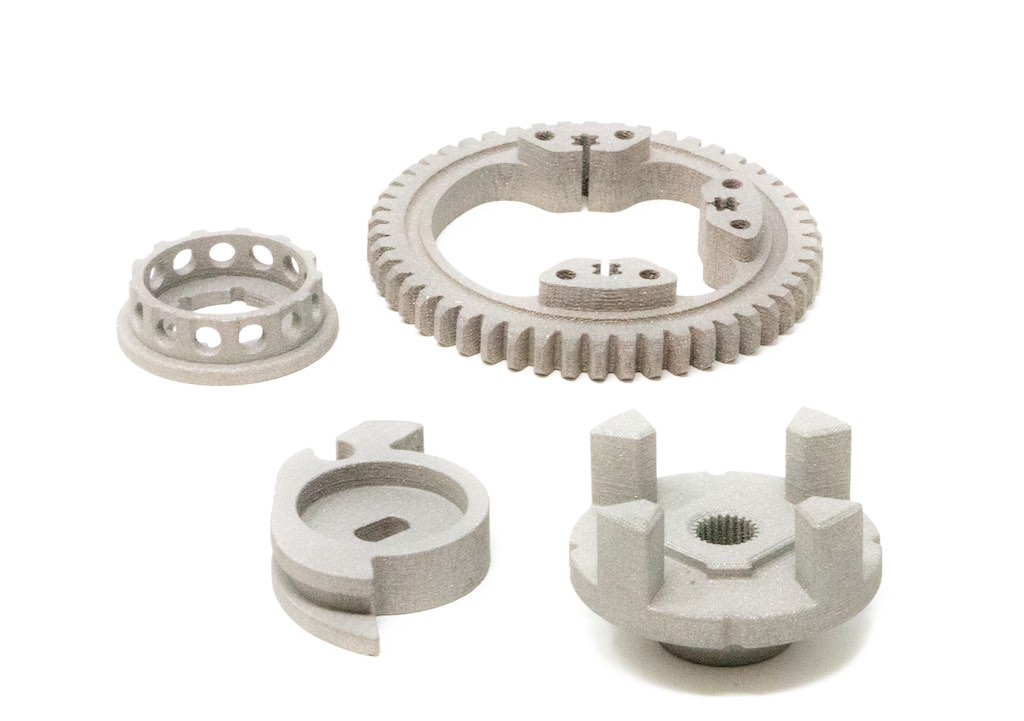
    Chromium zirconium copper parts via Desktop Metal

    Desktop Metal’s founder and CEO, Ric Fulop, expressed pride in announcing the qualification of chromium zirconium copper as a qualified material, bringing the company’s world-leading portfolio of binder jet materials to 23 metals. He also highlighted the simultaneous announcement of 304L qualification on the Shop System and Ti64 customer-qualification on the Production System. The company’s experts are collaborating with customers on application-specific material and part qualification projects for future Additive Manufacturing 2.0 production.

    Desktop Metal Production System

    Desktop Metal’s binder jet technology can 3D print almost any powder. The company has a tiered material qualification system for metals to signify the varying levels of material property results produced by its technology. DM Qualified signifies printing and sintering profiles developed by DM, with fully characterized material and mechanical properties that meet MPIF or other similar standards where available. Customer-Qualified materials have been qualified by customers with their own standards and are being successfully printed for their own applications. R&D Materials signify initial testing completed by DM demonstrating binder and process compatibility, with printing and sintering profiles under final development.

    The Production System platform features high-speed Single Pass Jetting (SPJ) technology on two models: the P-1, for research and development of binder jetting projects for serial production, and the P-50, the world’s fastest metal binder jet system, offering the lowest cost per part, with SPJ technology. With C18150 qualification, the Production System now offers a wider range of options for customers seeking to use copper alloys in their products.

    Desktop Metal and Sandvik will provide an update on binder jetting of Ti64 and Al6061 at AMUG 2023. The companies will also discuss details of the automotive project during a panel discussion from 1:30-2:30 p.m. on Thursday, March 23, in the Joliet Room at the Hilton Chicago.

    In conclusion, Desktop Metal’s qualification of copper alloy C18150 for binder jet 3D printing on the Production System, in collaboration with Sandvik Additive Manufacturing and a top five global automaker, represents a significant milestone in the company’s efforts to provide a world-leading portfolio of binder jet materials to its customers. The partnership has demonstrated the capabilities of binder jetting in the production of complex parts in copper alloys, opening up a range of applications in thermal transfer and other

  • Desktop Metal and TriTech Titanium Parts Bring Titanium Alloy Ti64 to Binder Jet 3D Printing on the Production System™

    Desktop Metal and TriTech Titanium Parts Bring Titanium Alloy Ti64 to Binder Jet 3D Printing on the Production System™

    TriTech Titanium Parts LLC, a Detroit-based manufacturer of titanium parts for aerospace, marine, and automotive industries, and Desktop Metal, Inc., a global leader in additive manufacturing technologies for mass production, have announced the customer-qualification of Ti64 for binder jet 3D printing on the Production System™. The high-speed Single Pass Jetting (SPJ) technology platform features two models: the P-1, for research and development of binder jetting projects for serial production, and the P-50, the world’s fastest metal binder jet system, offering the lowest cost per part with SPJ technology. Ti64 is a popular material, known for its excellent strength-to-weight ratio, corrosion resistance, and biocompatibility. Binder jetting of Ti64 simplifies the production of complex titanium parts, which can be challenging and expensive to fabricate using traditional manufacturing methods.

    Desktop Metal Production System via Desktop Metal

    TriTech Titanium Parts LLC, which is ISO 9001:2015 certified, uses metal injection molding (MIM), investment casting, and now binder jet 3D printing on the Desktop Metal Production System P-1 to produce titanium parts. The company is a spin-off of AmeriTi Manufacturing Co., which was founded in 1984 and sold last year to Kymera International.

    TriTech’s owner, Robert Swenson, who is also the former owner of AmeriTi, stated that with binder jet 3D printing, titanium production of even the most complex geometries can be greatly simplified and achieved at a lower cost. Swenson, a graduate of Purdue University with a degree in Metallurgical Engineering and an MBA from Harvard Business School, is incredibly proud to be the first Desktop Metal Production System P-1 customer worldwide to binder jet 3D print titanium, and the company is excited to offer this new manufacturing technology to its customers.

    With the latest addition to the material portfolio, Desktop Metal offers the ability to binder jet 23 metals, including copper, aluminum, and now, titanium. Ric Fulop, Founder and CEO of Desktop Metal, stated that they are excited to help engineers and manufacturers produce complex, once-impossible designs in a wide range of metals, including challenging materials such as titanium.

    While Ti64 is a popular material, it’s also known for being expensive to manufacture. The material’s strength, as well as its low thermal conductivity and ductility, make it challenging to machine or produce with traditional manufacturing methods. Shaping the material with MIM requires special knowledge and processes. TriTech is among a very small percentage of companies that produce titanium parts with MIM, and the company has developed its own MIM processes after years of R&D. However, with binder jetting, the process can be simplified and made more economical.

    Binder jetting is a process where an industrial printhead selectively deposits a binder into a bed of Ti64 powder particles, creating a solid part one thin layer at a time, just like printing on sheets of paper. The form or shape produced by the printer is then sintered to high density and accuracy in a furnace, similar to the MIM process. Additionally, binder jetting allows unbound material to be reused in the process, adding to its cost efficiency.

    Desktop Metal’s binder jet technology can 3D print almost any powder, which is why the company has a tiered material qualification system for metals to signify the varying levels of material property results produced by. Production System users interested in working with titanium should consult their Desktop Metal sales representative on hardware and binder requirements.

    TriTech will discuss its experience binder jetting Ti64 at AMUG 2023, held March 19-23 in Chicago. The topic will be part of a Desktop Metal panel discussion from 1:30-2:30 p.m. Thursday, March 23,

  • Uniformity Labs Releases UniFuse™ IN718 Nickel Alloy for High-Performance L-PBF Printing

    In the world of additive manufacturing, Uniformity Labs has just released its latest innovation: UniFuse™ IN718 Nickel Alloy, optimized for L-PBF printing at 60um layer thickness. The highly advanced ultra-low porosity metal powder feedstock allows for repeatable part builds at the highest throughput, producing parts with improved and repeatable mechanical properties, even while printing at significantly higher build rates, utilizing thicker build layers, and the more efficient use of L-PBF lasers.

    But don’t take Uniformity’s word for it. Independent engineering consultancy EWI has released a detailed material property validation study on the performance of UniFuse™ IN718, conducted by Ajay Krishnan, research leader at EWI – Buffalo Manufacturing Works. The study confirms that UniFuse™ IN718 is the best-in-class material for mechanical properties, surface finish, printing yield, and part reliability, with substantially increased throughput printing at 60um layer thickness.

    via uniformitylabs

    According to Uniformity’s founder and CEO Adam Hopkins, UniFuse™ IN718 is a significant step forward for additive manufacturing, delivering on the promise of no compromise additive manufacturing. The optimized parameters for L-PBF printing at 60um layer thickness with lasers power at 400W achieved a 2.2X faster exposure time and superior, more uniform mechanical properties compared to competitors’ lower layer thickness scan strategies targeting best-in-class mechanical properties.

    With the new UniFuse™ IN718 release, Uniformity Labs has addressed the industry challenge of achieving serial production in AM economically, allowing additive manufacturing to become an increasingly better-established serial production tool. Its highly advanced ultra-low porosity metal powder feedstock, currently in production under the product brands UniFuse™ (for L-PBF) and UniJet™ (for binder jetting), has dramatically improved the ability to produce high-quality parts repeatedly and at scale.

    In conclusion, the release of UniFuse™ IN718 nickel alloy by Uniformity Labs, along with its optimized scanning parameters, is a significant development in additive manufacturing. The ability to print with 60um layer thickness and achieve 2.2 times faster exposure time with superior mechanical properties compared to competitors’ lower layer thickness strategies is a game-changer. The independent validation study conducted by EWI adds further credibility to the product and its capabilities. With the development of its ultra-low porosity metal powder feedstock, Uniformity Labs is addressing the challenge of achieving serial production in AM economically. The impact of this development on the industry is significant, as it will enable additive manufacturing to become an increasingly established serial production tool. The availability of steel, aluminum, and titanium powders under the brand UniFuse™ and UniJet™, with many others nearing availability, shows that the technology is advancing rapidly. This news is a clear indication that additive manufacturing is continuously evolving, and new innovations will undoubtedly push its limits even further in the future.

    via uniformitylabs

  • Revolutionize Your Manufacturing with Desktop Metal’s Live Suite: The Most Intuitive and Powerful 3D Printing Software Yet!

    Revolutionize Your Manufacturing with Desktop Metal’s Live Suite: The Most Intuitive and Powerful 3D Printing Software Yet!

    Desktop Metal has announced the launch of Live Suite, a software package that simplifies the 3D printing process for metal, polymer, and ceramic parts. Live Suite builds on the success of the company’s Live Sinter™ simulation software, allowing users to bring their digital design data to life with ease and precision.

    Utilizing advanced multi-physics simulation technology based on state-of-the-art GPUs, Live Sinter generates new design shapes that will produce the desired final part within tight tolerances. The software applies machine learning to calibrate the simulation process and match real-world results for the world’s largest binder jet system install base.

    According to Ric Fulop, founder and CEO of Desktop Metal, “AM 2.0 is a digital manufacturing process that is ultimately powered by software, and we believe Live Suite offers the most intuitive and powerful AM software on the market.”

    Desktop Metal’s Live Suite End-to-End Software Hub

    Live Suite eliminates the need for users to purchase expensive 3D printing software programs to operate their equipment. The platform is designed to keep digital manufacturing accessible, so users have the tools they need and do not pay for expensive features they don’t require.

    The Live Platform is a cloud-based hub for all Live Suite applications and services, organized into four content categories: build, manage, learn, and support. It allows users to manage their entire workflow in one location with 2FA security.

    Live Platform is also the central administration hub for Live Suite, with the ability to provision and manage Desktop Metal 3D printing systems and users, as well as access firmware updates, knowledge, and technical support. The new Business Units feature allows larger companies with multiple users and departments to easily manage 3D printer permissions and controls for groups.

    Live Suite includes a range of application-specific options, such as part serialization or optimized build instructions for specific parts ranging from dentures to valves. Special add-on features include Autopilot, which automates build preparation, and Live Monitor, which will soon be available to remotely view jobs as they progress through printers and ancillary equipment.

    Live Suite offers several tools, including Live Sinter™, Live Build™ MFG, Live Build™ DLP, and Live Studio™. Live Sinter simplifies the production of sintered metal parts via binder jetting with powerful, generative AI multi-physics sintering simulation and new, scan-based adjustments that deliver parts with tight tolerances. Live Build MFG supports build preparation for all binder jet 3D printing of metal, wood, ceramic, and sand designs, while Live Build DLP is desktop-based build preparation software for customers of Desktop Health and ETEC digital light processing printers. Live Studio supports slicing and build preparation for Desktop Metal’s Bound Metal Deposition™ systems, including the Studio System 2.

    Existing Desktop Metal equipment users will receive software updates starting today or by the end of the year. A schedule of the Live Suite rollout is available in the release notes, located in the Knowledge Base. Customers can also watch a Get Started video in the Academy.

    Desktop Metal’s Live Suite is a game-changer for the additive manufacturing industry. By offering an integrated suite of applications and services, it streamlines the entire workflow, making it easier for users to manage their entire digital manufacturing process in one place. Moreover, with the incorporation of advanced multi-physics simulation and machine learning techniques, Live Sinter™ and Live Build™ simplify the 3D printing process and provide users with accurate and high-quality results. The cloud-based Live Platform™, with its centralized administration hub, provides users with 2FA security, and the ability to remotely manage and monitor their 3D printing systems and users, as well as access knowledge and technical support. This not only saves time and increases productivity but also eliminates the need to purchase other expensive 3D printing software programs. The wide range of add-on options available through Live Platform, including Autopilot and Live Monitor, further enhance the value proposition for users. In short, the Live Suite is a powerful and intuitive software suite that makes AM technology easy to use, cost-effective, and accessible to everyone.