Tag: Production System

  • Desktop Metal and Sandvik Additive Manufacturing Qualify Copper Alloy C18150 for Production System™: Joint Automotive Project Unveiled at AMUG 2023

    Desktop Metal and Sandvik Additive Manufacturing Qualify Copper Alloy C18150 for Production System™: Joint Automotive Project Unveiled at AMUG 2023

    Desktop Metal, in partnership with Sandvik Additive Manufacturing and a top five global automaker, has announced that copper alloy C18150, also known as chromium zirconium copper, has been DM Qualified for binder jet 3D printing on the Production System. This material is commonly used in electrical and electronic components due to its high-strength and high-conductivity properties. The automaker is testing a unique 3D printed part design, which is being developed for a future production application, in C18150 using Sandvik’s Osprey metal powder. The companies will discuss details of this joint automotive project during a presentation at AMUG 2023 in Chicago. With the addition of C18150, Desktop Metal now offers a world-leading 23 metal materials on its binder jet 3D printing systems, including the Shop System, Production System, and X-Series platforms.

    Chromium zirconium copper offers a combination of strength, conductivity, and corrosion resistance that makes it suitable for a wide range of industrial and commercial applications. The material has now been qualified for use on the high-speed Printing System platform in collaboration with Sandvik Additive Manufacturing, who provided C18150 powder that routinely delivered as-sintered densities of 98-99% when printed on the P-1. The automaker will scale a part design in C18150 for serial production on the Production System P-50 after additional development.

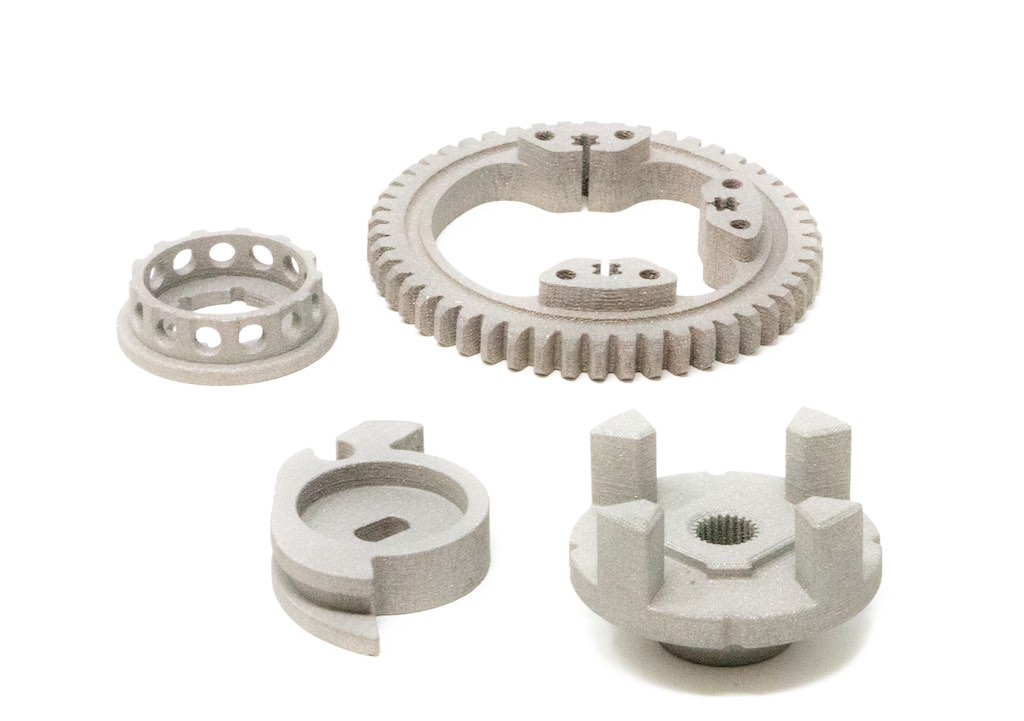
    Chromium zirconium copper parts via Desktop Metal

    Desktop Metal’s founder and CEO, Ric Fulop, expressed pride in announcing the qualification of chromium zirconium copper as a qualified material, bringing the company’s world-leading portfolio of binder jet materials to 23 metals. He also highlighted the simultaneous announcement of 304L qualification on the Shop System and Ti64 customer-qualification on the Production System. The company’s experts are collaborating with customers on application-specific material and part qualification projects for future Additive Manufacturing 2.0 production.

    Desktop Metal Production System

    Desktop Metal’s binder jet technology can 3D print almost any powder. The company has a tiered material qualification system for metals to signify the varying levels of material property results produced by its technology. DM Qualified signifies printing and sintering profiles developed by DM, with fully characterized material and mechanical properties that meet MPIF or other similar standards where available. Customer-Qualified materials have been qualified by customers with their own standards and are being successfully printed for their own applications. R&D Materials signify initial testing completed by DM demonstrating binder and process compatibility, with printing and sintering profiles under final development.

    The Production System platform features high-speed Single Pass Jetting (SPJ) technology on two models: the P-1, for research and development of binder jetting projects for serial production, and the P-50, the world’s fastest metal binder jet system, offering the lowest cost per part, with SPJ technology. With C18150 qualification, the Production System now offers a wider range of options for customers seeking to use copper alloys in their products.

    Desktop Metal and Sandvik will provide an update on binder jetting of Ti64 and Al6061 at AMUG 2023. The companies will also discuss details of the automotive project during a panel discussion from 1:30-2:30 p.m. on Thursday, March 23, in the Joliet Room at the Hilton Chicago.

    In conclusion, Desktop Metal’s qualification of copper alloy C18150 for binder jet 3D printing on the Production System, in collaboration with Sandvik Additive Manufacturing and a top five global automaker, represents a significant milestone in the company’s efforts to provide a world-leading portfolio of binder jet materials to its customers. The partnership has demonstrated the capabilities of binder jetting in the production of complex parts in copper alloys, opening up a range of applications in thermal transfer and other
  • Desktop Metal and TriTech Titanium Parts Bring Titanium Alloy Ti64 to Binder Jet 3D Printing on the Production System™

    Desktop Metal and TriTech Titanium Parts Bring Titanium Alloy Ti64 to Binder Jet 3D Printing on the Production System™

    TriTech Titanium Parts LLC, a Detroit-based manufacturer of titanium parts for aerospace, marine, and automotive industries, and Desktop Metal, Inc., a global leader in additive manufacturing technologies for mass production, have announced the customer-qualification of Ti64 for binder jet 3D printing on the Production System™. The high-speed Single Pass Jetting (SPJ) technology platform features two models: the P-1, for research and development of binder jetting projects for serial production, and the P-50, the world’s fastest metal binder jet system, offering the lowest cost per part with SPJ technology. Ti64 is a popular material, known for its excellent strength-to-weight ratio, corrosion resistance, and biocompatibility. Binder jetting of Ti64 simplifies the production of complex titanium parts, which can be challenging and expensive to fabricate using traditional manufacturing methods.

    Desktop Metal Production System via Desktop Metal

    TriTech Titanium Parts LLC, which is ISO 9001:2015 certified, uses metal injection molding (MIM), investment casting, and now binder jet 3D printing on the Desktop Metal Production System P-1 to produce titanium parts. The company is a spin-off of AmeriTi Manufacturing Co., which was founded in 1984 and sold last year to Kymera International.

    TriTech’s owner, Robert Swenson, who is also the former owner of AmeriTi, stated that with binder jet 3D printing, titanium production of even the most complex geometries can be greatly simplified and achieved at a lower cost. Swenson, a graduate of Purdue University with a degree in Metallurgical Engineering and an MBA from Harvard Business School, is incredibly proud to be the first Desktop Metal Production System P-1 customer worldwide to binder jet 3D print titanium, and the company is excited to offer this new manufacturing technology to its customers.

    With the latest addition to the material portfolio, Desktop Metal offers the ability to binder jet 23 metals, including copper, aluminum, and now, titanium. Ric Fulop, Founder and CEO of Desktop Metal, stated that they are excited to help engineers and manufacturers produce complex, once-impossible designs in a wide range of metals, including challenging materials such as titanium.

    While Ti64 is a popular material, it’s also known for being expensive to manufacture. The material’s strength, as well as its low thermal conductivity and ductility, make it challenging to machine or produce with traditional manufacturing methods. Shaping the material with MIM requires special knowledge and processes. TriTech is among a very small percentage of companies that produce titanium parts with MIM, and the company has developed its own MIM processes after years of R&D. However, with binder jetting, the process can be simplified and made more economical.

    Binder jetting is a process where an industrial printhead selectively deposits a binder into a bed of Ti64 powder particles, creating a solid part one thin layer at a time, just like printing on sheets of paper. The form or shape produced by the printer is then sintered to high density and accuracy in a furnace, similar to the MIM process. Additionally, binder jetting allows unbound material to be reused in the process, adding to its cost efficiency.

    Desktop Metal’s binder jet technology can 3D print almost any powder, which is why the company has a tiered material qualification system for metals to signify the varying levels of material property results produced by. Production System users interested in working with titanium should consult their Desktop Metal sales representative on hardware and binder requirements.

    TriTech will discuss its experience binder jetting Ti64 at AMUG 2023, held March 19-23 in Chicago. The topic will be part of a Desktop Metal panel discussion from 1:30-2:30 p.m. Thursday, March 23,