Tag: Lockheed Martin

  • IperionX and the Future of Titanium Production: A New Era in Advanced Manufacturing

    IperionX and the Future of Titanium Production: A New Era in Advanced Manufacturing

    In the realm of advanced manufacturing, titanium stands as a material of choice for its unparalleled strength-to-weight ratio, resistance to high temperatures, and anti-corrosion properties. Historically, the production of titanium has been energy-intensive, costly, and environmentally taxing. However, recent developments by IperionX Limited (NASDAQ: IPX, ASX: IPX) promise to revolutionize the titanium production landscape.

    The Lockheed Martin Collaboration

    IperionX’s recent agreement with global security and aerospace giant, Lockheed Martin (NYSE: LMT), is a testament to the company’s innovative approach to titanium production. This collaboration will see IperionX delivering titanium plate components, manufactured using their U.S. produced titanium, for testing by Lockheed Martin. Brian Rosenberger, Lockheed Martin’s senior fellow for Additive Manufacturing Processes and Materials, emphasized the potential of reduced titanium component costs leading to broader applications and enhanced product performance.

    The IperionX Difference

    What sets IperionX apart is its cutting-edge titanium production technologies. Traditionally, the ‘Kroll Process’, developed in the 1940s, has been the standard for mass-producing titanium. This method is not only energy-intensive but also contributes significantly to greenhouse gas emissions.

    In stark contrast, IperionX’s production methods are environmentally friendly, utilizing less energy and producing zero Scope 1 and 2 emissions. Their patented Hydrogen Sintering and Phase Transformation (HSPT) technologies offer a revolutionary approach to enhancing the microstructure of titanium parts. This ensures that the strength and fatigue properties of the produced titanium are on par with wrought titanium alloys.

    Addressing the Titanium Supply Chain Challenge

    The U.S. defense sector heavily relies on titanium for various applications, from fighter aircraft to naval platforms. However, the U.S. currently imports over 95% of the required titanium sponge, highlighting a significant supply chain vulnerability. IperionX aims to address this challenge by re-shoring titanium metal production to the U.S., thereby strengthening the domestic supply chain for critical defense systems.

    A Sustainable Future with IperionX

    IperionX’s CEO, Anastasios (Taso) Arima, envisions a future where titanium production is not only cost-effective but also environmentally sustainable. Their breakthrough low-carbon titanium technologies can utilize either titanium minerals or titanium scrap metal as feedstock. This approach not only reduces costs but also minimizes the carbon footprint associated with titanium production.

    The Hydrogen Sintering and Phase Transformation (HSPT) process is a cutting-edge technique in powder metallurgy, specifically designed for producing high-quality titanium alloys. Developed as part of IperionX’s titanium technologies, this method promises titanium with characteristics akin to wrought titanium, but with a more efficient production approach.

    At its core, sintering is a method where particles bond by being heated below their melting point. Instead of melting, the particles fuse, forming a solid structure. The HSPT process introduces a unique twist to this traditional method by incorporating hydrogen.

    In the HSPT method, titanium powders undergo a reaction with hydrogen, resulting in titanium hydride. This step is pivotal as the presence of hydrogen facilitates a more effective sintering process, ensuring the end product is both uniform and dense. Following the formation of titanium hydride, it’s subjected to heating, triggering a phase transformation. During this stage, the hydride decomposes, and hydrogen is expelled, leaving behind dense titanium.

    Several advantages set the HSPT process apart from conventional titanium production methods:

    1. Microstructure Refinement: One of the standout features of the HSPT process is its ability to enhance the titanium’s microstructure. In simpler terms, the internal grain structure of the titanium is refined, which translates to superior mechanical properties.
    2. Strength and Durability: Titanium produced via HSPT boasts strength and fatigue properties that rival those of wrought titanium alloys. This is significant, as it means industries can access top-tier titanium without the high costs and complexities of traditional wrought titanium production methods.
    3. Cost and Efficiency: Traditional titanium production, such as the Kroll Process, is notorious for being both energy-intensive and costly. HSPT offers a refreshing alternative, producing premium titanium more cost-effectively.
    4. Sustainability: In today’s environmentally-conscious world, the reduced energy consumption of the HSPT process is a boon. It not only consumes less energy but also results in lower carbon emissions, marking it as a greener choice for titanium production.

    Given its myriad benefits, the HSPT process holds immense potential across various sectors. Industries like aerospace, defense, and medical implants, where titanium’s strength and biocompatibility are crucial, stand to benefit immensely. In essence, the HSPT process, with its innovative use of hydrogen and phase transformation, paves the way for a more sustainable, efficient, and high-quality titanium production method.

    In Conclusion

    The collaboration between IperionX and Lockheed Martin marks a significant milestone in the journey towards sustainable and efficient titanium production. As industries like aerospace, electric vehicles, and 3D printing continue to grow, the demand for high-quality titanium will only increase. Companies like IperionX, with their innovative approaches, are poised to lead the way in meeting this demand while ensuring environmental sustainability.

    For those keen on exploring the intricacies of titanium production and its future prospects, the research by Zhigang Zak Fang et al., titled “Powder metallurgy of titanium – Past, present, and future,” offers a comprehensive overview.
  • Electron Beam Additive Manufacturing: A Comprahensive Review

    Electron Beam Additive Manufacturing: A Comprahensive Review

    Welcome, dear readers, to another exciting adventure in the world of additive manufacturing! Today, we’ll dive into the remarkable technology of Electron Beam Additive Manufacturing (AM). But before we delve into the nitty-gritty of Electron Beam AM, let’s take a quick trip down memory lane to see how additive manufacturing and 3D printing have evolved over the years.

    The concept of additive manufacturing can be traced back to the 1980s when pioneers like Charles Hull invented stereolithography (SLA). From there, other technologies like Fused Deposition Modeling (FDM) and Selective Laser Sintering (SLS) emerged, opening up a universe of possibilities. Fast forward to today, and we find ourselves in the midst of an additive manufacturing renaissance. 3D printing has come a long way since its inception, now encompassing a wide range of materials, processes, and applications.

    As 3D printing matured, the demand for metal components also grew, driven by industries like aerospace, automotive, healthcare, and energy. Metal 3D printing offers the ability to create complex, lightweight, and high-performance components that would be impossible to produce using traditional manufacturing methods. Moreover, it has revolutionized the way we approach design, prototyping, and production, contributing to increased efficiency, reduced waste, and lower environmental impact.

    Now, it’s time to shine the spotlight on our main subject: Electron Beam AM is a game-changing metal 3D printing technology that utilizes a powerful electron beam to melt and fuse metal wire feedstock layer by layer. This innovative process has several advantages over traditional manufacturing methods, including faster production times, material and cost efficiency, and superior material properties.

    In the following sections, we’ll explore the fascinating science behind Electron Beam AM, its numerous benefits, applications in various industries, and the challenges and limitations it faces. By the end of this journey, you’ll have a deeper understanding of Electron Beam AM and why it’s set to play a pivotal role in the future of manufacturing. So, buckle up, and let’s get started!

    The Science behind Electron Beam Additive Manufacturing

    Ready to dive deeper into the fascinating world of Electron Beam AM? In this section, we’ll unravel the science behind this cutting-edge technology, exploring the key components of an Electron Beam AM system and the process that brings complex metal components to life.

    Electron beam gun

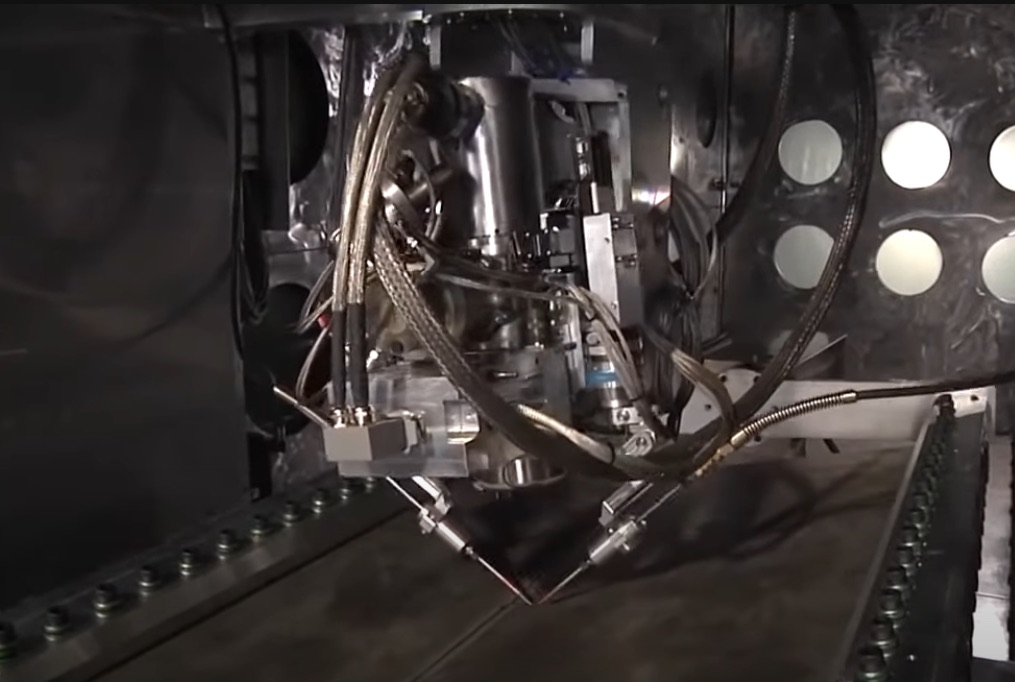
    At the core of every Electron Beam AM system, you’ll find the awe-inspiring electron beam gun. This ingenious device generates a highly focused, powerful stream of electrons by heating a tungsten filament or cathode. When heated, the filament releases a cloud of electrons that are accelerated by a high-voltage electric field, and then, with the help of magnetic or electromagnetic lenses, are shaped into a tight, concentrated beam. This mighty beam is directed towards the metal wire feedstock, packing enough energy to effortlessly melt and fuse metal in a matter of milliseconds!

    Vacuum chamber

    Stepping into the spotlight next is the vacuum chamber, an essential component that ensures the Electron Beam AM process unfolds in a pristine and controlled environment. By maintaining a vacuum, the chamber removes air and any potential contaminants such as dust, moisture, or gases that could jeopardize the quality and integrity of the printed part. Vacuum is critical for Electron Beam AM systems since any particle in the chamber can effect and scatter electron beam.Additionally, the vacuum reduces the risk of oxidation, which is particularly crucial when working with reactive metals such as titanium. This oxygen-free environment not only supports the creation of components with exceptional material properties but also enables more accurate and consistent results.

    Wire feed system

    Completing the Electron Beam AM ensemble, we have the wire feed system—a true maestro of metal feedstock management. This sophisticated system is designed to continuously deliver a precise amount of metal wire to the focal point of the electron beam. By carefully controlling the wire feed rate and synchronizing it with the movement of the electron beam gun, the wire feed system ensures accurate and efficient deposition of material during the printing process. Moreover, the wire feed system can accommodate multiple wire spools, allowing for an uninterrupted printing process and even the possibility of creating multi-material components.

    Together, these three key components form a harmonious trio that powers the Electron Beam AM process, unlocking new frontiers in metal 3D printing and additive manufacturing. In the upcoming sections of this blog, we’ll dive further into the advantages, applications, and challenges of this revolutionary technology. So, keep reading and join us on this thrilling journey into the future of manufacturing!

    The Electron Beam Additive Manufacturing process

    Generating the electron beam

    The Electron Beam AM process kicks off with the generation of a formidable electron beam. The electron beam gun springs into action, heating a filament (typically made of tungsten) that emits a flurry of electrons. These electrons are then accelerated using a high-voltage electric field, turning them into a veritable electron army. Electromagnetic lenses work their magic to focus the electrons into a high-energy beam, capable of melting and fusing metal with extraordinary precision.

    Melting metal wire feedstock

    With the electron beam locked and loaded, it’s time for the wire feed system to strut its stuff. The metal wire feedstock is guided into the path of the electron beam, where the intense energy of the beam melts the wire in the blink of an eye. This rapid melting forms a small pool of molten metal, which is meticulously controlled by adjusting the intensity of the electron beam and the wire feed rate. This fine-tuning ensures the perfect balance between speed and precision, resulting in high-quality printed parts.

    Layer-by-layer deposition and solidification

    Prepare to be dazzled by the magic of the Electron Beam AM process! The system expertly choreographs the movements of the electron beam gun and wire feed system in perfect harmony, following a predetermined path based on the digital 3D model of the component being printed. As the molten metal is deposited onto the substrate or previous layer, it rapidly solidifies, forming a sturdy layer of material. The process is repeated layer by layer, with each new layer fusing seamlessly to the one below, gradually bringing the entire component to life, right before your very eyes!

    In the next section, we’ll explore the many advantages of Electron Beam AM over other additive manufacturing techniques, and why this technology is making waves across various industries. Stay tuned!

    Advantages of Electron Beam AM over other additive manufacturing techniques

    As we’ve discovered so far, Electron Beam AM is an innovative and powerful technology. But what sets it apart from other additive manufacturing techniques? In this section, we’ll explore the numerous advantages of Electron Beam AM and why it’s making a splash in the world of 3D printing.

    Unparalleled speed

    One of the most significant advantages of Electron Beam AM is its incredible speed. Thanks to the high-energy electron beam and efficient wire feed system, Electron Beam AM can deposit material at an astonishing rate of up to 25 lbs (11.3 kg) per hour. This rapid deposition allows for the production of large-scale components in a fraction of the time compared to other additive manufacturing techniques, which is particularly useful for industries that require quick turnaround times, such as aerospace and defense.

    Material and cost efficiency

    Electron Beam AM shines in the realm of material and cost efficiency. The wire feedstock used in Electron Beam AM is typically more affordable than the powders employed in other metal 3D printing processes, such as Powder Bed Fusion (PBF). Moreover, the near-net-shape manufacturing process of Electron Beam AM results in significantly reduced material waste, lowering both material costs and environmental impact. This efficiency makes Electron Beam AM an attractive option for industries looking to optimize production costs while maintaining high-quality results.

    Superior material properties

    Electron Beam AM’s unique combination of a high-energy electron beam and a vacuum chamber results in components with outstanding material properties. The vacuum environment minimizes oxidation and contamination, while the rapid heating and cooling cycles during the Electron Beam AM process produce a fine-grained microstructure. This leads to parts with excellent mechanical properties, such as high strength, fatigue resistance, and reduced residual stress, making them well-suited for demanding applications in aerospace, automotive, and other high-performance industries.

    Design freedom and complexity

    Like other additive manufacturing techniques, Electron Beam AM empowers designers with the ability to create complex geometries and intricate structures that would be impossible or prohibitively expensive to produce using traditional manufacturing methods. However, Electron Beam AM takes it a step further by enabling the production of large-scale components without the need for support structures. This design freedom allows for the creation of lightweight, optimized parts that push the boundaries of engineering and innovation.

    Multi-material capabilities

    A noteworthy advantage of Electron Beam AM is its potential for multi-material printing. By utilizing multiple wire feed systems or switching between wire spools during the printing process, Electron Beam AM can create components with different metals or metal alloys in a single build. This capability opens up new possibilities for designing and manufacturing components with tailored material properties, paving the way for even more innovative and customized solutions.

    As we continue our exploration of Electron Beam AM, we’ll dive into the applications of Electron Beam AM in various industries, as well as the challenges and limitations this technology faces. So, stay tuned, and let’s keep unraveling the wonders of Electron Beam AM together!

    Electron Beam Additive Manufacturing Industry

    Sciaky, Inc.

    The company behind the trademarked term “EBAM,” is a leading provider of metal 3D printing solutions and advanced welding systems. Based in Chicago, Illinois, Sciaky has been at the forefront of large-scale Electron Beam Additive Manufacturing technology. Their EBAM systems are renowned for their speed, material efficiency, and impressive capabilities in producing large-scale, high-quality components for industries such as aerospace, defense, and automotive.

    Lockheed Martin EBAM satellite part

    Lockheed Martin

    Lockheed Martin, a renowned aerospace and defense company, has been capitalizing on Sciaky’s EBAM technology to manufacture titanium propellant tanks for satellites. By adopting this innovative method, they’ve achieved significant reductions in both production costs and lead times. This means faster, more cost-effective satellite production, opening up new possibilities for space exploration and communication

    Airbus EBAM satellite part

    Airbus

    Airbus, a major player in the aerospace industry, has been exploring the potential of EBAM for producing large-scale, lightweight structural components for aircraft. By incorporating EBAM into their manufacturing processes, they aim to reduce the weight of their planes, leading to improved fuel efficiency and reduced emissions. It’s a win-win situation for both the company and the environment!

    References

    Electron-beam additive manufacturing Wikipedia

    “What is Directed Energy Deposition (DED) 3D Printing?”Sciaky.com. Sciaky, Inc. Retrieved 16 May 2021.