Tag: artificial intelligence

  • Closed-Loop Control in LPBF: From Lab Curiosity to Aerospace Baseline

    Closed-Loop Control in LPBF: From Lab Curiosity to Aerospace Baseline


    Introduction: “Zero-Defect” Isn’t a Slogan—It’s Certification Currency

    In 2025, every kilogram of metal that takes flight on a newly certified aircraft must carry a statistical pedigree proving it is virtually pore-free. Synchrotron X-ray studies at Argonne National Laboratory now flag keyhole pores with greater than 99 percent confidence in under a millisecond—diagnostic speed unthinkable five years ago.

    Why the urgency? Regulators have tightened the loop. NASA’s MSFC-3716/3717 framework hard-codes real-time process control into qualification pathways, while Tier-1 suppliers face cost pressures to deliver flight-ready parts on the first build. Add to that the debut of EOS’s Smart Fusion software—live laser-power correction baked into commercial machines—and we have a perfect storm: closed-loop control is transitioning from “nice to have” to baseline for laser powder bed fusion (LPBF).


    1- From “Print & Pray” to “Measure, Decide, Correct”

    The Regulatory Pull and the Market Push

    • Aerospace compliance NASA’s qualification standards now demand documented process signatures for every layer. If you can’t prove thermal stability and melt-pool morphology, you can’t ship.
    • Cost-of-quality economics Scrap rates above 15 percent torpedo additive business cases. Real-time control slashes re-build frequency, pushing LPBF closer to break-even in Design-for-Additive-Manufacturing (DfAM) models.
    • Technology Readiness Level (TRL) climb Closed-loop LPBF has leapt from TRL 4 (lab validation) in 2020 to TRL 7 (system prototype in an operational environment) with Smart Fusion beta lines running in service bureaus today.

    Bottom line: Certification, economics, and maturation converge; ignoring closed-loop control now risks competitive obsolescence.


    2 – Sensor Fusion—The Nervous System of “Print-Time” Quality

    2.1 Multimodal Eyes & Ears

    Single sensors catch symptoms; fused sensors catch root causes. Recent studies that combine infrared thermography, coaxial photodiodes, and acoustic emission deliver balanced accuracies exceeding 94 percent in identifying keyhole pores at two-millisecond resolution. Convolutional neural networks crunch heterogeneous signatures, elevating pore-prediction confidence to production-worthy levels.

    Microscopic image showing the effects of laser scanning direction on porosity in metal powder layers during additive manufacturing. The top section displays run #2 with varying porosities, while the bottom section shows run #10, highlighting differences in laser power and scan speed.

    “Argonne ML model predicting pore formation during a live build.” https://3dprintingindustry.com/

    2.2 Why Fusion Outperforms

    • Orthogonality Thermal data reveals energy input; acoustic data captures bubble collapse; optical signals track plume dynamics. Correlated anomalies tell a fuller story.
    • Redundancy If spatter occludes the optical path, the acoustic channel still “hears” boiling instability.
    • Edge AI inference Field-programmable gate arrays (FPGAs) or graphics-processing units (GPUs) on the machine controller run trained models in sub-millisecond cycles, keeping latency budgets intact.

    2.3 Framework Fit: Industry 4.0

    Sensor fusion nests neatly inside Industry 4.0 architectures—edge nodes publish melt-pool metadata to a manufacturing-execution-system (MES) layer, feeding the digital thread and enabling qualify-as-you-go documentation. For auditors, the dataset is traceability gold.

    Caveat: Acoustic sensors remain fragile in powder-laden chambers, and calibration drifts over long builds. Reliability studies beyond 1,000 hours are still scarce, representing a research gap.

    A circular infographic representing Industry 4.0, featuring elements like Autonomous Robots, Big Data, Augmented Reality, Additive Manufacturing, Cloud Computing, Cybersecurity, Simulation, System Integration, and the Internet of Things.
    “Industry 4.0 control room streaming melt-pool data to a digital thread dashboard.” https://chivarotech.com/industry-4.0.html

    3 – Latency, Algorithms, and the Economics of Scale

    3.1 The Physics Case for Sub-50 µs Loops

    LPBF melt pools solidify in micro-seconds; corrective actions must beat that clock. Demonstrations using FPGA-based controllers have achieved a 73 percent reduction in temperature deviation with feedback cycles below 50 microseconds, translating into finer grain morphology and lower residual stress—critical for aerospace fatigue life. Yet hard quantitative data linking specific latency buckets (<10 µs versus 100 µs) to microstructural variance remain limited, leaving fertile ground for collaborative consortia.

    3.2 Algorithmic Robustness

    Controller StyleStrengthsLimitations
    Classical PIDMature; easy to tune for single-input/single-output loopsLess effective when parameters are tightly coupled
    Model Predictive Control (MPC)Manages multiple coupled parameters; anticipates constraintsRequires heavier computation; model stability can drift
    Reinforcement Learning LoopsSelf-optimizing; adapts to new alloysRegulatory acceptance remains low; deterministic guarantees absent

    3.3 Cost Drivers and Return on Investment

    Cost ComponentTypical Add-OnMitigation Path
    High-speed IR camera\$35 k – \$70 kShare across multi-laser zones; consider lower-cost short-wave sensors
    Edge GPU/FPGA\$5 k – \$15 kIntegrate into OEM controller boards
    Data storage (~1 GB hr⁻¹)\$1 k yr⁻¹ machine⁻¹Real-time compression; discard non-critical frames

    Smart Fusion field data hints at two- to five-times faster parameter development and up to a 50 percent reduction in support structures, lowering cost per part despite hardware premiums.

    3.4 Scalability Roadblocks

    • Standards The lack of common metadata schemas hampers interoperability. ASTM committees are still drafting guidelines.
    • Qualification loops Each algorithm tweak can reset the validation clock under NASA’s specification workflow.
    • Workforce skills Operators must evolve into data-savvy control engineers, boosting training demands.

    🔭 Conclusion: Your Next Competitive Edge Is an Algorithm

    Closed-loop control is no longer experimental tinkering; it has become the quality backbone demanded by aerospace primes and regulators. Data show pore-detection accuracies exceeding 90 percent, commercially available live power-correction software, and frameworks embedding control data into certification dossiers.

    Prediction: By 2028, any LPBF machine sold into aerospace will ship with factory-calibrated, sensor-fusion-enabled control loops as standard—much like every CNC now includes probing cycles.

    Are you still “printing and praying,” or are you ready to design with feedback in mind? Audit your sensor stack, map your latency budget, and engage with standards bodies. The parts you certify tomorrow will depend on the data you collect today.


    References

    1. Machine Learning–Aided Real-Time Detection of Keyhole Pore Formation in LPBF, Science (Argonne National Laboratory, 2023).
    2. Detecting 3-D Printing Defects in Real Time, Argonne APS Science Highlight (2023).
    3. EOS GmbH, Smart Fusion Press Release (April 2023).
    4. NASA Marshall Space Flight Center, Standards MSFC-STD-3716 and Specification MSFC-SPEC-3717 (2017 – present).
    5. Layer-to-Layer Closed-Loop Feedback Control for Inter-Layer Temperature Stabilization in LPBF, Additive Manufacturing (2023).
    6. Monitoring of LPBF via Bridging Sensing Modalities, Additive Manufacturing (2024).
    7. Qualify-as-You-Go: Optical and Acoustic Sensor Fusion in LPBF, Additive Manufacturing Letters (2024).
    8. In-Process Closed-Loop Melt-Pool Control via Pyrometer and FPGA, Progress in Additive Manufacturing (2019).
    AbbreviationFull TermContext in Article
    AIArtificial IntelligenceControl algorithms and data analysis
    ASTMASTM International (formerly American Society for Testing and Materials)Standards development for AM
    CNCComputer Numerical ControlAnalogous adoption of probing cycles
    CNNConvolutional Neural NetworkDefect-detection model type
    DfAMDesign for Additive ManufacturingEconomic break-even framework
    FPGAField-Programmable Gate ArrayUltra-low-latency edge computing
    GB hr⁻¹Gigabytes per HourData-generation rate during builds
    GPUGraphics Processing UnitEdge AI inference hardware
    ICMEIntegrated Computational Materials EngineeringNASA qualification workflow
    LPBFLaser Powder Bed FusionAdditive manufacturing process focus
    MESManufacturing Execution SystemIndustry 4.0 data backbone
    MPCModel Predictive ControlMulti-variable closed-loop algorithm
    MSFCMarshall Space Flight CenterNASA’s AM standards origin
    NASANational Aeronautics and Space AdministrationRegulatory & qualification driver
    PIDProportional–Integral–Derivative (control)Classical feedback method
    TRLTechnology Readiness LevelMaturity scale for technologies
    µsMicrosecondsFeedback-loop latency metric
  • AI‑Native Additive Manufacturing: Why 2025 Is the Inflection Point We’ll Remember

    AI‑Native Additive Manufacturing: Why 2025 Is the Inflection Point We’ll Remember

    “We just hit 100 % accuracy in predicting hidden pores inside a metal print.”
    When Argonne National Laboratory published that result in March 2023, it wasn’t a quirky lab demo—it was a flare in the night sky showing that artificial intelligence had moved from hype to hard engineering value in additive manufacturing (AM). In the two years since, physics‑informed learning loops, real‑time control software, and data‑hungry design engines have cascaded through the industry. Regulations are tightening, defense programs are stress‑testing forward‑deployed printers, and margins are compressing across supply chains. All of that makes 2025 the most consequential year yet for “AI‑native AM.” Let’s unpack where the field stands, what’s working, and—critically—what still isn’t.

    1. Pixels to Perfect Parts: Closing the Quality Gap in Real Time

    Defect mitigation used to be the tax we begrudgingly paid for design freedom. Now AI is clawing that money back.

    Argonne’s pore‑prediction breakthrough leveraged million‑frame‑per‑second X‑ray videos to train a model that can forecast void formation using nothing more than inexpensive thermal camera data. The result: shop‑floor systems that spot a nascent defect and allow the laser path to be adjusted on‑the‑fly instead of scrapping the part later.

    A robotic welding system setup featuring a WAAM robot with a TIG torch, wire feeder, and HDR camera.
    https://www.mdpi.com/2076-3417/11/16/7541

    On production machines, EOS’s Smart Fusion software has already translated that paradigm into a commercial reality for laser powder‑bed fusion. The tool varies laser power and scan speed layer by layer to keep thermal history inside a “golden window,” reducing cool‑down waits and pushing first‑time‑right builds into the mid‑90 % range.

    Where parameter tuning ends, physics‑informed autopilots begin. 1000 Kelvin’s AMAIZE platform, unveiled at Formnext 2023, autocorrects toolpaths, support strategies, and cost estimates without changing the CAD geometry. A launch‑vehicle case study cut support volume by 80 % and slashed build cost by more than 30 %.

    These gains matter because they attack AM’s two perennial cost drivers—scrap and post‑process rework—while also de‑risking certification. Yet limitations remain:

    • Data gravity: High‑fidelity training sets (e.g., Argonne’s X‑ray sequences) are still captured in bespoke facilities, creating a gap between research and shop‑floor adoption.
    • Generalization: Smart Fusion parameters dial in beautifully on Ti‑6Al‑4V but need fresh calibration for high‑entropy alloys or copper.
    • Compute latency: Sub‑second feedback loops are achievable on modern GPUs, but integrating them into legacy machine controllers can bottleneck throughput.

    For engineers chasing AS9100 or FDA clearance, the takeaway is clear: run your qualification plan on AI‑stabilized process signatures, but keep a conventional statistical process control (SPC) backstop until the model has digested enough of your data.

    2. Generative Brains Behind Lighter, Smarter Designs

    If real‑time control is about doing things right, AI‑driven design is about doing the right things—and doing them in ways no human would have imagined.

    Generative Design Meets DfAM

    Topology optimization has lived on engineers’ laptops for two decades, yet it often hit a wall of print feasibility. Modern generative engines trained on actual print‑success data are different. Platforms like Neural Concept feed 3‑D deep‑learning models with CAD and CAE archives, returning manufacturable geometries in minutes rather than days. Field programs report ten‑fold faster concept‑to‑validation cycles across aerospace brackets and thermal exchangers.

    Text‑to‑CAD Workflows

    Large language models are beginning to assimilate part libraries and materials datasheets. Picture an RF engineer typing “lightweight titanium waveguide, Ku‑band, keep insertion loss < 0.5 dB, compatible with LPBF,” and receiving a vetted, lattice‑reinforced solid model complete with anisotropic material allowables.

    Ceramic & Polymer Frontiers

    While metals dominate the headlines, AI is quietly reshaping brittle and viscous regimes, too. 3DCeram’s CERIA Live vision system flags delamination in technical ceramics, and UltiMaker’s “spaghetti” detection halts polymer prints when a nozzle jams mid‑air.

    Yet two hurdles still curb the design revolution: model explainability and multiscale validation. Many generative outputs remain black boxes to certifying bodies, and translating voxel‑level predictions into macro‑scale structural margins requires new verification frameworks—think Technology Readiness Level 6 with AI‑specific artifacts in the V‑model.

    For design managers, the pragmatic move is to treat AI as an expert co‑pilot: let it explode the design space, then run classical finite‑element or fatigue checks on the narrowed shortlist. The best innovations arrive when intuition and in‑silico exploration converge.

    3. From “Smart Line” to Autonomous Ecosystem: Supply Chains Get Re‑wired

    Quality and design breakthroughs mean little if parts can’t reach the point of need. Here, AI is extending its grasp beyond the printer envelope to the entire manufacturing ecosystem.

    Defense Stress‑Tests Forward Manufacturing

    During the U.S. Navy’s FLEETWERX exercises, containerized printers and AI‑guided repair pods fabricated mission‑critical components on a simulated Pacific island, trimming logistical tails and accelerating sortie rates. Field units used augmented‑reality overlays and drone‑delivered powder canisters—decisions orchestrated by AI that balanced production priority, machine health, and material inventory in real time.

    Predictive Maintenance as an MES Native

    AI’s role in uptime is no longer limited to lab demos. Mid‑tier service bureaus are wiring machine logs into reinforcement‑learning agents that schedule nozzle swaps hours before melt‑pool signatures degrade. Industry surveys cite fleet‑level availability gains of five to ten percent—no small feat when laser time is billed in four‑figure increments.

    software engineer using laptop

    Marketplace & IP Guardrails

    With more data moving through the cloud, cybersecurity is front‑and‑center. Web3‑inspired ledgers that cryptographically fingerprint toolpaths are emerging, but adoption is early. Debates about underestimated potential versus misplaced hype imply that cost, cultural inertia, and trust still gate progress.

    Regulatory & Sustainability Catalysts

    Europe’s Ecodesign regulations and the U.S. SEC’s climate‑risk disclosures are nudging OEMs toward life‑cycle accounting. AI excels here: it can map energy inputs from powder atomization to end‑of‑life recycling and suggest material‑light alternatives that still meet EN 9100 fatigue limits.

    Yet platform fragmentation persists. MES, ERP, and PLM vendors seldom agree on schemas, forcing engineers into CSV purgatory. Until the industry coalesces around true data interoperability—likely via OPC UA over secure APIs—autonomy will remain an 80‑percent solution.

    Conclusion: The Playbook for the AI‑Native Additive Era

    The evidence is unambiguous: AI is no longer an optional overlay; it is the digital substrate upon which competitive additive manufacturing will run. From Argonne’s pore‑free prototypes to containerized printers that manufacture spare parts on a runway, the technology’s center of gravity has shifted from possibilities to profits.

    Prediction: By 2028, major aerospace primes will certify at least one flight‑critical component whose entire value chain—from generative design to in‑process control, maintenance prediction, and carbon accounting—is orchestrated by AI. The firms that master that loop will set the cost floor and delivery tempo for the rest of the market.

    If you lead engineering, ask yourself: How many of my 2025 KPIs explicitly assign value to data, models, and closed‑loop feedback? If the answer is few or none, your roadmap is missing the control layer that will decide who owns manufacturing’s future. It’s time to pilot an AI‑stabilized process, integrate a generative design engine, or run a predictive‑maintenance sprint. In an industry where iteration cycles used to span months, waiting a year could mean you’re already obsolete.

    Let’s build the factories—and the mindsets—that make sure we aren’t.


    References

    1. Argonne National Laboratory, “Researchers unveil new AI‑driven method for improving additive manufacturing,” March 9 2023.
    2. EOS GmbH, “Smart Fusion software overview.”
    3. 1000 Kelvin, “AMAIZE AI‑driven additive manufacturing software announcement,” Formnext 2023.
    4. Neural Concept, company case studies and technical briefs.
    5. 3D Printing Industry, “AI and 3D Printing: Additive Manufacturing Experts Assess the Impact of Artificial Intelligence,” February 14 2025.
    6. Business Insider, coverage of FLEETWERX forward‑deployment exercises, 2025.
    7. 3DPrint.com, “AI in Additive Manufacturing: Underestimated Potential or Misplaced Hype?” 2024.
    8. Digital Engineering 24/7, “Artificial Intelligence Meets Additive Manufacturing,” 2024.

    bbreviation Index

    • AI — Artificial Intelligence
    • AM — Additive Manufacturing
    • LPBF — Laser Powder Bed Fusion
    • DfAM — Design for Additive Manufacturing
    • TRL — Technology Readiness Level
    • GPU — Graphics Processing Unit
    • SPC — Statistical Process Control
    • Ti‑6Al‑4V — Titanium alloy Grade 5 (ASTM designation)
    • HEA — High‑Entropy Alloy
    • ERP — Enterprise Resource Planning
    • MES — Manufacturing Execution System
    • PLM — Product Lifecycle Management
    • OPC UA — Open Platform Communications Unified Architecture
    • AS9100 — Aerospace Quality Management Standard (based on ISO 9001)
    • FDA — U.S. Food and Drug Administration
    • RF — Radio Frequency
    • CAD — Computer‑Aided Design
    • CAE — Computer‑Aided Engineering
    • KPI — Key Performance Indicator
    • CO₂e — Carbon‑Dioxide Equivalent
    • IP — Intellectual Property
    • ITAR — International Traffic in Arms Regulations
    • EN 9100 — European Aerospace Quality Management Standard
    • CSRD — Corporate Sustainability Reporting Directive
    • SEC — U.S. Securities and Exchange Commission

    Trademark & Brand Index

    • Argonne National Laboratory — U.S. Department of Energy national laboratory
    • EOS — EOS GmbH, industrial 3‑D‑printing equipment manufacturer
    • Smart Fusion — Process‑control software by EOS GmbH
    • 1000 Kelvin — AI–driven additive‑manufacturing software company
    • AMAIZE — Physics‑informed AM workflow platform by 1000 Kelvin
    • Neural Concept — AI‑powered generative‑design platform
    • 3DCeram — Ceramic 3‑D‑printing technology provider
    • CERIA Live — In‑process vision system by 3DCeram
    • UltiMaker — Desktop 3‑D‑printer brand (Ultimaker + MakerBot)
    • WarpSPEE3D — Cold‑spray metal printer by SPEE3D
    • Identify3D — Digital‑supply‑chain security company
    • Twikit — Mass‑customization software company
    • Siemens — Siemens AG, industrial technology company
    • Safran — Safran SA, aerospace and defense supplier
  • Shapeways and the Future of AI-Powered Robotics

    Shapeways and the Future of AI-Powered Robotics

    The world of manufacturing is undergoing a seismic shift, and at the forefront of this transformation is Shapeways Holdings, Inc. (NASDAQ: SHPW). As a global leader in digital manufacturing, Shapeways has recently announced a staggering 90% year-over-year growth in the robotics sector. But what’s driving this surge? The answer lies in the increasing adoption of artificial intelligence (AI) within robotics applications.

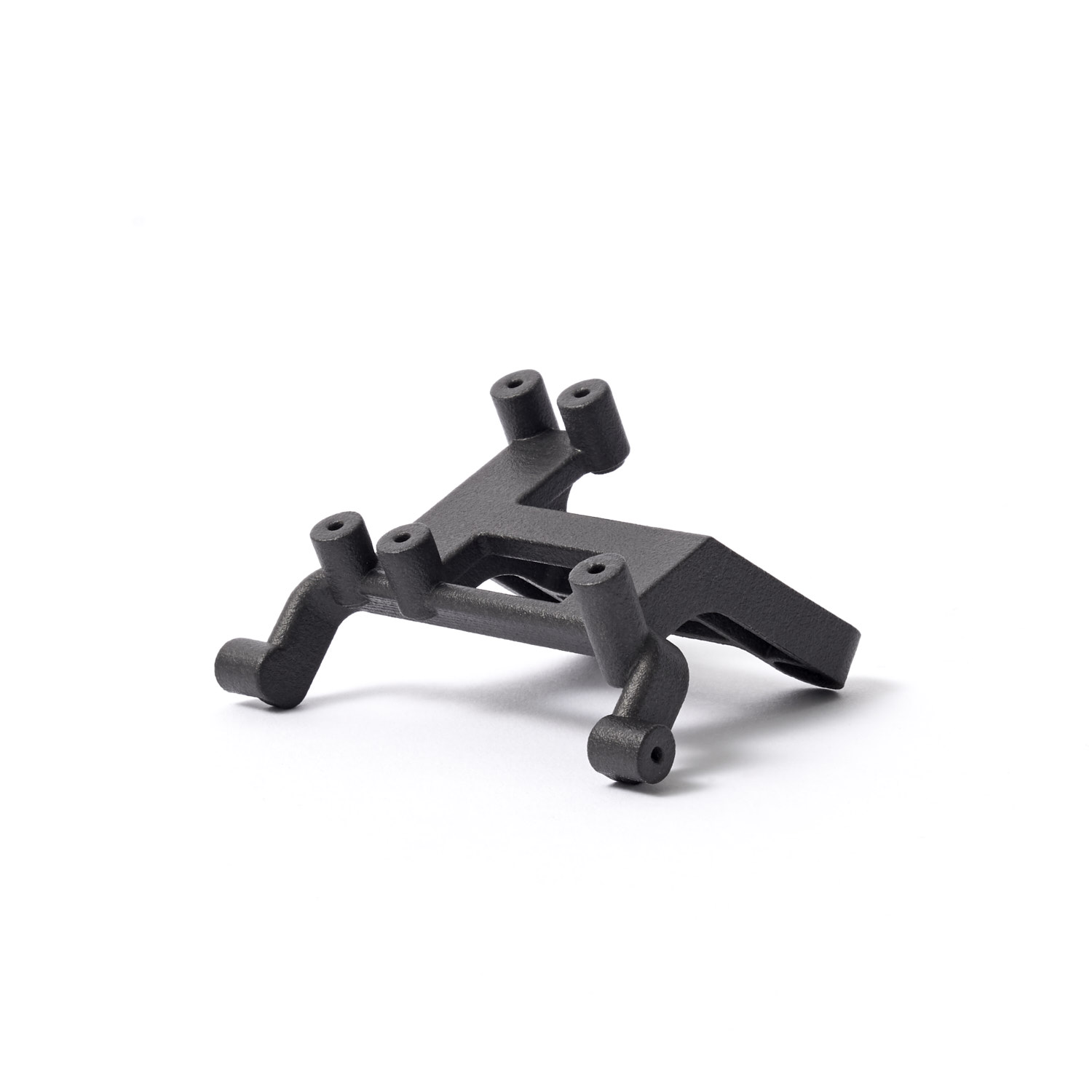
    Shapeways parts
    Shapeways parts

    The AI and Robotics Synergy

    The integration of AI into robotics is not just a trend; it’s a revolution. Companies are increasingly relying on Shapeways to meet the burgeoning demand for AI-powered robotic products. The reason? Shapeways’ Enterprise Manufacturing Solutions offering, which has been instrumental in acquiring new business from long-standing customer relationships.

    The numbers speak for themselves. With the robotics industry projected to be worth a whopping $260 billion by 2030, Shapeways is strategically positioning itself as a pivotal player. A testament to this is their recent expansion of a multi-year partnership with a leading robotics firm specializing in AI-driven robots for healthcare.

    Shapeways parts
    Shapeways parts

    Digital Manufacturing: The Game Changer

    Shapeways’ success doesn’t just stem from its ability to manufacture parts. It’s their innovative approach to digital manufacturing that’s making waves. As Aidan O’Sullivan, GM of Enterprise Solutions for Shapeways, rightly points out, the value of digital manufacturing for robotics is immense. It offers scalability, customization, and efficiency, minimizing overheads and maximizing output.

    But it’s not just about additive manufacturing. Shapeways’ expertise in tooling and molding, especially for high-volume parts, plays a pivotal role in their success story.

    The Broader Impact

    Shapeways’ impact isn’t limited to healthcare. They’ve also expanded their partnership with a top robotics manufacturer in the industrial supply chain, witnessing a fourfold increase in revenue year-over-year. This underscores the versatility and flexibility of digital manufacturing, especially when powered by AI and automation.

    According to Precedence Research, the global market valuation of AI in manufacturing is set to reach a staggering USD $68.4 billion by 2032. This projection underscores the transformative potential of AI in reshaping the manufacturing landscape.

    Looking Ahead

    As Greg Kress, CEO for Shapeways, emphasizes, the company’s dedication goes beyond mere manufacturing. They’re committed to fostering innovative advancements in the robotics sector. With AI’s increasing adoption, robotics is set to become even more integrated across various industries, automating processes and harnessing innovation.

    In conclusion, as robotics continues to evolve with AI capabilities, Shapeways is uniquely positioned to drive innovative solutions across sectors. For those keen on delving deeper into this fascinating intersection of AI, robotics, and manufacturing, keeping an eye on Shapeways’ journey might offer valuable insights.

    Source: Shapeways Holdings, Inc. Press Release

  • Unleashing the Power of Additive Manufacturing with Artificial Intelligence: The Game-Changing Revolution You Can’t Afford to Miss!

    Unleashing the Power of Additive Manufacturing with Artificial Intelligence: The Game-Changing Revolution You Can’t Afford to Miss!

    Are you ready to witness the future of manufacturing? Additive manufacturing and artificial intelligence are two rapidly growing technologies that are transforming the way we make things. And when combined, they have the potential to revolutionize manufacturing and beyond.

    Additive manufacturing, also known as 3D printing, is the only manufacturing technology that can be fully digitalized. It involves creating objects layer-by-layer from a digital model, using a range of materials such as plastics, metals, and even living tissue. Meanwhile, artificial intelligence (AI) is enabling machines to learn, adapt, and make decisions like humans.

    The possibilities of combining these two technologies are endless. Anything that seemed impossible before, such as creating complex geometries, personalized medical devices, or self-assembling structures, can now be possible with the power of additive manufacturing and AI.

    In this blog post, we will explore the intersection of additive manufacturing and artificial intelligence and discuss how their combination can lead to revolutionary advancements in manufacturing and beyond. We will delve into the role of AI in additive manufacturing, the potential of AI-powered 3D printing, and the challenges and opportunities of integrating these technologies. Get ready to witness the future of manufacturing and join us on this exciting journey.

    The Role of AI in Additive Manufacturing

    Additive manufacturing involves a complex process of designing, printing, and post-processing. AI can optimize each of these steps to improve efficiency and accuracy. In the design process, AI can analyze data from previous designs to generate new ones that are optimized for strength, weight, and other factors. In the printing process, AI can monitor the printing process in real-time to detect and correct errors. This can reduce waste and improve the quality of the final product. Finally, AI can improve the entire additive manufacturing software toolchain, from design to post-processing, to create a seamless and efficient workflow.

    The benefits of using AI in additive manufacturing are numerous. By optimizing the design and printing process, we can reduce waste, improve quality, and increase speed. This can lead to significant cost savings and improved competitiveness for businesses. Additionally, AI can help us discover new design possibilities and optimize our products for specific use cases.

    The Future of Additive Manufacturing with AI

    The potential of AI-powered 3D printing and additive manufacturing is limitless. In the aerospace industry, for example, AI can be used to optimize the design of components for weight reduction and improve fuel efficiency. In the automotive industry, AI can be used to design and produce custom parts on-demand, reducing the need for large inventories. In healthcare, AI can be used to create personalized medical devices and implants that are optimized for each patient’s unique anatomy.

    The impact of AI and additive manufacturing on the supply chain is also significant. By allowing for on-demand production of parts, businesses can reduce their inventory and supply chain costs. Additionally, AI can optimize the production process to reduce lead times and improve overall efficiency.

    The Challenges of Combining Additive Manufacturing and AI

    Integrating AI and additive manufacturing can be complex, especially in highly regulated industries like healthcare and aerospace. Ensuring compliance with regulations and safety standards is crucial, and R&D and implementation can be expensive and time-consuming. Additionally, there may be limitations to the types of materials that can be used in additive manufacturing with AI, which can limit the range of applications.

    However, there are solutions to these challenges. Collaboration between companies and researchers can help to share knowledge and resources, reducing costs and speeding up the development process. Additionally, advancements in material science are expanding the range of materials that can be used in additive manufacturing, opening up new possibilities for innovation.

    Success Stories and Case Studies

    Real-world examples of companies and researchers using AI and additive manufacturing to innovate and create are abundant. Let’s take a closer look at some of the most exciting success stories and the lessons learned from each.

    • Gas Turbine and Power Generation companies will been using additive manufacturing and AI to optimize the design of gas turbine blades. By simulating different designs and materials, they will be able to create a blade with better aerodynamics and cooling performance. This resulted in higher efficiency and longer lifespan of the turbine.AI and additive manufacturing can lead to better product performance and longevity in the energy sector.
    • Aviation companies will been using additive manufacturing and AI to improve the production process of aircraft parts. By using machine learning algorithms to analyze sensor data from the 3D printers, they will be able to detect and prevent defects in real-time, reducing the amount of waste and improving the quality of the final product.AI and additive manufacturing can lead to better quality control and waste reduction in the aviation industry.
    • 3D printing machine makers will be using AI to improve the printing process and optimize material properties. By analyzing data on the printing process and the behavior of different materials, they will be able to create a software tool that can predict the properties of a printed part before it is printed. This allows for better design optimization and material selection.AI can help optimize the printing process and improve the quality of the final product in additive manufacturing.
    1. Medical Device and Implant companies will be using AI and additive manufacturing to create personalized medical implants. By analyzing data on the patient’s anatomy and bone density, they will able to create a customized implant that fits perfectly and promotes bone growth. This solution is faster, more accurate, and more affordable than traditional implant manufacturing methods. AI and additive manufacturing can lead to personalized medical solutions that are more accessible and affordable to patients.
    1. Automotive companies will been using AI and additive manufacturing to create complex jigs and fixtures for their production line. By using generative design algorithms and 3D printing, they will be able to create customized and lightweight fixtures that are more efficient and cost-effective than traditional methods.AI and additive manufacturing can lead to better tooling solutions that improve efficiency and cost-effectiveness in the manufacturing process.

    These examples demonstrate the diverse range of applications for AI and additive manufacturing. By leveraging data and machine learning, we can create innovative solutions that improve efficiency, sustainability, and cost-effectiveness across a range of industries. The possibilities are endless, and we can’t wait to see what the future holds for this exciting intersection of technologies.

    At Addithive, we believe that the future of manufacturing and innovation lies in the combination of additive manufacturing and artificial intelligence. We encourage businesses and researchers to embrace these technologies and explore the exciting possibilities they offer. The combination of additive manufacturing and AI has the potential to revolutionize manufacturing and beyond. By leveraging data and machine learning, we can optimize the design, printing, and post-processing of parts, improve quality control and waste reduction, create personalized medical solutions, and improve tooling and fixtures for the manufacturing process.

    The benefits of these technologies are clear, and it’s time for businesses and researchers to embrace them fully. By investing in research and development, and implementing AI and additive manufacturing solutions, companies can stay ahead of the curve and gain a competitive advantage.